

A Practical Guide to the Depuratore Per Rubinetto
A depuratore per rubinetto is a small device that fits directly onto your kitchen tap. It offers a simple, quick way to improve the quality of your water. It works by passing tap water through a replaceable filter cartridge, which is designed to capture common impurities like chlorine and sediment.
The benefits are easy to notice. Your water tastes better for drinking and cooking. Limescale build-up in appliances is reduced. You also drastically cut down on plastic bottle waste, which is good for the environment and your wallet.
Quick Answer: A depuratore per rubinetto is a compact filter that attaches to your kitchen tap. It uses an activated carbon cartridge to help reduce chlorine, sediment, and limescale. This improves water taste and odour instantly. Installation is DIY-friendly and takes just a few minutes, with no special tools needed.
Why Choose a Faucet Water Filter?
Have you ever noticed a slight chlorine smell from your tap or seen that the water in your glass isn't perfectly clear? These are common issues, even where tap water is officially safe to drink. Municipal water is treated for safety, but it can still carry traces of substances that affect its taste, odour, and appearance. This is where a small accessory can make a big difference.
A faucet-mounted purifier is a practical solution that works right where you need it: at the kitchen sink. Unlike more complex systems, it requires no changes to your plumbing and installs in minutes.
The Growing Demand for Quality Water
More and more people are choosing to filter their water at home. In Italy, the water filter market is growing fast, showing a clear desire for purified, reliable water. The sector was valued at around €350 million and is projected to reach nearly €550 million by 2032.
This device allows you to make a real improvement to the water your family uses every day. It's not just about what is removed; it's about the peace of mind that comes with it. To better understand the local context, you might find our guide on tap water safety in Italy useful. From a simple glass of water to a richer-tasting coffee, the benefits are clear.
How a Faucet Purifier Cleans Your Water
A tap purifier might look small and simple on the outside, but don't let its compact size fool you. Inside, there's a sophisticated multi-stage filtration system hard at work. Think of it less like a single wall and more like a series of checkpoints, with each one designed to stop different kinds of impurities from getting through.
As your tap water flows into the unit, it travels through several different filter layers, and each one has a very specific job to do. This layered approach is precisely why a depuratore per rubinetto is so good at tackling the most common things that cause bad taste and odours, giving you cleaner, fresher water right on the spot.
This diagram shows how that journey from tap to glass works, turning cloudy, chlorinated water into something you actually want to drink.
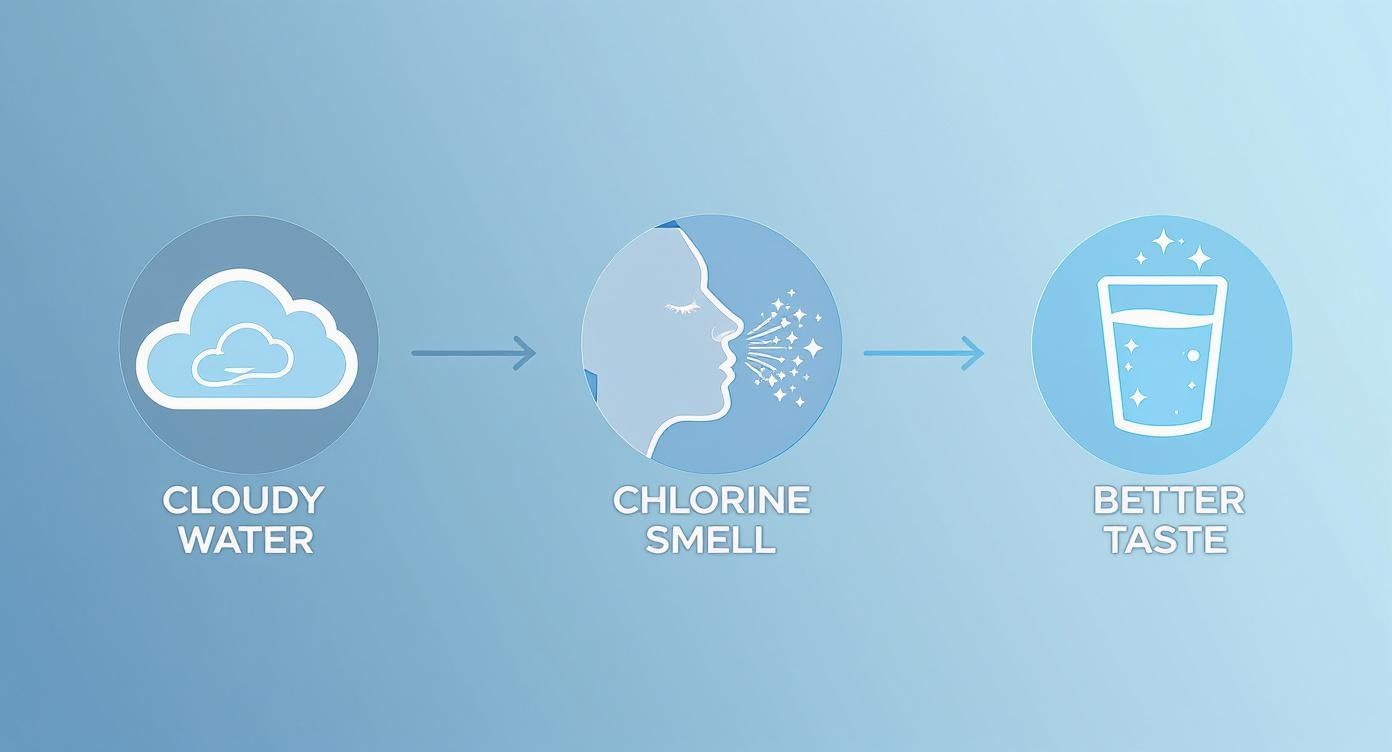
It’s a quick transformation, but it makes a world of difference.
The Magic of Activated Carbon
The real hero in most tap filters is activated carbon. The best way to picture it is as a sort of super-sponge, but on a microscopic level. It has a massive surface area packed with nooks and crannies that are perfect for trapping chemical compounds through a process called adsorption.
Activated carbon is a champion at grabbing chlorine—the disinfectant used to treat our water supply that often leaves behind that familiar swimming-pool taste and smell. It also helps lock away other organic compounds that can make your water taste off or look murky. This is exactly why the first thing people notice after installing a filter is just how much better their water tastes.
Tackling Sediment and Limescale
It's not just about chemicals. Tap water often contains tiny physical particles, like little bits of rust from old pipes, sand, or silt that can make it look cloudy. To catch these, tap purifiers include layers of materials like polypropylene cotton, which work like a fine sieve.
Another common headache is limescale, the chalky build-up caused by high levels of calcium and magnesium. While it’s not harmful, it’s a nightmare for your kettle and coffee machine, impacting how they work and how long they last. Some filter cartridges are specifically designed with materials that help reduce water hardness, which helps keep limescale at bay.
Understanding What Makes a Good Filter
Not all filters perform the same way. When you're comparing models, there are two key numbers you need to look at: the flow rate and the filter lifespan.
- Flow Rate: This is measured in litres per minute (LPM) and tells you how fast the water comes out. A decent flow rate means you aren’t left waiting ages just to fill a glass or a pan.
- Filter Lifespan: This tells you how much water a cartridge can clean before you need to swap it out—usually somewhere between 300 and 600 litres. Keep in mind that if your local water is particularly hard or full of sediment, you might need to change it a bit sooner.
It’s no surprise that people are paying more attention to what’s in their water. In Italy, the water purifier market has grown to around €640 million as more people look for reliable ways to remove contaminants like chlorine and heavy metals. This shift highlights a growing concern over the state of our ageing water infrastructure.
Ultimately, choosing the right purifier comes down to balancing these features to find what works for your home. A good depuratore per rubinetto is a simple, dependable way to get great-tasting water every single day.
How to Choose the Right Faucet Water Purifier
Choosing a depuratore per rubinetto can seem tricky with so many options available. But finding the perfect one for your kitchen is easier than you think. It comes down to checking a few key details: compatibility with your tap, filter performance, and long-term running costs.
Think of this section as a practical guide to making a smart choice. We will break down the essential features to compare, helping you select a purifier that fits your home, needs, and budget without any guesswork.
First, Check Your Faucet's Compatibility
Before looking at filter types, the most important step is to check if the purifier will actually fit your faucet. Most tap-mounted purifiers, like the models in our Water Filters collection, are designed to fit standard round faucets. They often include a set of adaptors to ensure a secure, leak-free connection.
Quick Compatibility Checklist
- Is your faucet spout round? Most filters are designed for this common shape.
- Does it have a removable aerator? This is the small mesh piece at the end of the spout that you can unscrew.
- Do you see threads when the aerator is off? These threads are what the filter adaptor will screw onto.
- What is the diameter? Measure the faucet diameter to compare it with the purifier's specifications.
If you have a faucet with a pull-out sprayer, an oval shape, or an irregular design, a standard tap-mounted purifier is unlikely to be compatible. Taking a moment to check this will save you a lot of hassle.
Understanding Performance and Certifications
Once you know a filter will fit, it's time to look at what it can do. Two key indicators tell you a lot about a filter's performance: its flow rate and filter lifespan.
A good flow rate, measured in litres per minute (LPM), ensures you can fill a glass or pot quickly without a long wait. The lifespan, usually measured in litres, tells you how long the cartridge will work before it needs to be replaced. A longer lifespan means fewer changes and lower costs over time.
Some products might also mention certifications from bodies like NSF International. These certifications are a good sign, as they confirm the filter has been independently tested to meet specific standards in reducing contaminants like chlorine.
The adoption of home filtration is a growing trend that reflects a deeper history. The evolution of water purification in Italy is tied to historical improvements in sanitation, yet modern cities still contend with ageing infrastructure and new pollutants. This has prompted many to install a depuratore per rubinetto, relying on point-of-use technology for extra peace of mind.
Compare Your Options
To simplify your decision, we've created a table that sums up the key features to consider. Use it to compare different models and find the best fit for your kitchen. Compare options with our quick table.
Faucet Purifier Feature Comparison Table
| Feature | What to Look For | Why It Matters to You |
|---|---|---|
| Compatibility | Includes multiple adaptors for standard taps. | Ensures the purifier fits your faucet without leaks. |
| Filter Lifespan | 300–600 litres or 3–6 months. | Determines how often you need to buy Refills & Cartridges. |
| Flow Rate | At least 2 LPM or higher. | A higher flow rate means less waiting time to fill pots or glasses. |
| Filter Media | Activated carbon for taste; extra layers for sediment. | Targets specific issues like chlorine odours or cloudy water. |
| Ease of Installation | No tools required; simple screw-on design. | You can install it yourself in minutes, no plumber needed. |
| Filter Selector | A lever to switch from filtered to unfiltered water. | Helps extend the filter's life by using it only when needed. |
If you are considering a more permanent solution, our guide on the best under-sink water purifiers offers a detailed comparison with faucet options, helping you weigh the pros and cons of each system.
By focusing on these practical points, you can confidently choose a purifier that will provide you with clean, great-tasting water every day.
Installing and Maintaining Your Water Purifier
One of the biggest perks of a depuratore per rubinetto is just how simple it is to get started. You don’t need to call a plumber or start drilling holes in your kitchen worktop—these are designed for anyone to install in a matter of minutes. Let's walk through the quick setup and then cover the simple checks to keep your purifier running perfectly.
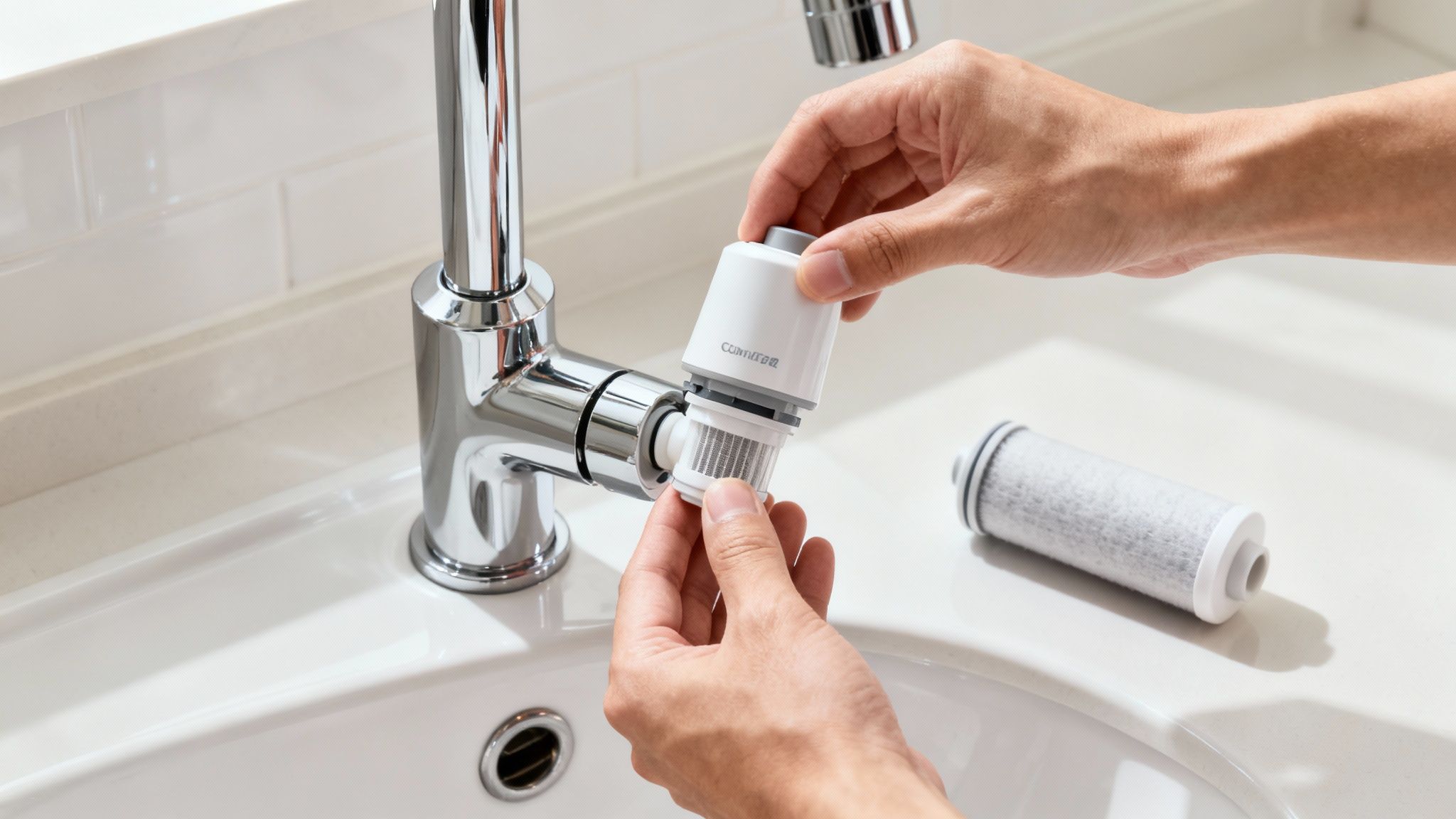
A Simple Step-by-Step Installation Guide
Getting your new purifier up and running is genuinely straightforward, and you won’t need any special tools. Most kits come with everything you need right in the box, including a few different adaptors to make sure it fits perfectly on standard round taps.
Here’s all it takes:
- Unscrew Your Tap's Aerator: First, remove the small mesh tip at the end of your tap. It should twist right off by hand. Use a cloth for a better grip if it’s on tightly.
- Find the Right Adaptor: Your purifier kit will have a few different threaded adaptors. Find the one that matches your tap’s threading and screw it on by hand until it’s firm.
- Attach the Purifier Unit: Now, take the main purifier unit and line it up with the adaptor you just installed. Screw it on until it feels snug and secure, but be careful not to overtighten it.
- Check for Leaks: Turn on the tap to let the water run through. Give the connection point a quick check for any drips. If you spot a leak, just tighten the connection a bit more or ensure the rubber washer inside is sitting flat.
And that’s it! You are ready to enjoy fresh, filtered water. See the water filter kit that installs in minutes.
Keeping Your Water Fresh: A Maintenance Checklist
Keeping your tap purifier in great shape is just as easy as installing it. A little regular care goes a long way, ensuring you always get the best-tasting water and helping your unit last for years.
Keeping your purifier in top condition isn't just about performance; it's about peace of mind. Consistent maintenance is fundamental for any home water system, ensuring it continues to reduce contaminants effectively and protect your appliances from issues like limescale.
Use this simple checklist to stay on top of things:
- Change the Filter Cartridge on Time: This is the most important step. A filter’s lifespan is limited, and an old cartridge won't capture impurities like chlorine effectively. Most need replacing every 3–6 months. Many models, like the Modern Essentials Faucet Water Filter with LED Display, have an indicator to remind you when it's time for a change.
- Clean the Unit's Exterior: Give the outside of the purifier a quick wipe with a soft, damp cloth about once a week. Avoid harsh chemical cleaners, as they could damage the housing.
- Use the Bypass Lever: Most tap filters have a lever that lets you switch between filtered and unfiltered water. Use the unfiltered setting for washing dishes or hands to preserve the filter lifespan for drinking and cooking.
- Flush New Cartridges: When you install a new filter, let cold water run through it for a few minutes before you use it. This activates the activated carbon and flushes out any harmless carbon dust.
By following these simple steps, your depuratore per rubinetto will keep delivering fantastic, cleaner water day after day.
The Everyday Benefits of Using Filtered Water
Let's move past the technical details. What difference does a depuratore per rubinetto actually make in your day-to-day life? You might be surprised. The changes are often immediate, improving everything from your morning coffee to the lifespan of your kettle.
The first thing you will notice is the taste and smell. Gone is that faint swimming pool scent from the chlorine used in municipal water treatment. Instead, you get water that is crisp, clean, and genuinely refreshing to drink.
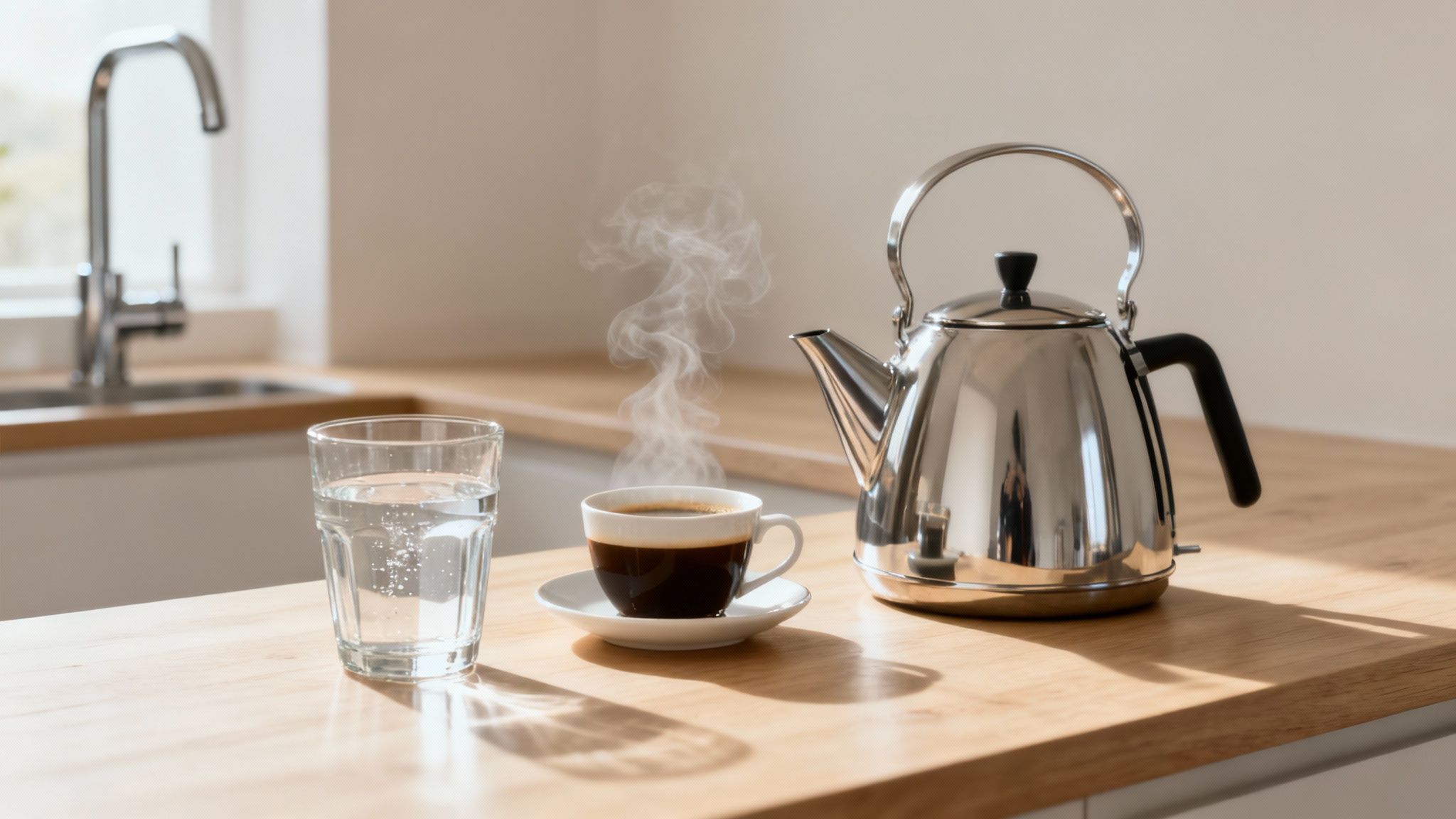
It’s a simple change, but it elevates everything that happens in your kitchen.
Better Tasting Drinks and Food
That chemical aftertaste you might not even notice anymore? It completely alters the flavour of your favourite drinks. Coffee and tea lovers are in for a treat.
When chlorine isn't masking the delicate notes, the true character of your coffee beans or tea leaves comes through. The result is a richer, fuller-bodied brew. The same goes for cooking—pasta, soups, and steamed vegetables will taste of themselves, not of the water they were cooked in.
Protect Your Appliances from Limescale
Here is one of the most practical perks: saying goodbye to limescale. If you live in a hard water area, you know all about those chalky white deposits that clog up your kettle and coffee machine.
Using filtered water is one of the easiest ways to protect your kitchen gadgets and make them last longer. By filtering out the minerals that create scale, your appliances run more efficiently, and you can stop spending your weekends descaling everything.
This means your kettle boils a bit quicker and your coffee machine performs as it should, saving you money and hassle in the long run.
A Softer Touch for Skin and Hair
We mostly think about drinking water, but its quality affects our skin and hair, too. While dedicated Shower Filters are best for bathing, simply washing your face with filtered tap water can make a noticeable difference.
Water with less chlorine and fewer harsh minerals is gentler on your skin, helping it stay moisturised. Some people find their skin feels less dry and tight. A final rinse with purified water can also leave your hair feeling softer and looking shinier.
A Greener and More Economical Choice
Making the switch from bottled water to a faucet purifier is a win for both your wallet and the planet. Every litre you filter at home is one less plastic bottle that needs to be made, shipped, and thrown away.
Think about the long-term benefits:
- Reduced Costs: Filtered tap water costs just a fraction of what you would pay for bottled water. The savings add up quickly.
- Less Waste: You will drastically cut down on your single-use plastic, shrinking your household’s environmental footprint.
- Convenience: Imagine an endless supply of pure water right from your tap. No more lugging heavy packs of bottles home from the supermarket.
A depuratore per rubinetto is a fantastic solution for filtration right where you need it. You can explore more options in our Knowledge Hub. Ultimately, it’s a small change that delivers big rewards, every single day.
Solving Common Faucet Filter Issues
Even the best depuratore per rubinetto can hit a snag now and then. The good news is that most of these small issues are surprisingly easy to sort out yourself in just a minute or two. Think of this section as your quick-start guide to troubleshooting, so you can get back to enjoying pure, great-tasting water without any hassle.
We will cover everything from a sluggish water flow to a pesky drip where the filter meets the tap.
Addressing a Slow Flow Rate
One of the most common things people notice is that the water pressure seems to have dropped. If your filtered water is trickling out instead of flowing freely, the culprit is almost always the same: your filter cartridge is ready for a change.
Over time, the filter does its job by catching all sorts of sediment and contaminants. As it gets clogged, it naturally lets less water through. This isn’t a defect—it’s proof that your filter is working hard.
Just pop in a new cartridge from our Refills & Cartridges collection, and you should see the flow rate return to normal instantly. Be sure to run cold water through the new filter for a minute to get the activated carbon inside ready to go.
Fixing a Small Leak
Noticing a small drip right where the purifier attaches to your tap? Don't panic. This is a common issue that usually comes down to the initial installation and is simple to fix.
Here’s a quick checklist:
- Tighten the Connection: The unit might just need to be a little more snug. Try giving it another gentle twist by hand to secure it.
- Check the Washer: There’s a small rubber washer inside the connector that creates the seal. Make sure it’s lying flat and hasn’t gotten twisted or pinched.
- Verify the Adaptor: If your tap needed an adaptor, double-check that you're using the right size and that it’s threaded on straight. A crooked fit can easily create a tiny gap.
Dealing with an Unusual Taste
Every so often, you might notice a slightly "off" taste right after installing a brand-new filter. This is perfectly normal and is almost always caused by harmless dust from the new activated carbon filter.
The fix is simple: just let cold water run through the filter for two to three minutes. This is called "flushing," and it clears out any loose particles while fully activating all the filter media. After that, your water should taste crisp, clean, and completely neutral.
By running through these simple steps, you can solve the vast majority of issues with your depuratore per rubinetto in no time. Of course, if a problem persists, our customer support team is always ready to help. For complete peace of mind, remember all our products are backed by our no-fuss Refund Policy.
Frequently Asked Questions
Got questions? We’ve got answers. Here, we'll tackle the most common things people ask when looking at a depuratore per rubinetto, so you can feel completely confident about getting one for your home. We're covering all the practical details that pop into your head right before you decide.
Our aim is simple: to give you clear, honest information so that upgrading your water feels easy and straightforward.
How Do I Know if a Purifier Will Fit My Tap?
This is usually the first question on everyone's mind. Most modern tap purifiers are built to be flexible, shipping with a handful of adaptors to fit standard round taps. The big thing to check is whether your tap has a removable aerator – that’s the little mesh cap on the end where the water comes out.
Here’s a quick way to check compatibility:
- Unscrew the Aerator: See if you can twist it off with your fingers.
- Look for Threads: With the aerator removed, you should see screw threads on the inside or outside of the tap's spout.
- Match the Adaptor: Your purifier kit will come with a few different adaptors. Just find the one that fits the threads and size of your tap.
The vast majority of standard kitchen taps will be a perfect match. However, these filters generally won't work with taps that have pull-out sprayers, oval spouts, or other unusual designer shapes.
How Often Should I Change the Filter Cartridge?
There isn't a single answer for this, as it depends on your local water quality and how much you use the filter. On average, a cartridge for a depuratore per rubinetto lasts between three to six months. This usually works out to be around 300 to 600 litres of filtered water.
If you live in an area with very hard water (lots of limescale) or have older plumbing, your filter has to work harder and will likely need changing sooner. Many newer models have a handy indicator that tells you when it’s time for a new one. Sticking to a regular schedule is key to making sure the activated carbon keeps doing its job on contaminants like chlorine. Check sizes & refills — fast EU shipping.
Does a Faucet Filter Remove Beneficial Minerals?
That’s a great question. A standard tap filter is designed to grab unwanted substances that affect taste and smell, like chlorine, sediment, and certain organic compounds.
These filters are not designed to strip out beneficial minerals such as calcium, magnesium, and potassium. Those healthy minerals pass right through. You get the best of both worlds: water that tastes crisp and clean but still has its natural mineral content.
Disclaimer: Home filtration complements—not replaces—professional advice. Always consult with a water quality expert for specific health concerns.
At Modern Essentials, we think everyone deserves better water without the fuss. Our range of Water Filters is designed for easy installation and results you can taste from day one.