

Depurazione Acqua Potabile: Your Practical Guide for an EU Home
Ever noticed chalky limescale in your kettle or a faint chlorine smell from your tap? EU tap water is generally safe, but its journey through kilometres of pipes can add unwanted tastes and particles. Home water purification, or depurazione acqua potabile, acts as a final checkpoint, ensuring the water you drink and use is as clean as possible. It’s a simple upgrade for better-tasting water every day.
Quick Answer: Depurazione acqua potabile at home uses filters to remove impurities picked up after municipal treatment. Common systems use activated carbon to reduce chlorine and improve taste, and sediment filters to capture rust or sand. Installation is often DIY-friendly, making it a practical way to ensure cleaner, safer water straight from your tap.
Why Home Water Purification Matters
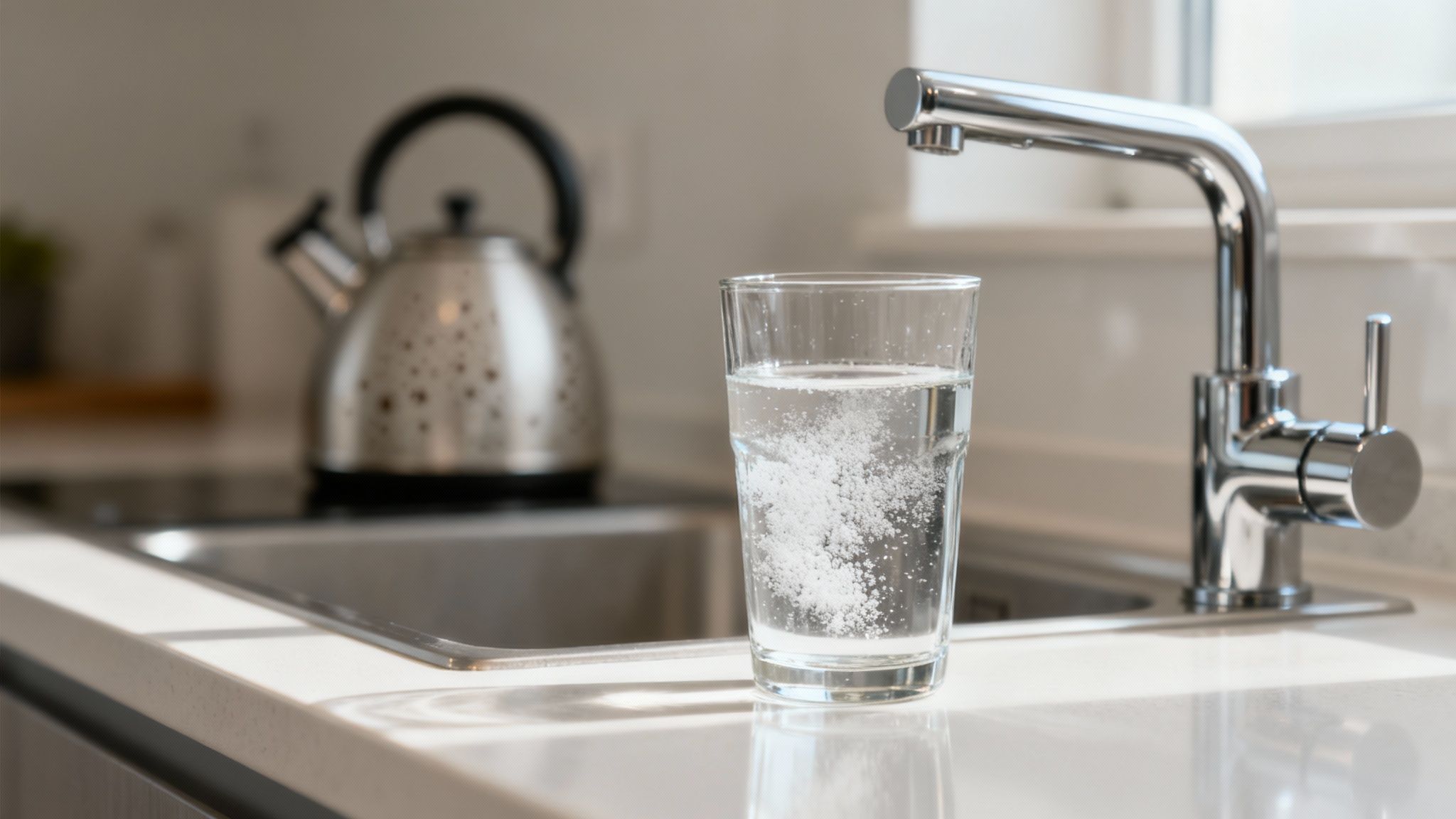
Across Europe, tap water undergoes strict municipal treatment. This process neutralises major threats before the water leaves the plant. But that's not the end of the story. The journey from the treatment facility to your tap can be long, passing through a vast network of pipes, some of which may be decades old. Along the way, water can collect substances that change its taste, smell, and overall quality.
From Plant to Tap: The Final Kilometre
Think of your home’s plumbing as the “final kilometre” of your water’s journey. This is why point-of-use depurazione acqua potabile (drinking water purification) is so valuable. It acts as a gatekeeper, right at your tap or shower, tackling issues that pop up after the city has treated the water.
A good home filter helps reduce common concerns like:
- Aesthetic Issues: Chlorine is essential for disinfection but often leaves an unpleasant taste and smell. Filters are great at capturing it, giving you a fresher result.
- Hard Water Minerals: Limescale, made of calcium and magnesium, is a common issue. It can damage appliances and leave a chalky residue.
- Sediment and Particles: Old pipes can sometimes shed tiny bits of rust or sand. A filter is designed to capture these particles before they end up in your glass.
Italy's Water Infrastructure: A Case Study
Italy's water system is a perfect example. Major reforms, like the Galli Law, led to the construction of over 18,000 wastewater treatment plants. This was a huge step forward.
But even with these massive improvements, regional differences and the age of local pipes still play a big role. Water quality can vary from one town to the next. You can learn more in our detailed guide on the safety of tap water in Italy. A home water filter isn't about distrusting your local supply. It's about taking a final step to ensure the best possible quality for your family.
What's Really in Your Tap Water?
Let's look at what might be in your water. While municipal treatments are effective, water is a universal solvent—it picks up traces of everything it touches. Understanding these substances is the first step toward effective depurazione acqua potabile. It's not about alarmism; it's about making an informed choice.
Aesthetic Issues: The Things You See and Taste
Some common impurities are not necessarily harmful but can worsen your water quality. They affect taste, odour, and appearance, and can even damage appliances.
- Chlorine: This is the main culprit for bad taste. Chlorine is a powerful disinfectant used to kill bacteria in water supplies. While vital for safety, it often leaves a chemical taste and smell.
- Limescale: If you live in a "hard water" area, you know limescale well. It's the chalky white residue left by minerals like calcium and magnesium. It's not a health risk, but it clogs showerheads and damages coffee machines.
- Sediment: This broad category includes tiny solid particles like rust from old pipes, sand, or silt. These particles can make water cloudy and give it a gritty texture.
Invisible Contaminants: Health-Related Concerns
Beyond what you can see or taste, other substances are best avoided. These often come from environmental sources or the plumbing itself. A quality filter provides an important final barrier against them.
Italy, for example, relies on groundwater for about 85% of its public water supply. However, recent monitoring has revealed pollutants in many of these sources, including nitrates from agricultural runoff and industrial chemicals. You can find more details on the Italian water industry su Statista.com. We cover this more in our article about cosa sapere quando si beve l'acqua del rubinetto.
Here are key health-related contaminants home filters are designed to capture:
- Heavy Metals: Lead is the most well-known, often leaching from old pipes or brass fittings. Other metals like mercury or copper can also find their way into the water supply.
- Volatile Organic Compounds (VOCs): This large group of chemicals can come from industrial solvents, pesticides, or fuels. They can seep into groundwater and are hard to remove with standard municipal treatments.
- Microplastics: These microscopic plastic particles (PM2.5) are a growing global concern. They come from the breakdown of larger plastic items and are increasingly found in tap water worldwide.
How Home Water Purification Technology Works
Ever wondered what happens inside a water filter? The basic ideas are straightforward. Effective depurazione acqua potabile uses a team of different technologies, each specialising in tackling specific problems. Think of it as a multi-stage clean-up crew, with sediment filtration and activated carbon as the two main players.
This map gives a great overview of typical culprits in tap water and shows why you need different tools for different jobs.
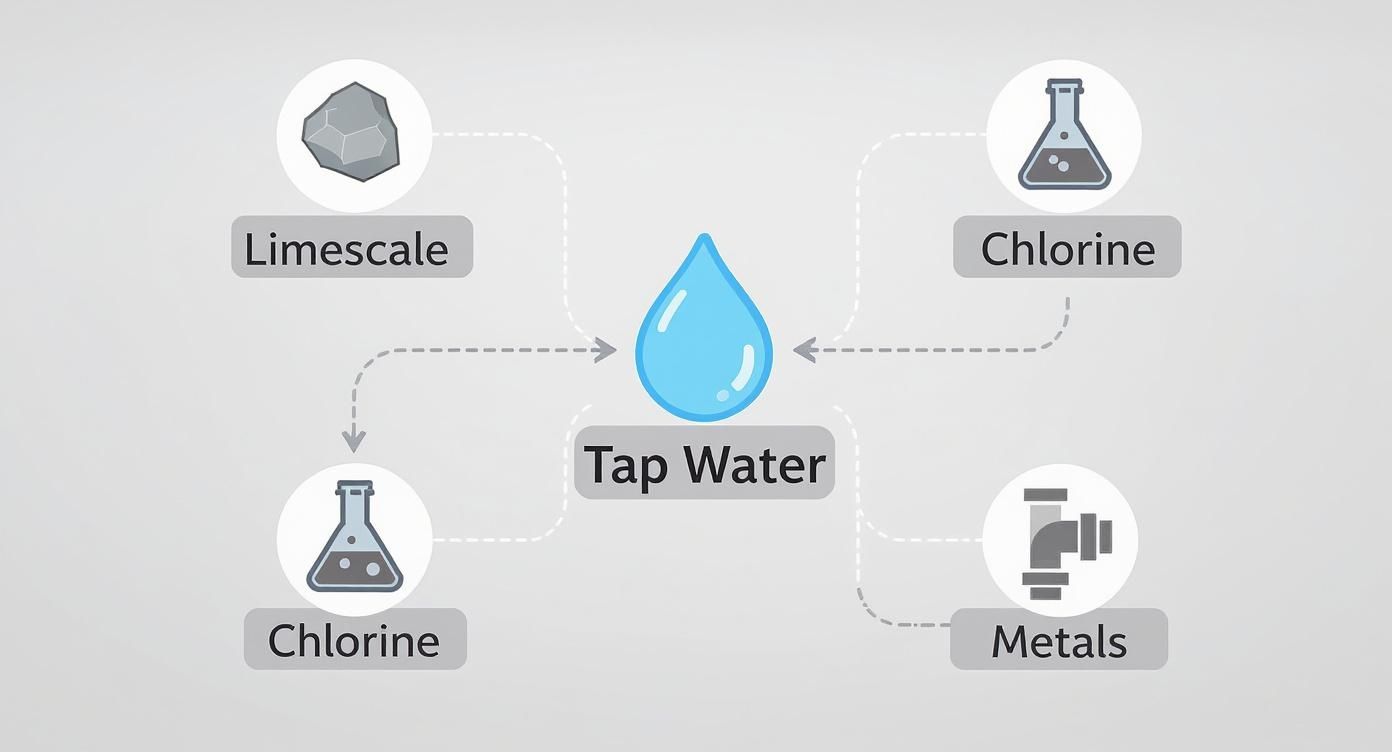
As you can see, the filter that handles limescale isn't the same one that captures chlorine. That's why multi-stage systems are so effective.
The Microscopic Sieve: Sediment Filtration
The sediment filter is the first line of defence. Picture a super-fine sieve. Its only job is to physically block and catch solid stuff floating in your water.
This filter is designed to grab things like:
- Tiny rust flakes from old pipes
- Sand and silt
- Other bits of organic debris
By removing these larger particles first, the sediment filter protects the more sensitive filter stages that follow. This helps them work better and last longer. For a whole-house solution, advanced units like a smart home central water purification pre-filter can handle this for every tap.
The Magnetic Sponge: Activated Carbon
Next is activated carbon, the real workhorse. Think of it as a "magnetic sponge" with a vast, porous surface. A single gram of activated carbon can have a surface area larger than a football pitch. This huge surface area uses a process called adsorption. It actively attracts and grabs onto certain chemical contaminants, pulling them from the water.
Activated carbon is brilliant at capturing chlorine. It's the key to getting rid of that chemical taste and smell. It also excels at trapping a range of Volatile Organic Compounds (VOCs).
Advanced Purification Methods
Some systems use more advanced technologies for an even deeper clean.
- Reverse Osmosis (RO): This technology uses a very fine membrane to force water molecules through, leaving contaminants behind. It's effective at removing dissolved solids, including heavy metals and minerals that cause limescale. However, RO systems are more complex and produce wastewater.
- Ultraviolet (UV) Purification: A UV filter acts as a steriliser. It uses UV light to destroy the DNA of microbes like bacteria and viruses, making them harmless. It's a chemical-free way to ensure water is microbiologically safe.
Understanding Filter Lifespan and Performance
A filter's expiry date is based on how much it has worked. Over time, the activated carbon gets clogged with contaminants. Once full, it can't grab any more impurities. This is why sticking to the replacement schedule is important. A maxed-out filter doesn't just stop cleaning; it can also slow your water's flow rate. Following the manufacturer's guidelines on filter lifespan ensures your system keeps working correctly.
Choosing Your Ideal Home Water Filter System
Picking the right water filter doesn't have to be overwhelming. It comes down to matching your needs, home setup, and budget. This guide will walk you through the most common systems. Whether you rent a small flat or own a house, there’s a solution that works for you. Let's break down the options for your depurazione acqua potabile goals.
Comparing Home Water Filtration Systems
This table gives a quick side-by-side look at the main types of home water filters. We've compared them based on cost, installation ease, and what they are designed to remove. Compare options with our quick table.
| System Type | Best For | Initial Cost (€) | Filter Lifespan | Typical Contaminants Reduced | Installation |
|---|---|---|---|---|---|
| Water Pitchers | Individuals or small households needing basic filtration for drinking water. | €15 - €40 | 1-2 months | Chlorine, some heavy metals, bad taste and odour. | None |
| Tap-Mounted Filters | Renters and anyone wanting a simple, immediate upgrade for drinking and cooking water. | €30 - €60 | 2-3 months | Chlorine, sediment, lead, VOCs, improves taste. | DIY, minutes |
| Under-Sink Filters | Homeowners wanting high-performance, invisible filtration for a dedicated kitchen tap. | €80 - €300+ | 6-12 months | Wide range: chlorine, lead, VOCs, cysts, sediment. | DIY/Professional |
| Shower Filters | Anyone looking to reduce chlorine exposure for healthier skin and hair. | €25 - €50 | 4-6 months | Chlorine, limescale, sediment, heavy metals. | DIY, minutes |
The "best" option depends on your priorities. If you just want better-tasting water for your coffee, a tap-mounted filter is a great, affordable start.
Key Factors to Consider
A few other details will help you find the perfect filter. Thinking through these points will ensure your new system fits into your life without hassle.
Installation and Space
How much work are you prepared to do? Tap-mounted filters and Shower Filters are designed for easy DIY installation in minutes, often without tools.
Under-sink systems offer more powerful filtration but need space under your counter. The big advantage is that they are completely out of sight. If that sounds good, you can explore our guide to choosing the best under-sink water purifier to learn more.
Filter Lifespan and Ongoing Costs
Think about the filter lifespan and the cost of replacement cartridges. A system that costs more upfront but has longer-lasting filters can save you money over time. Check the price and availability of Refills & Cartridges before you buy.
Water Flow Rate
Finally, consider the flow rate, measured in litres per minute (LPM). A good filter should provide a steady stream of clean water without a long wait. When the flow rate drops, it's a sign the filter is clogged and needs changing. Quality modern systems are designed to deliver excellent purification with little impact on water pressure.
Disclaimer: Home filtration complements—not replaces—professional advice. These systems are designed to enhance municipally treated water. If you have serious concerns about contamination, consult a certified water testing professional.
How to Install and Maintain Your Filter
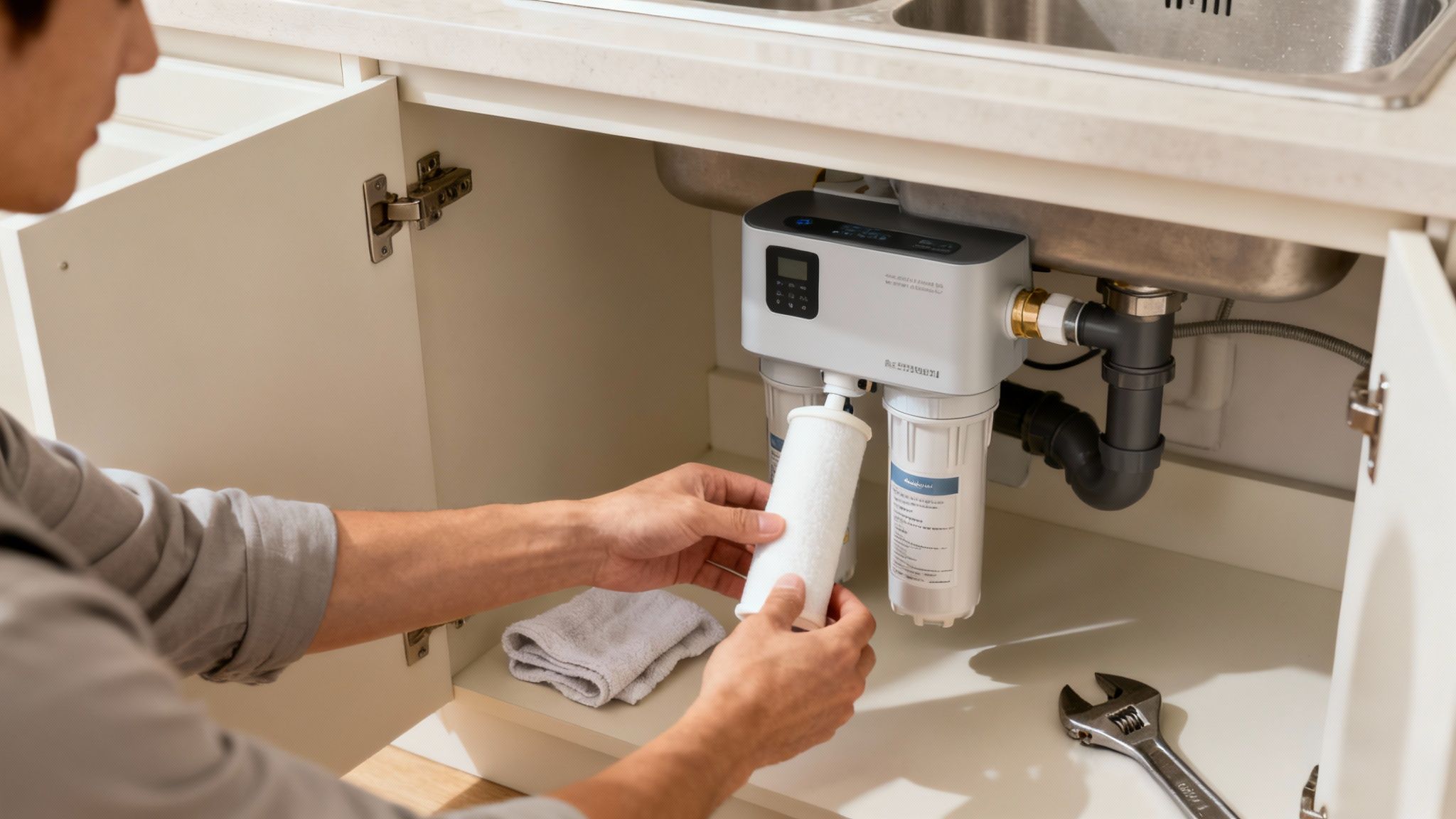
Ready to get started? You don’t need to be a plumber to enjoy the benefits of a home purification system. Most modern filters are designed for simple, tool-free DIY installation. This guide shows you the basic steps for common filter types and provides a simple maintenance checklist for your depurazione acqua potabile system.
Installing a Tap-Mounted Filter
Tap filters are popular because they are incredibly easy to fit. They attach directly to your kitchen tap, giving you purified water with the flip of a switch.
Installation usually involves three simple steps:
- Unscrew the Aerator: Your tap has a small mesh screen at its tip, called an aerator. Simply unscrew it by hand.
- Attach the Correct Adaptor: Your filter kit comes with several adaptors. Find the one that fits your tap's threads and screw it on.
- Click the Filter On: Align the filter unit with the adaptor and push until it clicks securely into place. You're done!
These systems are perfect for renters or anyone seeking a quick, effective solution. For a more detailed walkthrough, you can leggere il nostro articolo completo sull'installazione di un filtro da rubinetto.
Your Simple Maintenance Checklist
Keeping your water filter in top shape is easier than you think. Regular maintenance ensures optimal performance and a steady flow rate.
Use this simple checklist to stay on track:
- Mark Your Calendar: When you install a new filter, mark the replacement date on a calendar or set a phone reminder.
- Check for Leaks: After installation and each cartridge change, check for any drips around the connection points.
- Clean the Housing: Occasionally wipe the filter's exterior with a damp cloth to keep it clean. Avoid harsh chemicals.
- Use Genuine Refills: Always use genuine Ricariche e Cartucce from the manufacturer. They are designed to fit perfectly, ensuring performance.
A clogged filter doesn't just stop working; it can become a collection point for impurities. Following the replacement schedule is key to having consistently clean, safe water.
It’s About More Than Just Drinking Water
Filtering your water is a small change with a big impact. It’s not just about what you remove from your water; it’s about what you add to your life and subtract from the landfill. The most obvious win is ditching single-use plastic. When you have great-tasting water from your tap, the habit of buying bottled water fades away.
Small Changes, Big Everyday Improvements
Once you start using purified water, you notice its effects in unexpected places.
- Better Coffee and Tea: When you filter out chlorine, you unlock the true flavours of your coffee beans or tea leaves.
- A Kinder Shower: Hard water and chlorine can be tough on your body. Installing Shower Filters can leave skin feeling less dry and hair feeling softer.
- A Cleaner Home Environment: Combine water filtration with Air Purifiers to take active control over your home environment and create a healthier space.
Your Choice Has a Ripple Effect
This personal decision also connects to a larger environmental picture. In Italy, while the wastewater treatment sector is set to grow, the country still only treats 56% of its urban wastewater to meet EU standards. By saying no to plastic bottles, you help ease the burden on our collective resources. You can explore more on Italy's water treatment challenges here.
A home water filter is an investment in your health and the planet's. It’s a simple, effective way to improve your daily life while living more sustainably.
FAQs on Depurazione Acqua Potabile
We've covered a lot about depurazione acqua potabile, but you might still have questions. Let's clear up some common ones so you can decide with confidence.
How Can I Find Out What's in My Local Tap Water?
Your best source is the water quality report from your local municipal supplier. For a quick check, home water testing kits are a great option. They can test for things like chlorine, hardness (limescale), pH levels, and lead. Knowing this helps you pick a filter that targets your specific water issues.
Will a Water Filter Lower My Water Pressure?
A good filter is designed to have minimal impact on your flow rate. While any system adds slight resistance, it shouldn't be dramatic. If you notice a big drop in pressure, it's a clear sign your filter is clogged and needs changing. Following the replacement schedule is key to a steady flow.
Is a Whole-House Water Filter a Better Choice?
A whole-house system treats all water entering your home, but it's a major investment requiring professional installation. For most EU households, point-of-use Water Filters are a more practical and affordable solution. An under-sink filter for the kitchen and a separate filter for the shower target the water where quality matters most.
How Hard Is It to Maintain a Water Filter?
Most modern filters are very easy to maintain. The main task is swapping the old filter cartridge for a new one every few months, depending on the model’s filter lifespan. The process usually takes minutes and requires no special tools. The hardest part is remembering to do it! It's also important to use official Refills & Cartridges to ensure a perfect fit and optimal performance.
Ready to enjoy cleaner, better-tasting water? See the Water Filter kit that installs in minutes.
Check sizes & refills — fast EU shipping