

Is Lemon Water Good for You? A Practical Guide to "Acqua e Limone"
Starting your day with a glass of lemon water is a simple, refreshing habit. It's a low-calorie way to make daily hydration more interesting and provides a welcome dose of Vitamin C to support your immune system and skin.
Think of it less as a miracle cure and more as a smart, healthy upgrade from sugary drinks. It's about making a better choice, one glass at a time. This simple change can encourage you to drink more water, which is essential for overall wellness.
Quick Answer: The Real Benefits of Lemon Water
While some claim lemon water leads to rapid weight loss or major detoxification, most of these ideas are not backed by strong science. The biggest, most reliable benefit is simple: it helps you drink more water. Proper hydration is a cornerstone of good health, and adding a natural flavour like lemon can encourage you to meet your daily goals.
The Real Benefits of Lemon Water
Lemon water is not a magic potion, but it does offer real, science-backed advantages. Let's set aside the hype and look at what this simple drink can realistically do for your well-being.
The most immediate benefit is better hydration. Many people struggle to drink enough water, but adding a fresh citrus flavour makes it much more enjoyable. This simple act encourages you to drink more throughout the day—a crucial habit for nearly every function in your body. To learn more, read our guide on daily water consumption.
A Reliable Source of Vitamin C
Lemons are an excellent source of Vitamin C, a powerful antioxidant that plays a crucial role in our health. This essential nutrient helps protect cells from damage caused by free radicals.
It is also vital for producing collagen, the protein that keeps skin elastic and healthy. A single glass of lemon water provides a significant part of your daily requirement, supporting both your immune system and your skin's vitality. To get the most from every glass, it's worth understanding the basics of what makes water good to drink.
Support for Kidney Health
Beyond hydration and vitamins, lemon water has another specific benefit related to kidney health. Lemons contain high levels of citrate, a natural compound that can help prevent certain types of kidney stones from forming.
Citrate works by binding to calcium in the urine, which helps stop calcium oxalate crystals—the most common component of kidney stones—from forming and growing. Research shows that lemons have one of the highest concentrations of citric acid among common citrus fruits, about five times more than oranges. This high concentration is why lemon juice is often suggested as a natural way to support kidney function. You can explore the detailed findings on citric acid concentrations in citrus fruits.
In short: The main proven benefits of lemon water are better hydration, a steady supply of Vitamin C, and potential help in preventing certain kidney stones due to its high citrate content.
By focusing on these tangible advantages, you can appreciate lemon water for what it is: a simple, healthy habit. It's an excellent alternative to sugary drinks and an effective way to help your body function at its best.
Debunking Common Lemon Water Myths
The internet often portrays lemon water as a cure-all, but the reality is that many popular claims are exaggerated. It's time to separate fact from fiction. Let's look at the three most common myths about lemon water.
The Detox Myth
One of the most persistent beliefs is that lemon water "detoxifies" the body. The truth is, our bodies already have an incredibly efficient detoxification system: the liver and kidneys. These organs work non-stop to filter blood and eliminate waste.
No single drink can replace their hard work. While staying hydrated with water (with or without lemon) helps the kidneys function optimally, the lemon itself does not magically "cleanse" your organs. A healthy lifestyle is the only proven way to support your body's natural detox processes. If you are concerned about impurities in your drinking water, our guide on whether tap water is bad for you can offer some clarity.
This infographic summarises the real, proven benefits of lemon water.
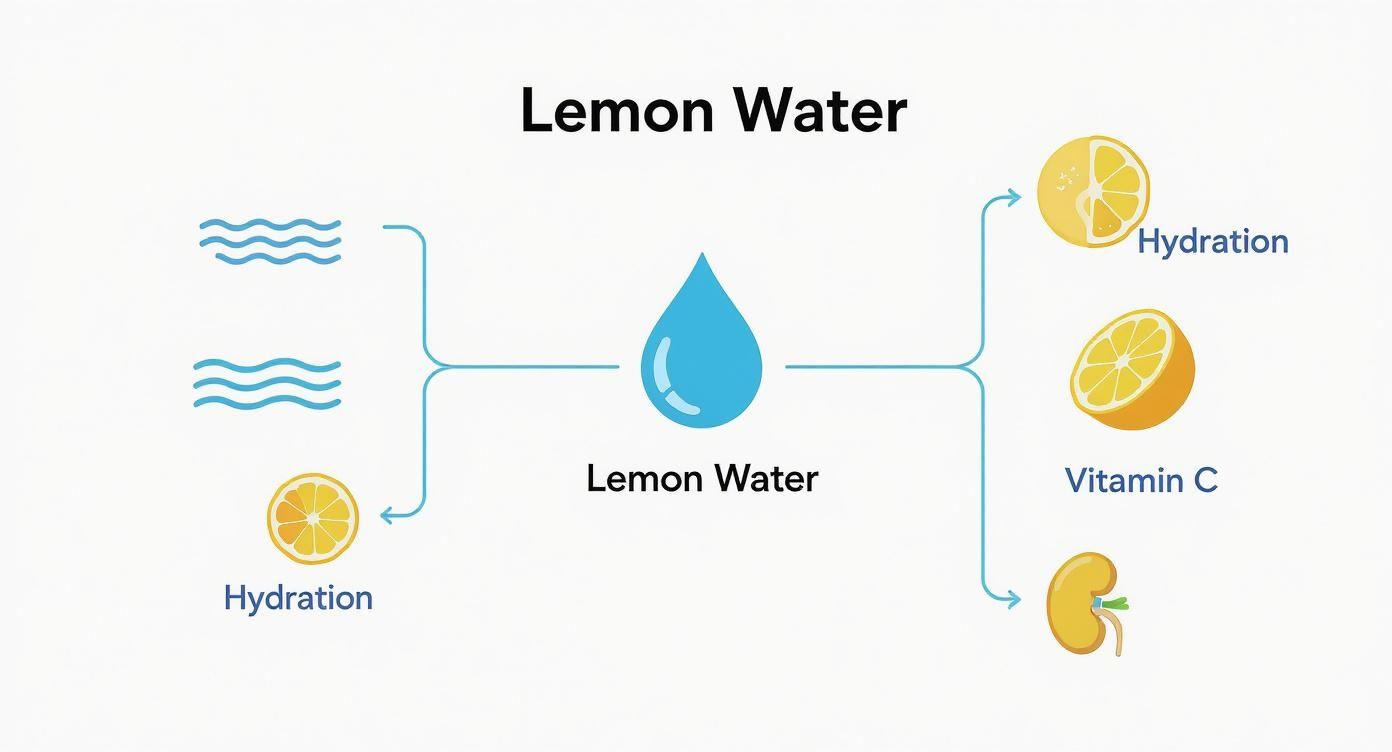
As the diagram shows, the key advantages are improved hydration, a supply of Vitamin C, and support for kidney health—not a miraculous detox.
The Alkalising Theory
Another common idea is that lemon water has an "alkalising" effect on the body, helping to balance pH levels. It's true that lemons, while acidic, produce alkaline by-products when metabolised. However, this has a negligible impact on your body's overall pH.
Our body, particularly the lungs and kidneys, works meticulously to keep blood pH stable and tightly controlled around 7.4. What we eat or drink has very little influence on this balance. Our system is designed to self-regulate, whether you drink lemon water or not.
The Weight Loss Promise
Finally, many believe that lemon water can literally melt away fat. Unfortunately, this is not the case. Lemon water is virtually calorie-free and can be a fantastic replacement for sugary drinks like sodas or fruit juices.
By replacing a high-calorie drink with lemon water, you reduce your overall calorie intake, which does help with weight management. It's a smart choice, not a fat-burning potion.
The drink's main contribution to weight management comes from promoting hydration, which is essential for a healthy metabolism. So, while it's a great tool within a healthy lifestyle, it has no special properties for dissolving fat. Focusing on a balanced diet and regular exercise remains the only reliable path to sustainable weight loss.
How to Avoid Potential Downsides
Lemon water is a great habit for most people, but it is smart to be aware of a couple of potential issues. This way, you can ensure you only get the benefits. The biggest thing to watch is your dental health.
Lemons are acidic, containing citric acid. Over time, frequent exposure to this acid can wear away at your tooth enamel. Another point to consider is how your stomach feels. If you experience heartburn or acid reflux, the acidity might cause discomfort. Knowing this lets you enjoy your lemon water without worry.
Protecting Your Dental Health
The key to keeping your smile safe is not to give up lemon water, but to be clever about how you drink it. You want to reduce the amount of direct contact the acid has with your teeth. A few small changes to your routine can make a big difference.
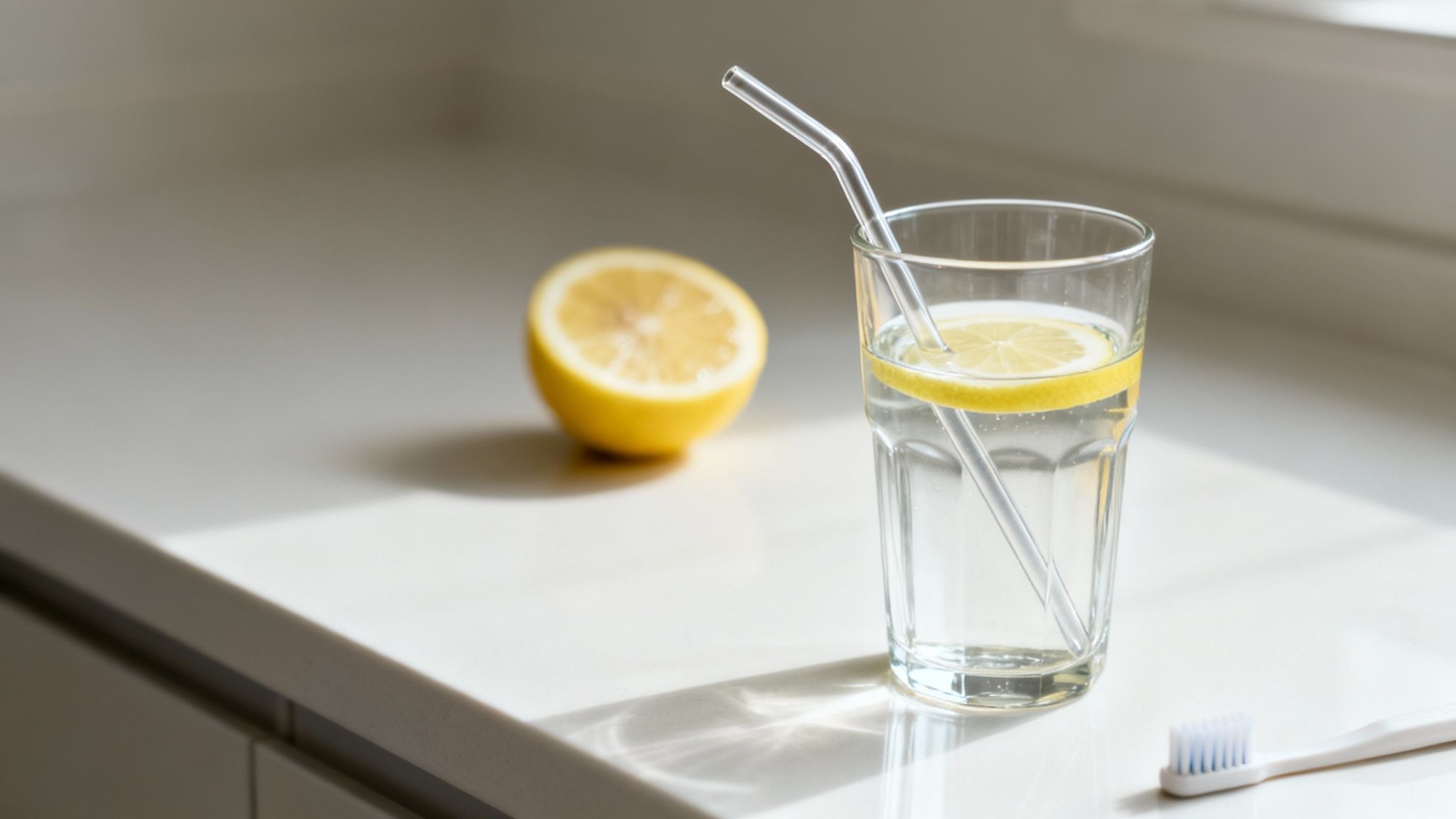
Think of it this way: you wouldn't put a hot mug directly on a wooden table. You'd use a coaster. Similarly, you can create a barrier for your teeth or take simple steps to wash away the acid's effects after you finish. It is all about being proactive.
Here is a checklist of simple habits to build into your routine:
- Dilute, dilute, dilute. Always mix the juice with plenty of water. The juice from half a lemon in a 250–350 ml glass is a good starting point.
- Use a straw. A reusable straw helps the liquid bypass your teeth, sending it straight to the back of your mouth.
- Rinse right away. After you finish your drink, swish your mouth with plain water.
- Wait to brush. This is important. Wait at least 30–60 minutes before brushing your teeth. Your enamel is slightly soft after acid exposure, and brushing too soon can cause damage.
- Go fresh. Stick to freshly squeezed lemons rather than commercial concentrates, which can have added sugars and preservatives.
Managing Digestive Sensitivity
If you have a sensitive stomach or are prone to acid reflux, you don't have to avoid lemon water. It is all about listening to your body and starting small.
Begin with just a tiny squeeze—perhaps a quarter of a lemon in a large glass of water. See how you feel. If everything is fine, you can slowly increase the amount over time.
Having it with food, rather than on an empty stomach, can also make a huge difference. The food acts as a buffer for the acid, making it gentler on your system. For the best-tasting water base, you might want to check out our guide on water pitcher filters. Moderation and mindfulness go a long way.
Making the Perfect Glass of Lemon Water
The secret to a great glass of lemon water isn't just the lemon—it’s the water. Using clean, filtered water makes all the difference, removing things like chlorine that can interfere with the fresh, zesty taste. Nailing the perfect glass is easy, but a few small tweaks can turn a good habit into a truly great one.
Figuring out how you like it best comes down to personal preference. There is no single "right" way to do it, but knowing your options helps you create a drink you'll look forward to every day.
Finding Your Perfect Ratio and Temperature
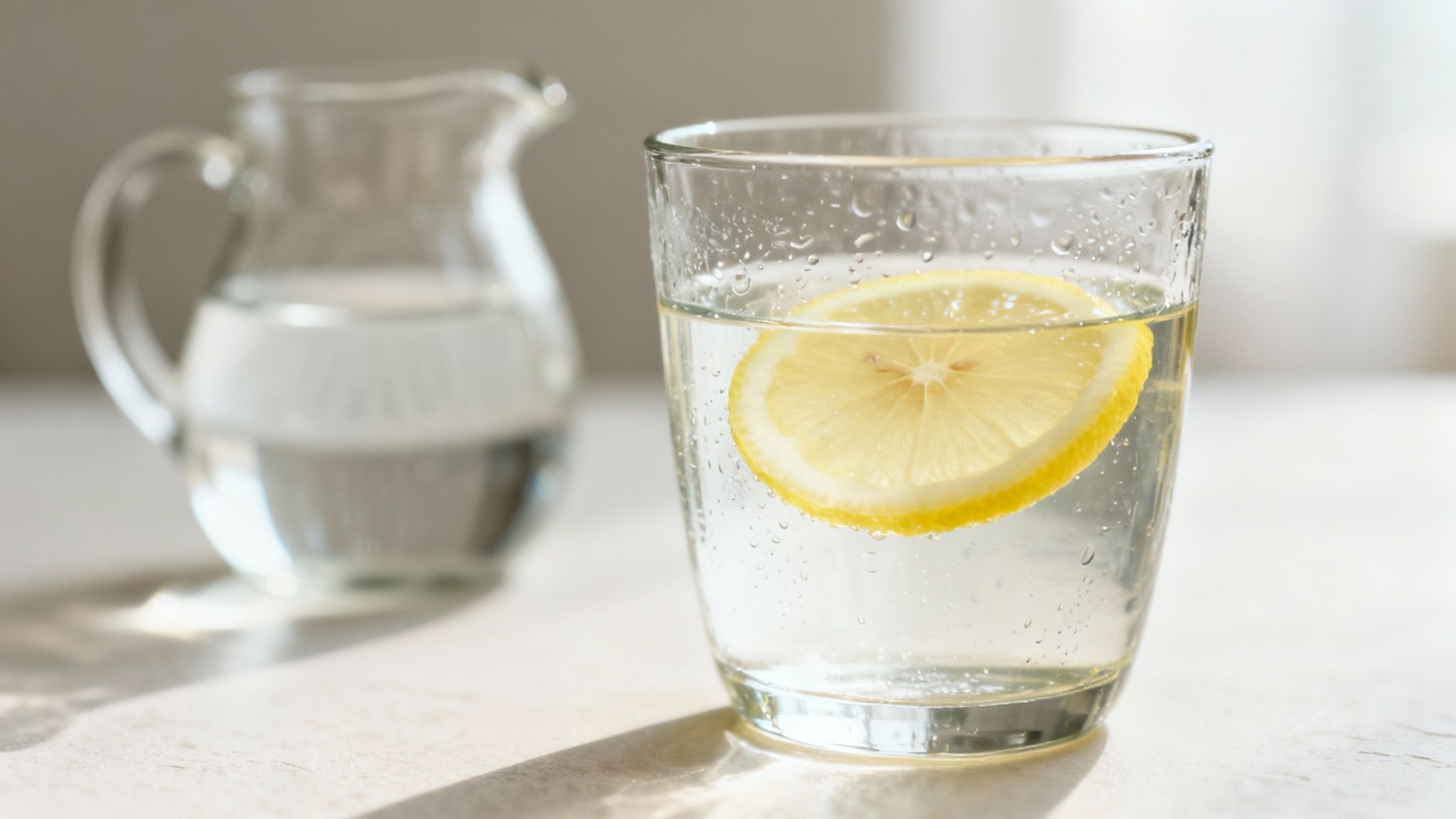
The ideal mix of lemon to water is completely up to you. A good place to start is with the juice of half a lemon in about 250–350 ml of water. If that is too strong, just dilute it with more water. The goal is a pleasant flavour, not something that makes you pucker.
When it comes to temperature, the warm versus cold debate is mostly a matter of personal comfort. Some people find warm water more soothing on the stomach first thing in the morning. Others prefer the refreshing crispness of a cold glass. There is no solid science saying one is significantly better than the other, so go with what you enjoy.
When Is the Best Time to Drink It?
Many people drink lemon water right after they wake up on an empty stomach to kick-start their hydration and digestion. But honestly, it is beneficial anytime. A glass before a meal might help you feel a bit fuller, and an afternoon glass can be a fantastic, healthy swap for a sugary drink.
What truly matters is consistency. The best time to drink lemon water is the time you’ll remember to do it, making it a reliable part of your daily routine.
A Sustainable and Mindful Choice
Choosing filtered tap water instead of bottled water is also a smart move for the planet. By using a good home filter, you're not only getting better-tasting water but also embracing a more mindful way of consuming it. This choice helps reduce single-use plastic and makes the most of our shared water resources.
To get the most out of your daily glass, you can even find expert tips on making your water healthier. Simple choices often have the biggest impact.
Why Filtered Water Is Your Best Foundation
The quality of any drink comes down to its main ingredient. For lemon water, that is the water itself. Switching to filtered water is a simple upgrade that can elevate the experience, ensuring the fresh flavour of the lemon stands out.
Tap water across Europe is generally safe to drink. The issue is that it often contains things that affect its taste and smell. The most common culprits are chlorine, added for disinfection, and minerals that cause limescale. These can leave a faint chemical or chalky aftertaste that overpowers the delicate notes of the lemon.

Filtration Options at a Glance
Choosing the right filter depends on your needs. Here is a quick comparison of common types.
| Filter Type | How It Works | Best For | Typical Lifespan |
|---|---|---|---|
| Pitcher Filter | Gravity-fed system with an activated carbon and ion-exchange resin cartridge. | Individuals or small households wanting to improve taste and reduce limescale. | 1–2 months |
| Tap-Mounted Filter | Attaches directly to your kitchen tap for instant filtered water. | Convenience and a higher flow rate than pitchers. Easy DIY installation. | 2–3 months |
| Under-Sink Filter | Installed under the sink, connected directly to the cold water line. | High-capacity filtration for the whole family without countertop clutter. | 6–12 months |
| Whole-House Filter | Installed at the main water entry point to filter water for the entire home. | Comprehensive solution for addressing widespread water quality issues. | 1–5 years |
The Science of Cleaner Water
A high-quality water filter is designed to capture unwanted impurities, leaving you with a clean, neutral base. Most modern filters use activated carbon, a porous material that traps chlorine and other organic compounds responsible for unpleasant tastes and odours.
Using filtered water is not just about better taste; it’s about confidence in every glass. This small change ensures that your answer to "fa bene acqua e limone" is always a firm "yes," because you are starting with the best possible foundation. The goal is not to create sterile, lab-grade liquid—it is important to understand the distinction between ultrapure water and drinking water—but rather to reduce common contaminants that affect quality. To learn more, check out our guide on purifying drinking water.
Your Lemon Water Questions Answered
We’ve covered the science, myths, and best practices for enjoying lemon water. Now, let's answer the most common questions. Here are clear, simple answers to help you make this habit your own.
Can I Drink Lemon Water Every Day?
Yes. For most people, a daily glass of lemon water is a perfectly fine and beneficial habit. The key, as with most things, is moderation. A good rule of thumb is to stick to the juice of half a lemon to one whole lemon per day, well-diluted in water.
Remember to protect your teeth. The citric acid can be harsh on enamel, so sipping through a straw and rinsing your mouth with plain water afterwards is a smart practice. If you have a sensitive stomach, start with a smaller amount of lemon and see how your body responds.
Does the Temperature of the Water Matter?
This really comes down to personal preference. There is no strong scientific proof that one temperature is better than another.
Many people prefer warm lemon water in the morning, finding it a comforting way to wake up the digestive system. A cold glass can be incredibly refreshing. Room temperature water is just as good and is often the easiest on your system. Go with what feels best for you.
Will Lemon Water Help Me Lose Weight?
Lemon water is not a magic weight-loss solution. However, it can be a helpful tool in your health journey. Its biggest contribution is boosting hydration, which is essential for a healthy, functioning metabolism.
When you swap a high-calorie drink like a sugary soda for a glass of lemon water, you cut calories. That simple, consistent change can make a real difference in managing your weight over time.
Can I Use Bottled Lemon Juice?
You can, but fresh is always better. When you squeeze a lemon yourself, you get the most potent dose of its nutrients, especially the delicate vitamin C.
Bottled lemon juices are often pasteurised. This heating process can degrade some of the beneficial vitamins. Many also contain preservatives or added sugars. While bottled juice is convenient, you get far more benefits from a fresh lemon.
For more deep dives into health and wellness, explore our Knowledge Hub.
Disclaimer: Home filtration complements—not replaces—professional advice. The information provided in this article is for educational purposes only and is not intended as a substitute for professional medical advice, diagnosis, or treatment.