

Filtri per Caraffe Acqua: Your Practical Guide to Better Water
Ever notice a slight chemical taste in your tap water or find limescale residue in your kettle? You're not alone. Many households deal with water that, while safe, could taste and smell better. This is where filtri per caraffe acqua (water pitcher filters) offer a simple and effective solution, designed to provide cleaner, fresher water with minimal fuss.
Quick Answer: How Do Water Pitcher Filters Work?
Water pitcher filters use a replaceable cartridge to improve tap water quality. As water passes through, activated carbon helps reduce chlorine, which affects taste and smell. Ion-exchange resins are designed to capture minerals that cause limescale and can reduce certain heavy metals. This simple process delivers better-tasting water for drinking and cooking.
This guide will walk you through everything you need to know about pitcher filters. We'll explore how they work to help reduce common substances like chlorine and limescale, making your water more enjoyable for drinking, coffee, or just staying hydrated.
Home filtration complements—not replaces—professional advice. For specific water quality concerns, always consult a certified expert.
How Do filtri per caraffe acqua Actually Work?
Ever wondered what’s happening inside that small filter cartridge? It’s not magic, but it is clever science. Think of the filter as a tiny maze designed to catch unwanted substances floating in your tap water.
This diagram gives you a great visual breakdown of how these pitchers work, from the benefits they offer to the common contaminants they’re designed to tackle.
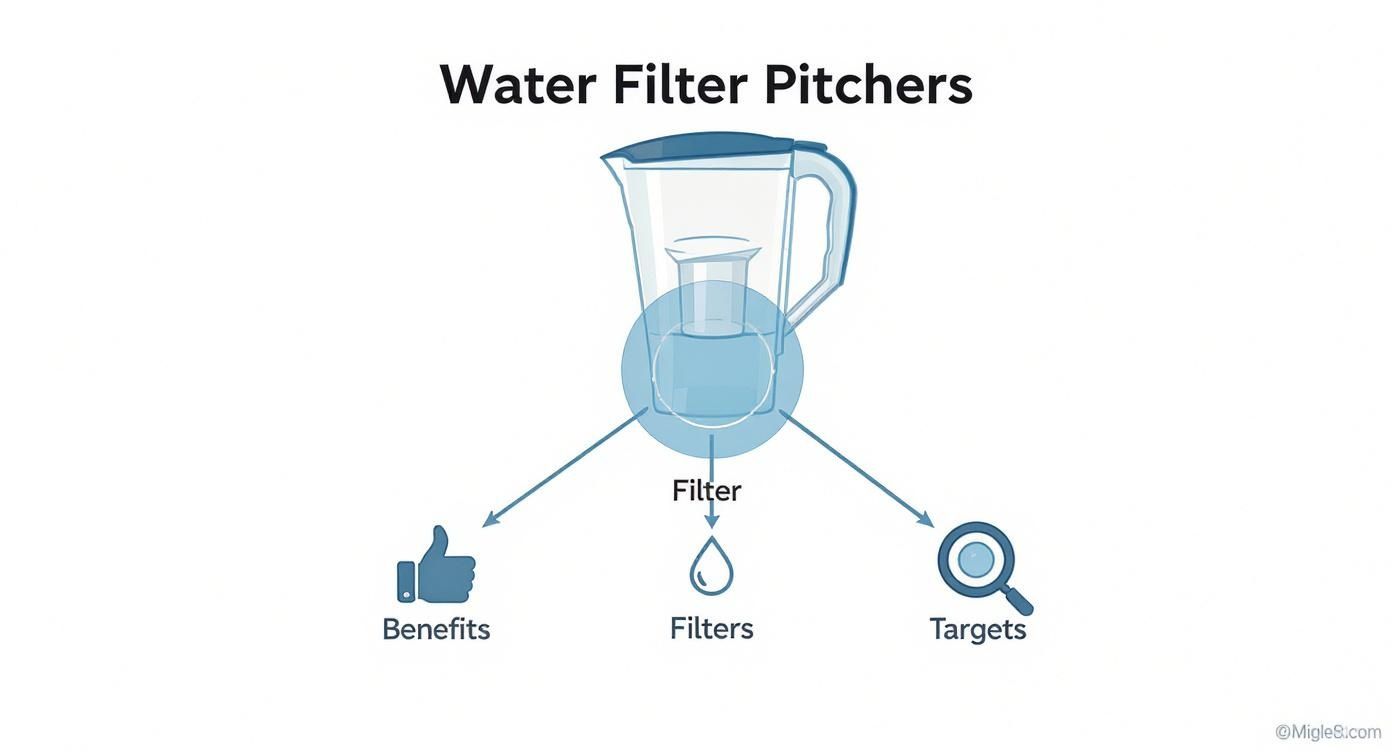
As you can see, it’s all about using different layers of materials to improve the water’s quality. Each layer has a specific job, targeting things that affect the taste, smell, and clarity of your drinking water. This multi-stage process makes these pitchers so handy.
The Power of Activated Carbon
The hero inside most of these filters is activated carbon. Imagine it as a super-powered sponge. It's incredibly porous, giving it a massive surface area to attract and trap impurities through a process called adsorption. In fact, many popular pitcher filters rely on materials like GAC activated carbon filter cartridges to get the job done.
This carbon is especially good at grabbing the things that make your water taste and smell a bit off.
- Chlorine: Activated carbon is fantastic at snagging chlorine, which is often the culprit behind that "tap water" chemical taste.
- Volatile Organic Compounds (VOCs): It also helps reduce certain pesticides and industrial chemicals that might find their way into the water supply.
A Quick Look at Common Filter Technologies
To make it clearer, here’s a simple table comparing the different materials you'll find in pitcher filters and what they do.
Common Filtration Technologies in Pitcher Filters
| Filtration Technology | Primary Target | How It Works |
|---|---|---|
| Activated Carbon | Chlorine, VOCs, bad taste/odour | Adsorption: Impurities stick to the carbon's huge, porous surface area. |
| Ion-Exchange Resins | Limescale (calcium, magnesium), heavy metals | Swaps "hard" mineral ions for "soft" sodium ions, effectively softening the water. |
| Micro-Filtration | Sediments, microplastics | A physical barrier with tiny pores that blocks larger particles from passing through. |
Each technology plays a vital role. The best filters often combine them to give you a more comprehensive clean.
Tackling Limescale and Heavy Metals
While activated carbon works on the taste, another component tackles water hardness: ion-exchange resins. These are tiny, bead-like spheres that act like magnets for the minerals that create limescale in your kettle.
These clever little beads work by swapping out the "hard" mineral ions (like calcium and magnesium) for "soft" ones (usually sodium). This not only helps protect your coffee machine from chalky build-up but can also reduce certain heavy metals like lead and copper, which sometimes leach from older pipes. To get a broader view of water purification, check out our guide on broader methods to purify tap water.
Finding the Right Balance: Speed vs. Purity
The final piece of the puzzle is something you’ve probably noticed: the flow rate. The filter has to be designed just right—letting water pass through quickly enough so you’re not waiting forever, but slowly enough for the filter materials to do their job.
If water rushes through too fast, it won't have enough contact time with the carbon and resins to get properly filtered. It's this careful balance that ensures you get consistently fresh, clean water every time you pour a glass.
Choosing the Right Water Pitcher Filter
With so many options, choosing the best filtri per caraffe acqua can seem daunting. It’s simple if you focus on a few key factors to match a pitcher to your lifestyle. The goal is to align the product's features with your daily habits.
First, think about the pitcher's size and material. A larger one is perfect for a family, while a smaller one suits a single person or a couple. You’ll find models in durable, BPA-free plastic or elegant glass, letting you choose between practicality and aesthetics.
Key Factors for Your Choice
Making a good choice means understanding filter compatibility, checking certifications, and thinking about daily use. These elements ensure your filter works effectively and conveniently.
Across Europe, there is a clear trend towards more advanced, user-friendly filtration. The European water filter market, valued at €5.28 billion, is seeing a surge in "smart" pitchers that digitally track filter lifespan. Italy alone accounts for nearly 11% of the continent's pitcher filter sales, driven by demand for sustainable alternatives to plastic bottles. You can read more about this trend in recent analyses of the booming mercato globale in forte crescita delle caraffe filtranti.
Understanding Filter Compatibility and Lifespan
Not all filters fit all pitchers, so compatibility is key. Always check that replacement cartridges match your pitcher model. Another vital factor is the filter lifespan, usually measured in litres filtered or months (e.g., 150 litres or 2 months).
If your household drinks a lot of water, you’ll need to change cartridges more often. Luckily, many modern pitchers have built-in indicators—from simple stickers to digital timers—that tell you when it’s time for a change. For more detailed advice, you can read our complete guide on come scegliere la caraffa filtrante giusta.
Matching the filter lifespan to your family's water consumption ensures great-tasting water and effective filtration. An overused filter can no longer adequately reduce contaminants.
Why Certifications Matter
Certifications from independent bodies are a mark of quality. They confirm that a filter does what it claims, such as reducing specific contaminants like chlorine or lead. When comparing different filtri per caraffe acqua, look for certifications from recognised organisations.
These credentials are a seal of quality and safety. They show the product has passed rigorous tests to meet high standards, so you can drink with peace of mind.
Simple Maintenance and Cartridge Replacement
Keeping your water filter pitcher working perfectly is easy. It just comes down to regular cleaning and swapping the filter cartridge on schedule. This simple routine ensures great-tasting water and helps prevent bacteria growth.
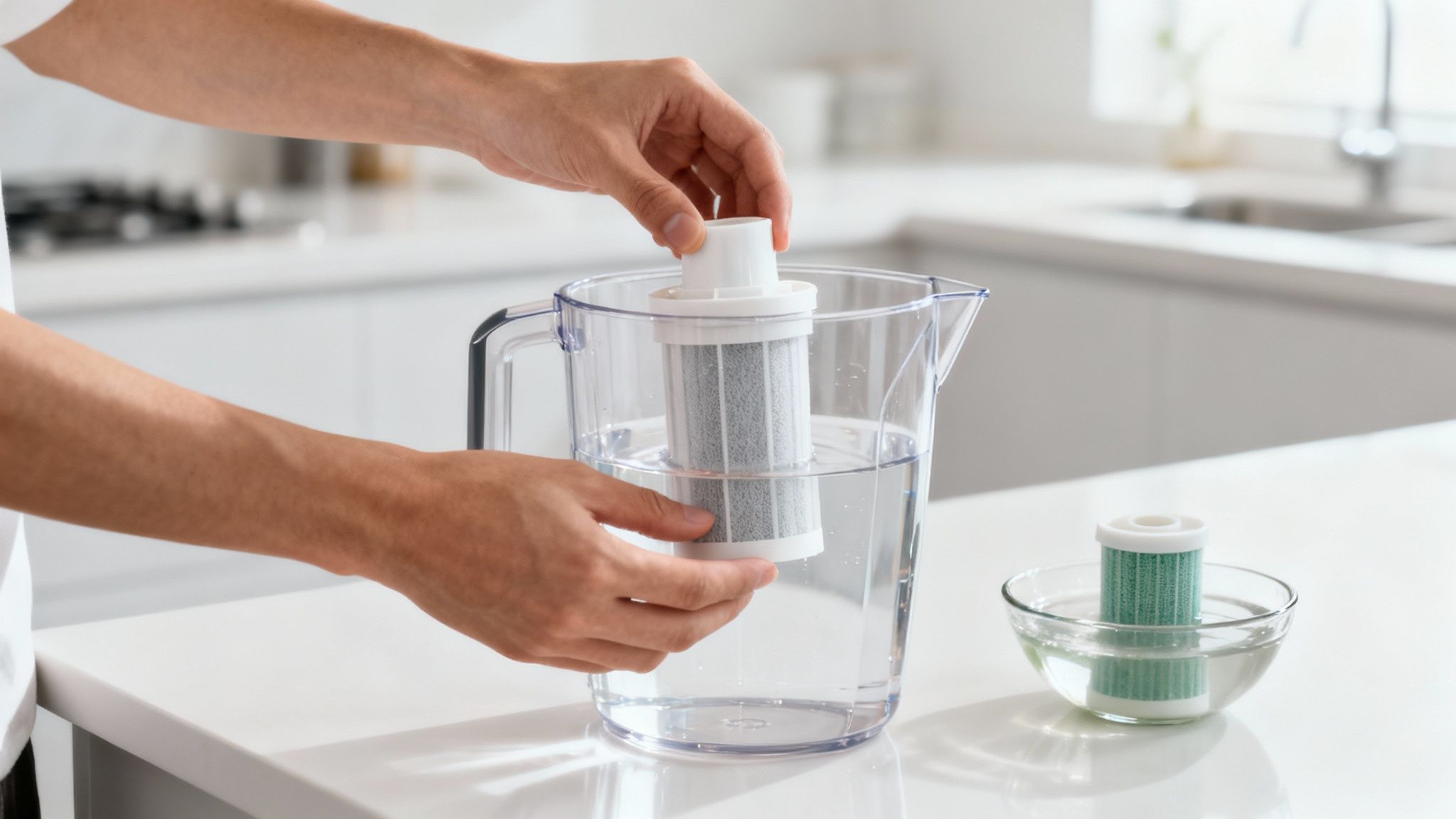
Changing your filtri per caraffe acqua on time is essential. The activated carbon inside acts like a sponge for impurities like chlorine. Eventually, that sponge gets full and can't absorb any more. An old filter isn't doing its job, and you'll notice the difference in your water.
When to Replace Your Filter
Most brands recommend a filter lifespan, usually in litres or months. A typical filter is good for about 150 litres, which is roughly one or two months for an average family. If your tap water is particularly hard with limescale, you might need to change the filter more often.
Many modern pitchers have a built-in reminder, from a sticker to a digital timer, that signals when it’s time for a new filter. If yours doesn't, just set a reminder in your calendar. If you're curious about how these compare to other systems, our guide on tap filters offers a useful comparison.
Your Cartridge Replacement Checklist
Swapping out the old cartridge takes just a couple of minutes. Follow these simple steps to get your pitcher ready for action.
- Step 1: Wash Your Hands: Start with clean hands to avoid contaminating the new filter.
- Step 2: Soak the New Cartridge: Place the new filter in a bowl of cold water for 10–15 minutes. This activates the filtration materials and removes any loose carbon dust.
- Step 3: Discard the Old Filter: Remove the old cartridge. Check if the manufacturer has a recycling programme.
- Step 4: Insert the New Filter: Place the soaked cartridge into the pitcher’s reservoir. Press gently to ensure a snug seal.
- Step 5: Flush the System: Fill the pitcher and pour away the first one or two batches of filtered water. This flushes out any remaining carbon dust.
- Step 6: Reset the Indicator: If your pitcher has a reminder, reset it to start the countdown.
When you're changing the filter, it's a perfect time to wash the pitcher, lid, and reservoir with mild, soapy water. Find what you need on our Refills & Cartridges page. Check sizes & refills — fast EU shipping.
A Smart Move for Your Wallet and the Planet
Switching to a water filter pitcher isn't just about better-tasting water. It's a smart decision that saves you money and reduces your environmental footprint. It’s a simple kitchen swap that ends the cycle of single-use plastic bottles.
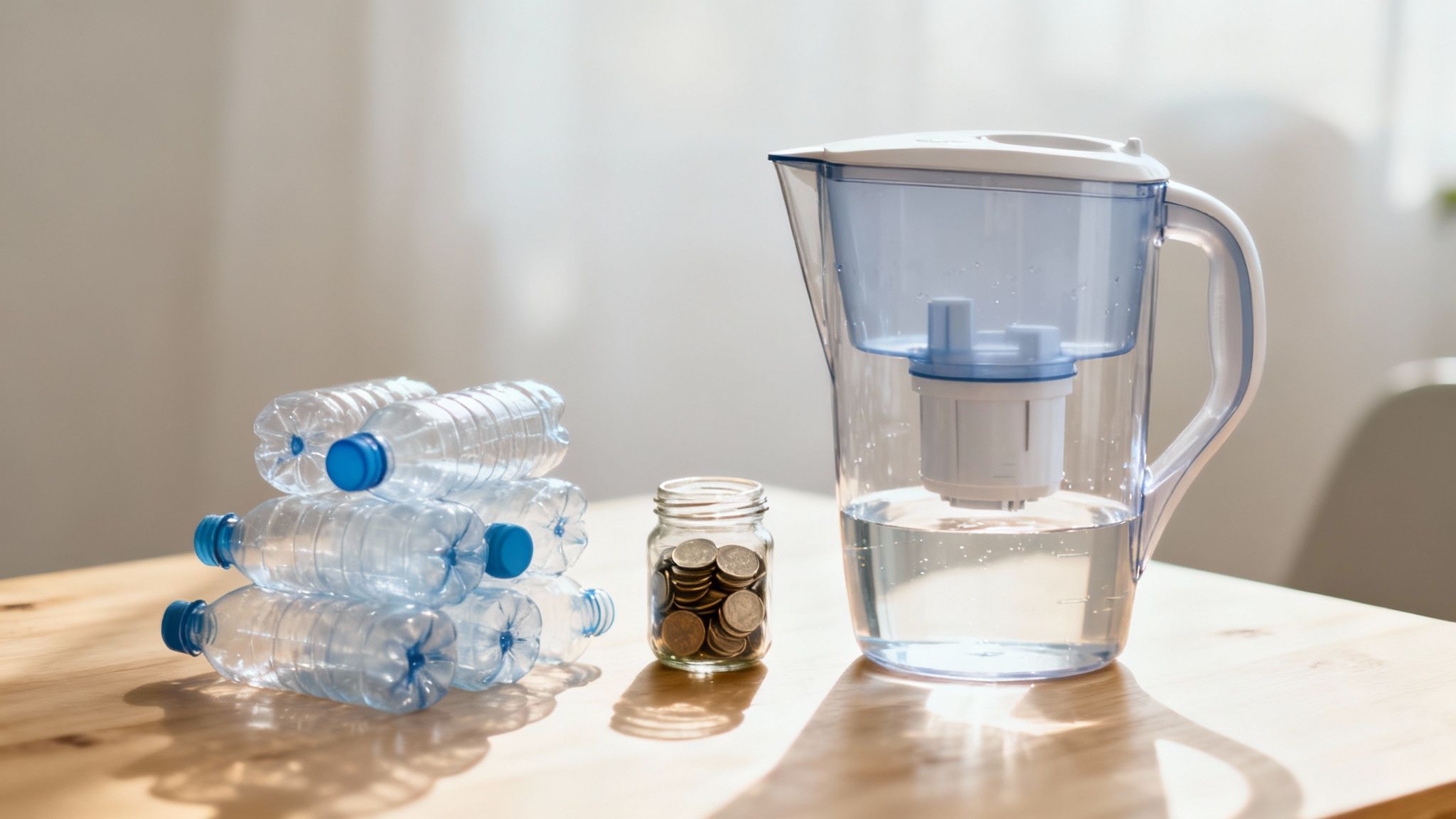
A single filter cartridge can purify hundreds of litres of tap water. That’s hundreds of plastic bottles that won't end up in landfills or oceans. This one change directly reduces your household's plastic waste and carbon footprint.
Let’s Talk Real Savings
The financial argument is strong. The long-term savings compared to buying bottled water are significant. Let's break down the numbers for a typical household.
A Quick Cost Breakdown
- Bottled Water Habit: A family can easily spend €300 to €500 per year on bottled water.
- Filter Pitcher Alternative: The annual cost for a pitcher and its replacement filtri per caraffe acqua is usually under €70.
- Your Annual Savings: That means you could save over €200 every year just by filtering your tap water.
You're not just saving money; you're also skipping heavy trips from the supermarket loaded with plastic bottles. If you're curious about other ways to get filtered water, our guide on tap-mounted purifiers is a great next read.
What About the Used Filters?
What happens to spent filter cartridges? Many leading brands now offer recycling programmes for their used cartridges, making responsible disposal easier.
These programmes let you collect old filters and drop them off or mail them back. The plastic casing and internal materials, like activated carbon, are then separated and repurposed. It’s a great way to close the waste loop and support a more sustainable lifestyle.
Troubleshooting Common Filter Pitcher Problems
Even the best filtri per caraffe acqua can have minor issues. Don't worry—most problems are simple to fix with a quick adjustment. Let's walk through the common culprits.
Often, the first hint of a problem is a slow filtration rate or a change in taste. These are just clues that your filter needs attention.
Why is My Filter So Slow?
Is your pitcher filtering at a snail's pace? The most likely reason is an air pocket trapped inside the filter cartridge, which blocks the water. Another common cause is hard water; over time, limescale deposits can clog the filter’s tiny pores.
Here’s a quick fix:
- Remove the filter cartridge from the reservoir.
- Tap it a few times against the side of the sink to dislodge trapped air bubbles.
- Soak the filter in cold water for about 10-15 minutes before putting it back in.
This should get the water flowing freely again.
My Water Tastes a Bit Off
If you've just put in a new filter and notice a slightly strange taste, it's almost always harmless carbon dust. Just filter and discard the first one or two pitchers of water. This flushes the system and gets rid of any residue.
If that familiar chlorine taste returns, it’s a sure sign your filter has reached the end of its filter lifespan. The activated carbon is saturated and can't absorb any more impurities. Time for a new cartridge.
Tiny black specks in your water are usually just harmless particles of activated carbon. A quick flush of the filter will clear them out.
What if the Indicator Stops Working?
Sometimes, the electronic indicator can malfunction. This is an annoyance, but it has no effect on how well the filter works.
The easiest workaround is to go manual. Just use a marker or set a calendar reminder for two months from the day you install the new filter. It’s a foolproof way to stay on schedule.
If you run into a problem that these tips can't solve, our clear Refund Policy means you can buy with peace of mind.
Frequently Asked Questions
Here are some common questions we hear about filtri per caraffe acqua. This quick guide should help you get the most out of your pitcher.
Can I put hot water in my filter pitcher?
No. You should only fill your pitcher with cold or room-temperature water. Hot water can damage the filtering materials inside the cartridge, like the activated carbon and ion-exchange resin. It would make the filter ineffective.
If you need hot water, filter the water cold first, then heat it in a kettle.
How do I know when to change the filter if there’s no indicator?
If your pitcher doesn't have a reminder, just mark your calendar. Most filters are good for about 150 litres, which usually means a new filter every two months for an average family.
You can also trust your senses. If the water's taste changes or the flow rate slows down significantly, it's time for a replacement. You can find plenty of options in our Water Filters collection.
Do these filters remove bacteria and viruses?
Standard pitcher filters are not designed to remove microbiological contaminants like bacteria or viruses. Their job is to tackle substances that affect taste and smell, such as chlorine, limescale, and certain heavy metals.
These pitchers are meant to be used with tap water that is already microbiologically safe. If you have concerns about bacteria, you would need a more advanced water purification system.
Is it okay to keep the pitcher in the fridge?
Yes, absolutely. Storing your pitcher in the fridge keeps your water cold and refreshing. It also helps slow any potential bacteria growth, so the water stays fresher for longer.
As a general rule, it's best to drink filtered water within a day or two to ensure every glass is as clean and pure as possible.
At Modern Essentials, our goal is simple: make better water accessible to everyone. Our filters are designed to give you cleaner, fantastic-tasting water straight from your tap, turning everyday hydration into a pleasure.
Ready to taste the difference? See the Water Filters kit that installs in minutes.