

Dyson HEPA Filter: A Practical Guide for Cleaner Air
A filtro hepa dyson, or Dyson HEPA filter, is a high-efficiency filter designed to capture 99.97% of microscopic airborne particles like dust, pollen, and allergens down to 0.3 microns. Think of it as a very fine net that cleans the air passing through your Dyson purifier, helping to create a healthier home environment.
Quick Answer: A genuine Dyson HEPA filter is designed to capture tiny pollutants like dust (PM2.5), pollen, and pet dander. It often works with an activated carbon layer to help reduce gases and odours. For best results, replace the filter approximately every 12 months, or when your machine indicates it's time.
How a Dyson HEPA Filter Cleans Your Home's Air
Have you ever wondered what happens inside your air purifier? The core technology is quite straightforward. A Dyson HEPA filter is engineered to tackle poor indoor air quality. In many busy European cities, the air inside can be worse than the air outside.
The filter works by forcing air through a complex web of fibres. Large particles like dust and pet hair get trapped easily. But microscopic pollutants are also captured through a mix of physical processes. It's a key mechanism for stopping common irritants you can't even see.
Key Pollutants a HEPA Filter is Designed to Capture
A standard HEPA filter is excellent at capturing particulate matter. These are tiny solid or liquid particles suspended in the air. When combined with other materials, its effectiveness expands.
- PM2.5: These are fine inhalable particles with diameters of 2.5 micrometres or less. They come from sources like vehicle exhaust, cooking fumes, and smoke.
- Allergens: This category includes common triggers like pollen, dust mite debris, and mould spores, which can affect wellbeing.
- Volatile Organic Compounds (VOCs): Many Dyson filters pair the HEPA layer with activated carbon. This porous material is designed to absorb gases, odours, and VOCs released from cleaning products, paints, and furniture.
This image shows how a Dyson HEPA filter helps trap, capture, and reduce different types of pollutants.
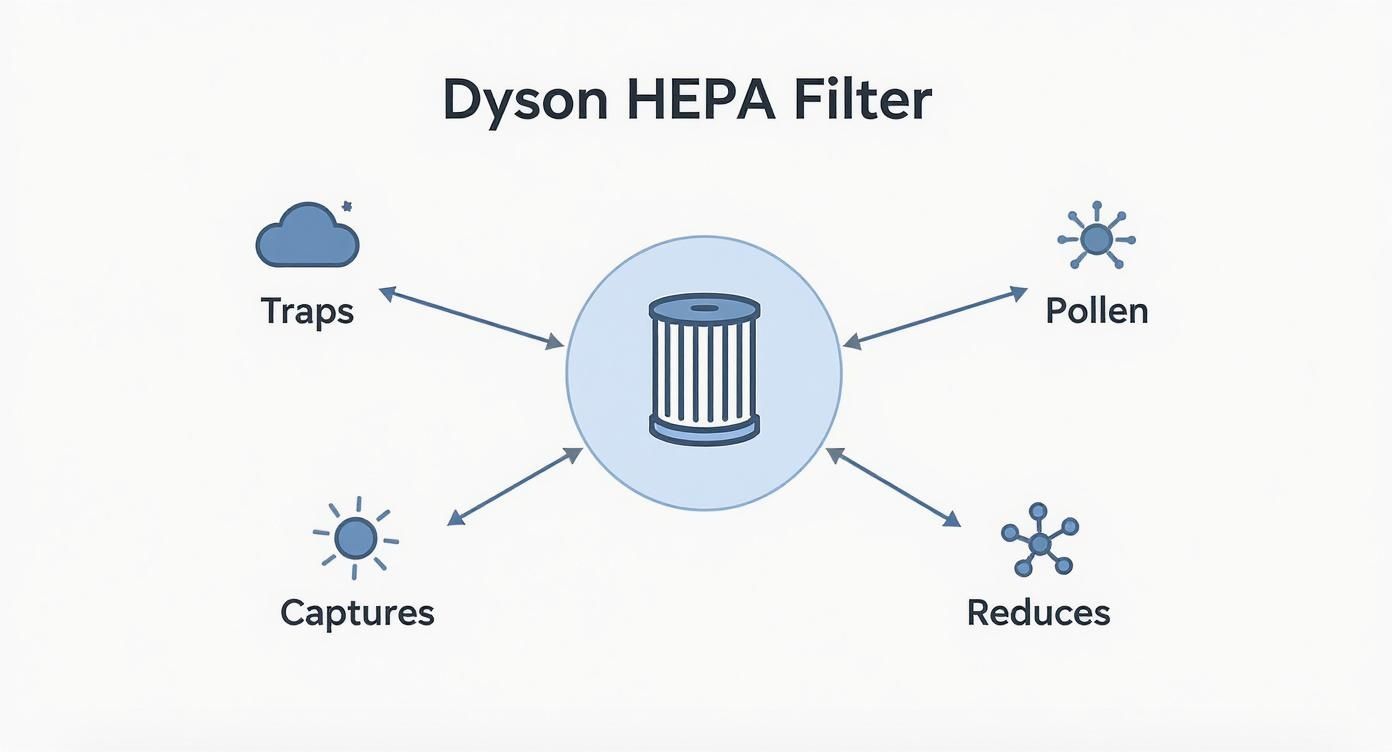
The diagram illustrates the filter's role in improving air quality by physically blocking particles and absorbing gases.
The Science Behind HEPA Filtration
The acronym HEPA stands for High-Efficiency Particulate Air. To earn this label, a filter must prove it can trap at least 99.97% of particles that are 0.3 microns in size. This specific size is considered the most difficult to capture. A filter that succeeds here is also very effective against larger and smaller particles.
A true HEPA filter is not a simple sieve. It uses diffusion, interception, and impaction to capture particles of all sizes, ensuring thorough air cleaning.
This level of performance is what sets a Dyson HEPA filter apart from basic mesh or foam filters. To learn more about how this technology works in different devices, see our detailed guide on HEPA air purifiers. It offers a deeper look at effective filtration for modern homes.
Choosing the Right Dyson HEPA Filter
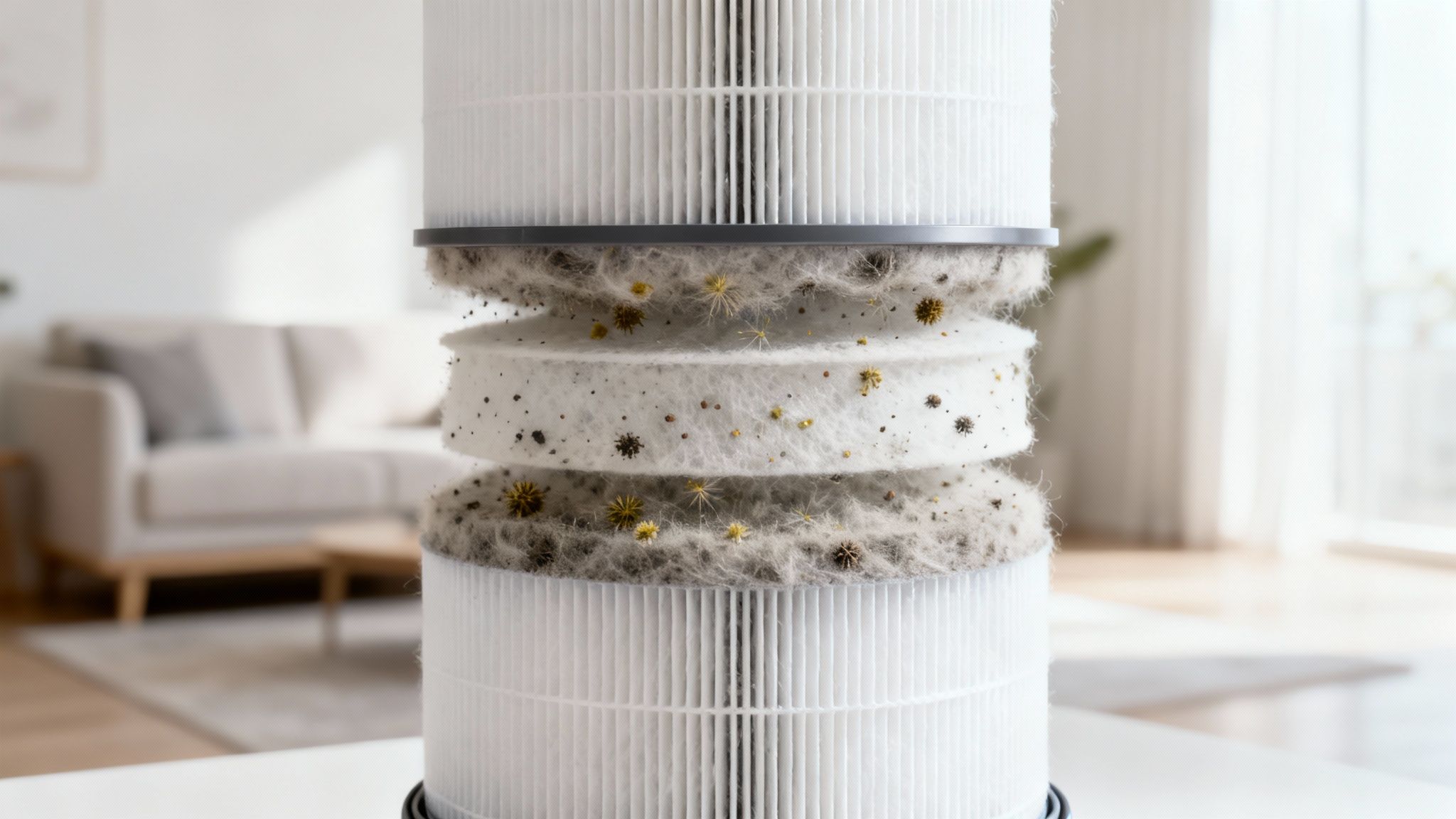
Picking the right filtro hepa dyson for your machine is crucial for it to work correctly. Dyson designs specific filters for each series, like the Pure Cool or Hot+Cool models. They are not interchangeable.
Using the wrong filter will likely result in a poor fit. A bad seal is a big problem because it creates gaps. These gaps let polluted air sneak past the filter and go straight back into your room. This defeats the purpose of having a purifier. Always check your exact model number to ensure a perfect fit.
Understanding Filter Types
Dyson often combines different filter technologies to capture a wide range of indoor pollutants. You will typically find two key layers working together: a HEPA layer and an activated carbon layer.
- Glass HEPA Filter: This is the main component. It’s a dense, pleated material designed to physically trap 99.97% of particulate matter (PM2.5). This includes allergens, fine dust, and mould spores.
- Activated Carbon Filter: This layer targets smells and gases. It uses porous carbon granules to absorb odours and chemicals like Volatile Organic Compounds (VOCs). Pollutants get stuck to the carbon's large surface area.
Some Dyson purifiers use two separate filters that you replace individually. Many newer models combine both into a single, easy-to-swap cartridge. Find out which setup your machine has before buying a replacement from our Refills & Cartridges collection.
Comparing Common Dyson Filter Combinations
Here is a simple table to clarify the most common filter combinations in Dyson purifiers. Look at what each one targets to match a filter to your home's air quality needs. Compare options with our quick table.
Dyson HEPA Filter Types at a Glance
| Filter Type | Primary Target Pollutants | Includes Activated Carbon | Typical Filter Lifespan |
|---|---|---|---|
| Glass HEPA | Dust, Pollen, PM2.5, Allergens | No | 12 Months |
| HEPA + Carbon | Dust, Pollen, PM2.5, Odours, VOCs | Yes | 12 Months |
| Combi 360° Glass HEPA & Carbon | All-in-one capture of particles & gases | Yes (Integrated) | 12 Months |
| Cryptomic™ | Formaldehyde, Particles, Odours, VOCs | Yes + Catalytic Layer | Non-replaceable (Cryptomic part) |
The push for better air filtration is growing, especially in urban areas. In Italy, the annual average PM2.5 concentration is 2.8 times higher than the WHO recommended level. It's no surprise that effective air purifiers are becoming more popular. You can read more about Italian air filter market trends.
This concern for clean air goes beyond just one brand. You can explore a variety of high-performance air purifiers that use the same proven HEPA and carbon technologies.
A Simple Guide to Replacing Your Filter
https://www.youtube.com/embed/OTlOcghnCL4
Swapping your filtro hepa dyson is a simple but vital task. It keeps your air purifier running at its best. Think of the filter as a sponge for airborne pollutants—eventually, it gets full. If you don't change it, it can't clean the air effectively, and the machine's performance will drop.
The good news is that Dyson makes it easy. Most newer machines will alert you through the Dyson Link app or on the LCD screen. If you have an older model, a few clear signs will tell you it's time for a change.
Signs It Is Time for a New Filter
Pay attention to how your machine behaves and how the air in the room feels. If you notice any of these signs, you probably need a new filter.
- Reduced Airflow: Does the breeze from the purifier feel weaker? A lower flow rate is a classic sign of a clogged filter.
- Returning Odours: A fresh filter is great at absorbing smells. If household odours linger longer than usual, the activated carbon layer is likely saturated.
- Increased Noise: Your purifier's fan works harder to pull air through a blocked filter, which often makes it louder.
- Visible Dirt: Sometimes, a quick look is all you need. If the filter is visibly grey and caked with dust, it has done its job.
Step-by-Step Replacement Checklist
Changing the filter is a quick job you can do in minutes. Follow this checklist to do it safely and correctly.
| Step | Action | Notes |
|---|---|---|
| 1. Unplug the Unit | Always disconnect the purifier from the mains power first. | This is the most important safety step. |
| 2. Remove the Outer Cover | Press the release buttons on the side to lift the cover off. | This exposes the old filter. |
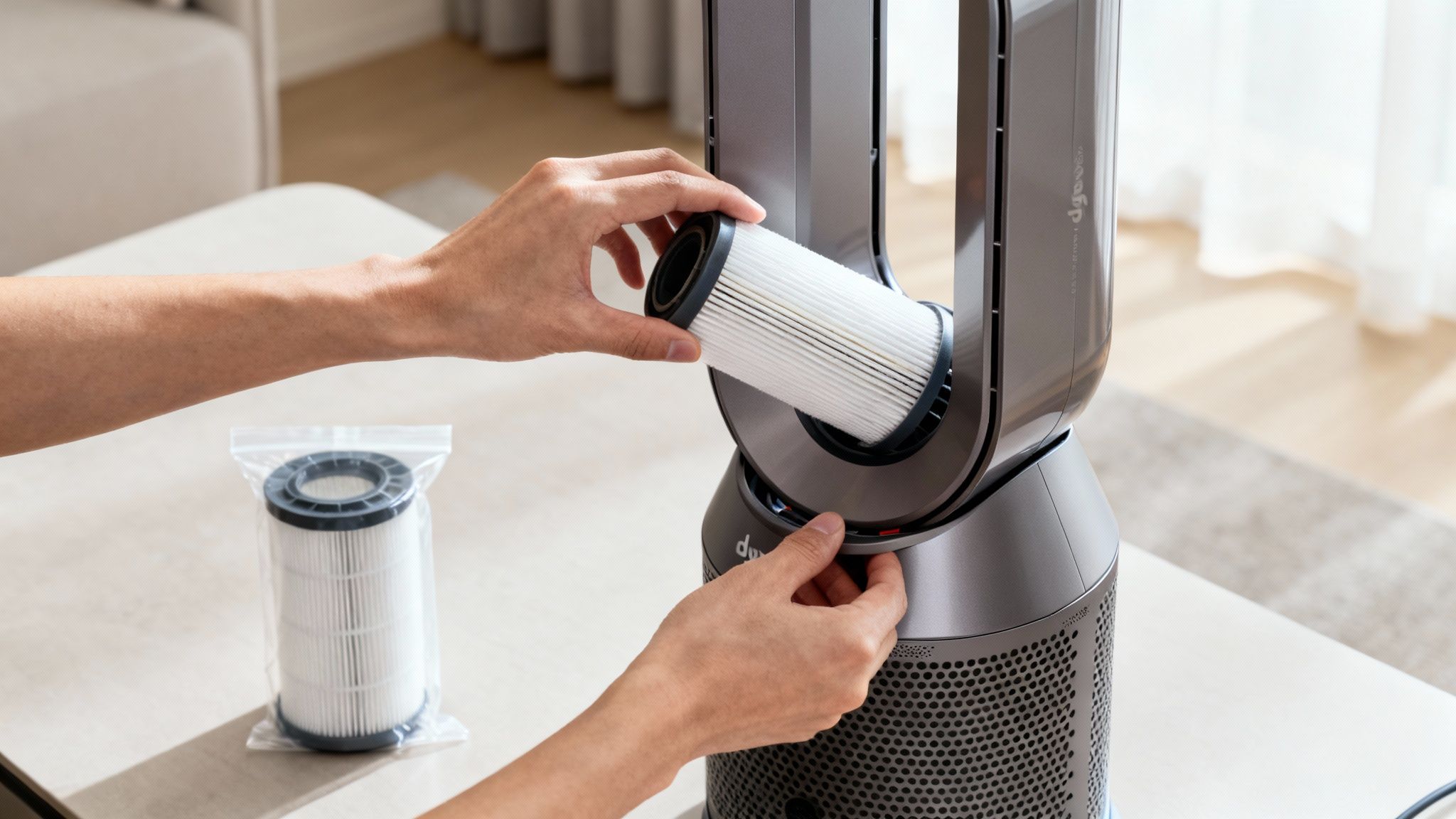
| 3. Take Out the Old Filter | Gently lift the used filter out of the base. | Put it straight into a bin to contain dust. |
| 4. Install the New Filter | Slide the new filter into the base until it clicks securely. | It should fit snugly with no gaps. |
| 5. Reattach the Cover | Place the cover back on, ensuring it clicks down firmly. | Check that both sides are locked in place. |
| 6. Reset the Filter Life | Plug the machine in, then press and hold the power button to reset the filter life counter. | Your user manual has the exact instructions for your model. |
Following these steps will get your purifier back to peak efficiency. For a smaller space, a desktop air purifier with negative ion purification can be a great solution for a home office or bedside table.
Understanding Costs and Maximising Filter Lifespan
Keeping your air clean involves a running cost, mainly for filters. A genuine replacement filtro hepa dyson typically costs between €60 and €90. The exact price depends on your purifier model and filter type. While it's a necessary expense, you can take steps to extend each filter's life.
Dyson suggests a filter change every 12 months. Think of this as a guideline, not a strict rule. The real filter lifespan depends on your home. If you live near a busy road, have pets, or run the machine 24/7, the filter will need replacing sooner.
Simple Tips to Extend Filter Life
A few small changes to your routine can help you get more use from your filter without sacrificing air quality.
- Strategic Placement: Avoid placing your purifier in high-pollution areas. A spot near an open window on a busy street or in a dusty workshop will force it to work harder.
- Use Lower Fan Speeds: When the air feels fresh, you don't need to run the purifier on full blast. Higher speeds pull in more air and particles, wearing out the filter faster.
- Clean Your Home Regularly: Regular housekeeping makes a big difference. Vacuuming and dusting frequently reduces the overall workload for your purifier.
This idea of regular upkeep applies to many home appliances. For instance, a complete guide to air conditioning maintenance shows how proper care is crucial for performance across the board.
When to Replace Your Filter
Ultimately, your purifier knows best. Once the machine's display or app indicates the filter life is low, it's time for a replacement. Pushing a clogged filter beyond its limit is a false economy—you end up circulating air without cleaning it.
If you’re seeking a system to tackle airborne irritants, our air purifier combo for home allergies provides a comprehensive approach. Check sizes & refills — fast EU shipping. It's another great way to keep your indoor environment fresh and healthy.
Official vs. Third-Party Filters: What's the Difference?
So, it's time for a new filter. Should you buy an official Dyson replacement or a third-party option? The choice comes down to cost versus guaranteed performance.
Genuine Dyson filters are made to fit your machine perfectly. This perfect fit creates a tight seal, which is essential for proper air purification. Without a solid seal, dirty air can bypass the filter, defeating the purpose of the purifier.
On the other hand, aftermarket filters are almost always cheaper. They offer a more budget-friendly way to keep your machine running. However, the lower price can sometimes come with compromises.
The Risks of Third-Party Filters
While many aftermarket filters work well, some can cause problems. The biggest issue is often a poor fit. Even a tiny gap around the filter's edge can let pollutants like PM2.5 particles and allergens bypass the filter media entirely.
Another potential issue is material quality. A cheaper filter might use a lower grade of HEPA material or less activated carbon. This means it may be less effective at trapping particles or absorbing odours and VOCs, and its lifespan may be shorter.
Your choice of filter directly affects how well your purifier cleans the air, which is the whole reason you bought it.
Making an Informed Decision
Ultimately, the right choice depends on your priorities. If you want guaranteed performance and peace of mind, stick with genuine Dyson filters. If you are on a tight budget, a well-reviewed aftermarket filter can be a good substitute. Just be sure to research its reputation for fit and quality.
People are taking air quality more seriously than ever. In Italy, the portable air purifier market is expected to reach USD 593.1 million by 2033. This shows how much we value effective filtration in our homes. You can read more about the Italian air purifier market trends on Research and Markets.
If you're exploring all your options, our range of Air Purifiers uses high-quality HEPA technology to clean your air effectively. See the air purifier kit that installs in minutes.
Frequently Asked Questions
To wrap things up, let's tackle a few of the most common questions about Dyson HEPA filters.
Can I wash and reuse my Dyson HEPA filter?
No. Genuine Dyson HEPA and carbon filters are not designed to be washed. Washing will damage the delicate HEPA fibres, ruining their ability to trap microscopic particles. For the activated carbon layer, water clogs its porous structure, making it ineffective at absorbing odours and gases. Once a filter is used up, it must be replaced.
How do I find the right filter for my machine?
Dyson makes this easy. The simplest way is to find the model number of your air purifier. It's usually on a sticker on the base or body of the unit. If you use the Dyson Link app, it automatically identifies your machine and directs you to the correct filter model. A proper fit ensures an airtight seal, which is crucial for effective purification.
What does the "filter life" percentage mean?
The percentage shown on your screen or in the app is a smart estimate of the filter's remaining lifespan. It is calculated based on two key factors: the total hours the machine has been running and the pollution levels detected by its sensors. This gives you an accurate, real-world estimate of when a replacement is needed. You can find our full range of replacement filters in the Refills & Cartridges section of our store.
Disclaimer: Home filtration complements—not replaces—professional advice. For details on delivery, please see our Shipping Policy.