

A Practical Guide to Erogatori Acqua Casa
An erogatori acqua casa, or home water dispenser, is the simplest way to get better-tasting water straight from your tap. If you are tired of limescale buildup in your kettle or the taste of chlorine in your drink, a quality filter can make a real difference. This guide explains your options, from simple tap-mounted units to more comprehensive under-sink systems, helping you choose the right fit for your home.
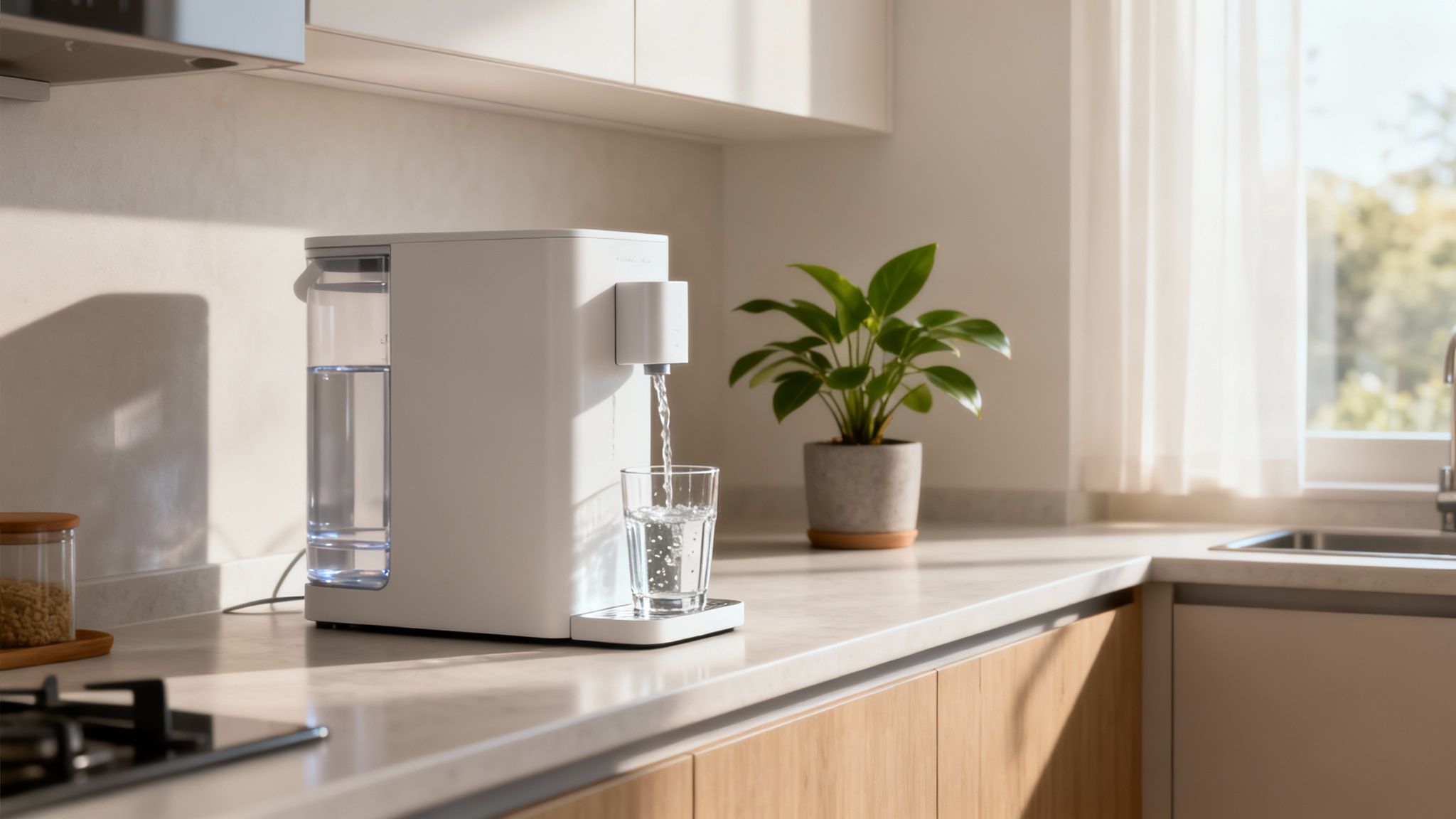
Quick Answer: What is an Erogatori Acqua Casa?
An erogatori acqua casa is a home water filtration system that connects to your water supply. It uses technology like activated carbon to help reduce common substances like chlorine and limescale. This improves the taste and smell of your tap water, providing a convenient alternative to buying bottled water.
In short, a home water dispenser gives you filtered water on demand. It’s a simple upgrade that turns your tap into a source of fresh, pure-tasting water, freeing you from the hassle of plastic bottles.
Why You Might Want a Home Water Dispenser
Concerns about tap water are common in Italy. A recent report found that 8.7% of Italian households—about 2.3 million families—had issues with their water supply. The problem was especially noticeable in the South, where nearly 30% of homes in regions like Calabria and Sicily reported irregularities.
A home water dispenser addresses these concerns directly. It gives you peace of mind and noticeably better water. Here’s what you can expect:
- Better Taste and Smell: Filtration materials like activated carbon are excellent at absorbing chlorine, which helps remove the typical "tap water" flavour and odour.
- Fewer Impurities: A good system is designed to capture things like sediment, limescale, and other particles that can make their way into municipal water.
- Everyday Convenience: Enjoy an endless supply of fresh, filtered water without the waste and cost of single-use plastic bottles.
An effective water filtration system is more than just an appliance; it's a practical step towards healthier habits and a more sustainable lifestyle.
Exploring some general advice on improving home water quality can be a great first step. This guide will help you dive deeper, moving from the basics to finding the ideal erogatori acqua casa for your home by looking at what matters, like filter lifespan and flow rate.
Understanding Your Home Water Quality
Before you can get better water, you need to understand what you’re working with. While tap water across the EU is generally safe, its quality can vary. The taste, hardness, and overall character of water can change from one city to another—and sometimes even between streets in the same neighbourhood.
The long journey from the treatment plant to your tap is where things often get complicated.
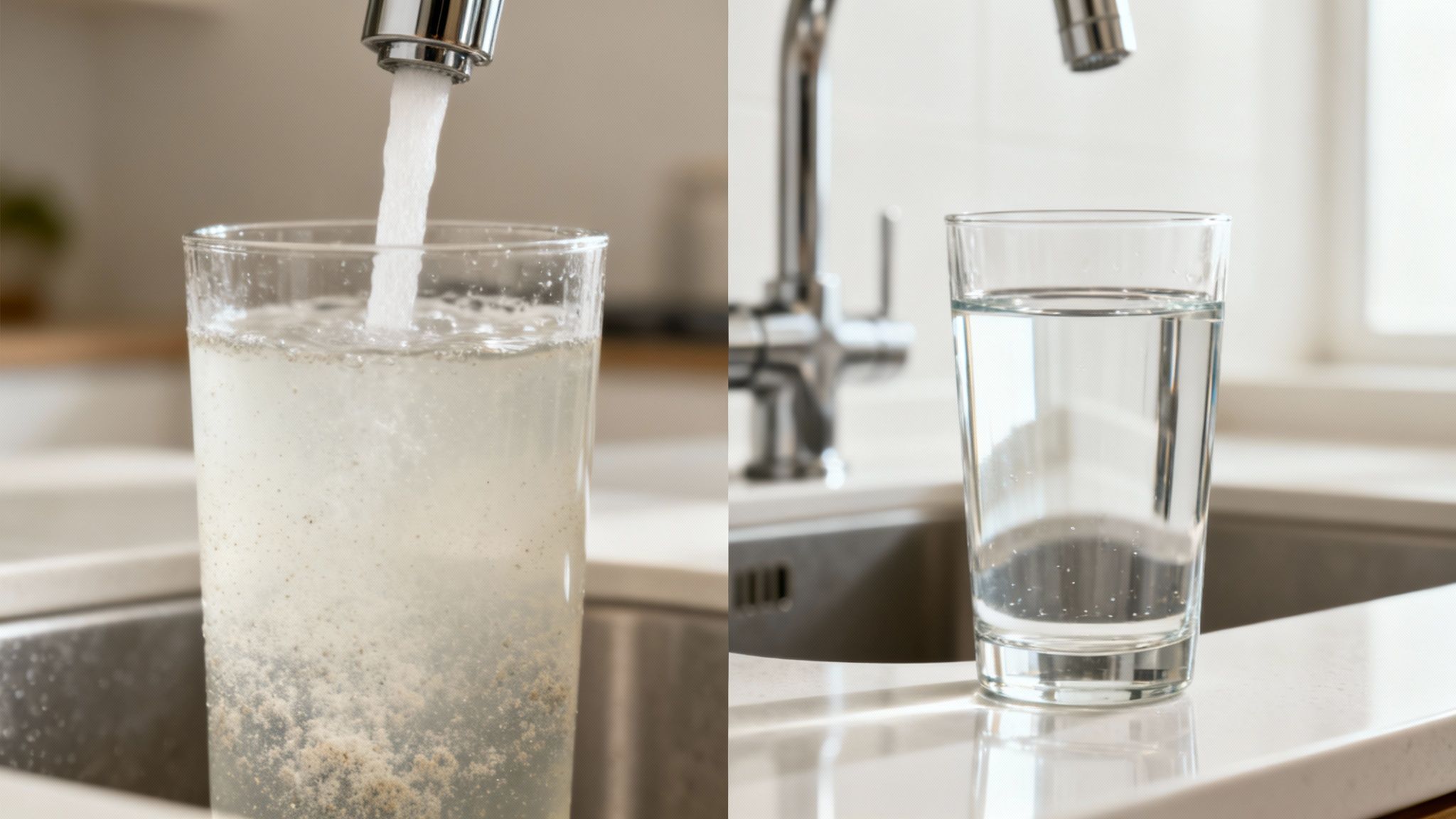
As water flows through kilometres of pipes, it can pick up unwanted substances. Old pipework might introduce sediment or trace metals. The chlorine added to keep water safe often leaves behind an unpleasant taste and smell. An erogatori acqua casa becomes the final, crucial checkpoint, cleaning the water right before it hits your glass.
Common Issues in Tap Water
Most tap water issues are about taste, smell, and appearance, not safety. Certain elements can affect everything from your morning coffee to your appliances. Figuring out what’s in your water is the first step to choosing the right solution.
Here are the usual suspects:
- Chlorine: This is the go-to disinfectant for public water systems. It keeps bacteria at bay but can give your water a chemical taste and odour.
- Limescale: This is caused by calcium and magnesium, the minerals that create "hard water." While safe to drink, they cause the chalky white buildup that clogs kettles, coffee makers, and showerheads.
- Sediment: Small bits of rust, sand, or silt can get stirred up from older pipes. This can make your water look cloudy and feel gritty.
- Volatile Organic Compounds (VOCs): These can seep into water supplies from industrial or agricultural runoff, sometimes appearing in trace amounts.
Knowing what you’re up against helps you pinpoint why your water isn't as fresh as you’d like. If you want to learn more, our guide on Italian tap water safety and quality is a great place to start.
Why a Filter Makes a Difference
A water filter acts as your personal quality control manager. Municipal treatment is a broad solution for an entire city. A home system, however, gives you targeted filtration that is fine-tuned to tackle the specific issues with your water.
Think of it this way: municipal treatment is for the entire city, but an erogatori acqua casa is tailored for your kitchen. It provides the final polish for consistently great-tasting, clean water.
For instance, a filter using activated carbon is a champion at absorbing chlorine and many VOCs, which instantly improves your water's taste and smell. Other filters are designed specifically to trap sediment or reduce the minerals that cause limescale. By matching the filter to your water, you can solve the exact problems you are dealing with every day.
A Guide to Erogatori Acqua Casa Options
Choosing the right water dispenser comes down to your space, budget, and what you want to filter out. It is not a one-size-fits-all situation. Let’s break down the most popular options to see which one makes sense for you.
We'll look at everything from simple tap-mounted filters to powerful under-sink systems that work out of sight.
Tap-Mounted and Faucet Filters
For sheer convenience, you can't beat a tap-mounted filter. These devices simply screw onto your existing kitchen tap. It is a fantastic choice for renters or anyone who wants a straightforward solution.
They generally use activated carbon to help reduce things like chlorine, which often causes that "tap water" taste. The downside is a shorter filter lifespan—you'll likely change it every 2–4 months. But for an instant upgrade in a small kitchen, they are hard to beat. See the Water Filters kit that installs in minutes.
Under-Sink Filtration Systems
For those who want powerful filtration without cluttering the counter, an under-sink system is the way to go. These units are tucked away in your kitchen cabinet and connect directly to your cold water line.
They often use several stages of filtration to tackle a wider range of contaminants, including limescale, sediment, and even some VOCs. Since the filter cartridges are bigger, they last much longer, typically from 6 to 12 months. The installation is a bit more involved but is a perfectly doable weekend project for most. If you're curious about advanced options, you can learn how reverse osmosis systems work in our guide.
Think of an under-sink system as a silent guardian for your water. It works behind the scenes, delivering consistently pure, great-tasting water from its own dedicated tap.
Effective home solutions are a big focus in Italy. The nation’s water utilities sector has grown to a market size of €12.7 billion by delivering 4.6 billion cubic metres of water each year. This shows a real commitment to quality water at home. You can discover more insights about Italy's water utility industry on ibisworld.com.
Quick Comparison Table
This simple table lays out the key features of the most common types of home water dispensers. It's a great way to see the differences at a glance.
Comparison of Home Water Dispenser Types
| Dispenser Type | Best For | Installation | Designed to Reduce | Typical Filter Lifespan |
|---|---|---|---|---|
| Tap-Mounted Filter | Renters, small kitchens, ease of use | DIY, screws directly onto faucet | Chlorine, sediment, improves taste | 2–4 months |
| Under-Sink System | Homeowners, comprehensive filtration | DIY or professional installation | Chlorine, limescale, VOCs, heavy metals | 6–12 months |
| Countertop Dispenser | Convenience, chilled/hot water | Plug-and-play, no plumbing needed | Chlorine, lead, improves taste | 4–6 months |
| Whole-House System | Total home protection | Professional installation required | Sediment, chlorine, limescale (system dependent) | 1–5 years |
Disclaimer: Home filtration complements—not replaces—professional advice. If you have serious concerns about your water quality, consult a local expert.
How to Choose the Right Water Dispenser
Finding the perfect water dispenser isn't about picking the most expensive model. It’s about matching the system to your real life. The best choice for someone in a small city flat will be different from what a busy family needs. By asking a few simple questions, you can find a dispenser that works for you.
This section is your practical checklist. We’ll look at key factors—your living situation, your main water concerns, and your kitchen layout.
This simple decision tree can help you visualise the best place to start.
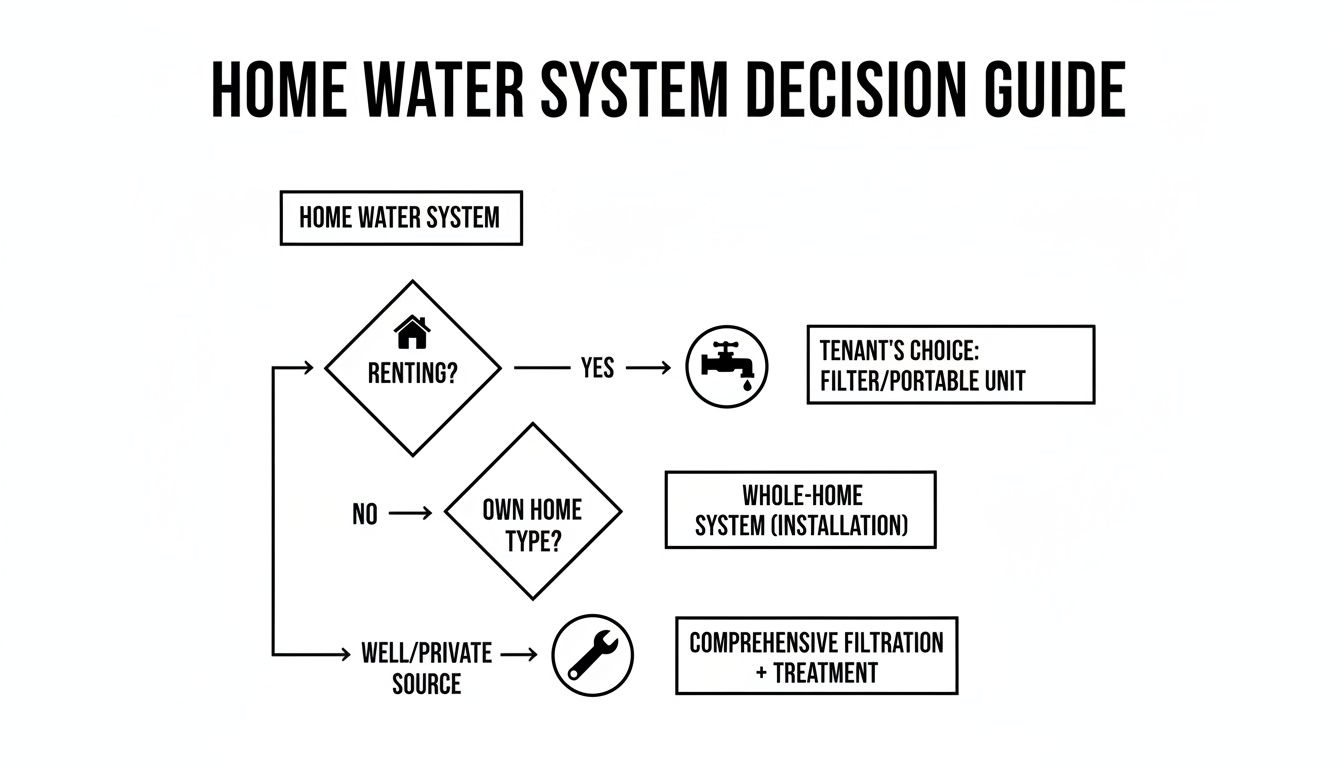
As you can see, whether you rent or own your home is a huge first step. It immediately points you towards either a temporary fix like a faucet filter or a more permanent under-sink solution.
For Renters and Small Spaces
If you’re renting or have a small kitchen, a tap-mounted filter is often the perfect fit. These systems are easy to install, screwing directly onto your faucet without permanent changes. They are fantastic for improving water taste and smell, especially when reducing chlorine and sediment.
Their biggest advantage is their small footprint—they don’t take up any counter space. This makes them a great choice for apartments and studios. The filters need changing more often, but the convenience and low upfront cost are hard to beat.
For Homeowners and Families
For homeowners or larger households, a more powerful under-sink system usually makes more sense. These are tucked away in the cabinet below your sink and connected directly to your water line. They are workhorses, built to tackle a wider range of issues like stubborn limescale and other common impurities.
Because these systems use larger cartridges, they have a much longer filter lifespan, often lasting six months or more. For families that use a lot of water, this makes them a cost-effective and low-maintenance choice.
Your choice of water dispenser reflects your priorities. For some, it’s about solving an immediate taste issue. For others, it's a long-term investment in their home's health and sustainability.
Household efficiency is becoming more important everywhere. In Italy, the rollout of smart water meters—part of Europe's growing network of 80.8 million advanced meters—is changing how we think about water. These devices help us track usage, cutting down waste and making home systems even more effective. You can read the full research on smart water metering trends on businesswire.com.
Your Water Dispenser Selection Checklist
Run through these questions to make your decision easier. Your answers will point you to the right type of dispenser for your home.
- What are my primary water concerns? (e.g., chlorine taste, limescale, specific contaminants)
- What is my budget for the initial purchase and ongoing filter replacements?
- How much space do I have in my kitchen? (Is there room on the counter or under the sink?)
- Am I a homeowner or a renter? (This is key for installation options.)
- How many people are in my household? (This helps determine the capacity and flow rate you’ll need.)
- Do I want special features like chilled or sparkling water?
- How important is reducing plastic bottle waste to me?
- What is the filter lifespan and how much do replacement cartridges cost?
Answering these questions will clarify what you need. If you're interested in chilled water, check out our guide on water coolers. The goal is to find the sweet spot between performance, convenience, and cost that fits your daily routine.
Simple Installation and Maintenance Steps
Setting up your erogatori acqua casa should not be a chore. Most modern systems are designed for easy self-installation, saving you the cost of a professional. Let’s walk through the steps for popular tap-mounted and under-sink models, along with the simple care needed to keep them working well.
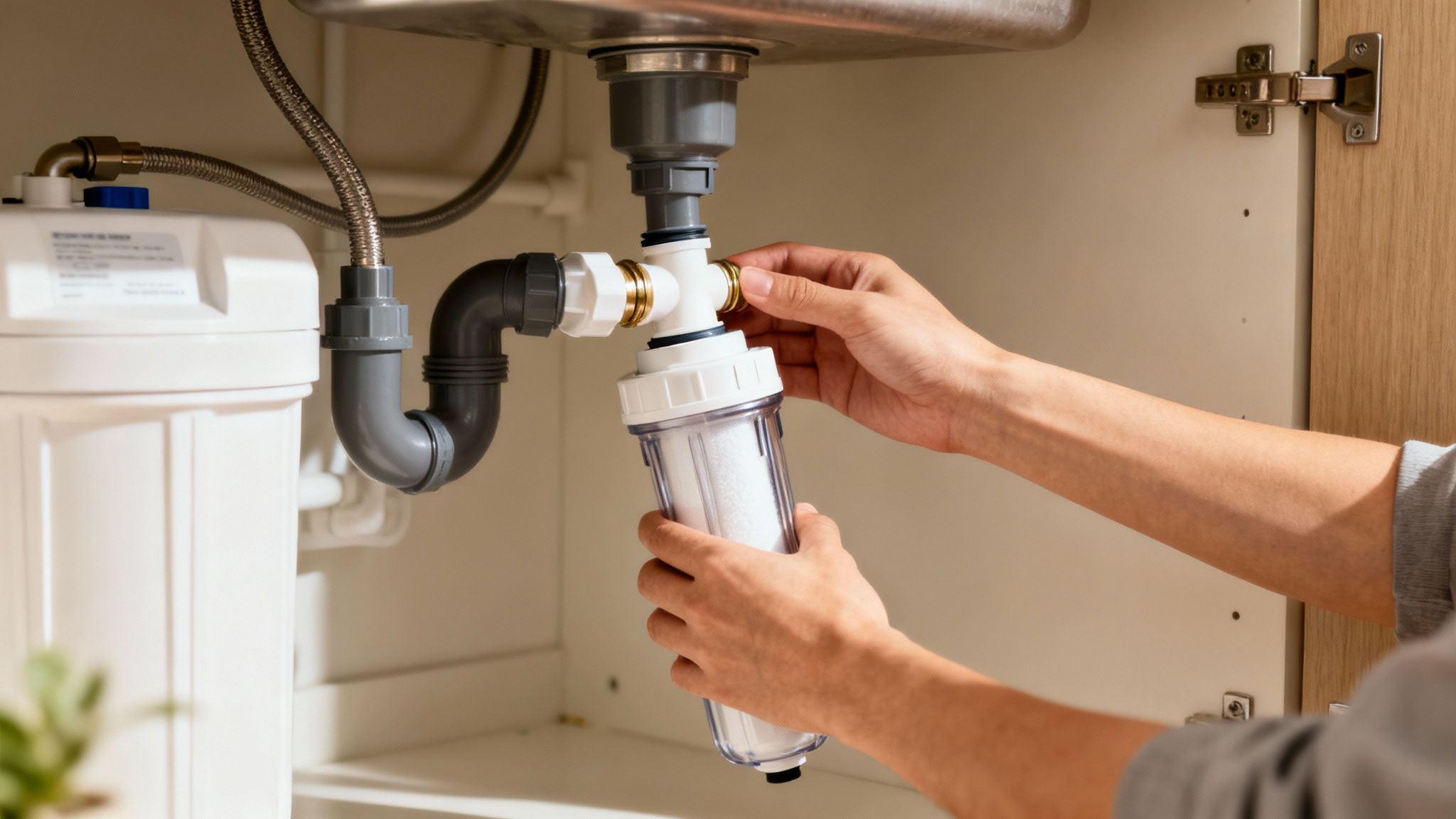
The idea is to get you from the box to better-tasting water as quickly as possible. With a couple of basic tools, you can have filtered water right at your fingertips.
A Quick Guide to DIY Installation
Most filter systems come with everything you need in one kit. While the exact steps differ between models, the basic process is similar and surprisingly simple. Here’s a typical rundown for an under-sink installation.
-
Turn Off the Water: First, find the cold water shut-off valve under your sink and turn it off. Open your tap to let any remaining water drain out.
-
Connect the Filter: Unscrew the cold water hose from the valve. Attach the filter’s diverter valve, then reattach the original hose to the other side of it.
-
Mount the Unit: Find a good spot on the cabinet wall to secure the main filter unit with the screws provided. This keeps it tidy and stops it from rattling.
-
Check for Leaks: Slowly turn the water back on and watch all connection points for drips. If you spot a leak, gently tightening the fitting usually solves it.
For general plumbing health, it's a good idea to know how to prevent costly plumbing repairs through regular maintenance. For more specific tips, our guide on installing an under-sink water filter offers more detail.
Keeping Your System in Top Shape
Once your erogatori acqua casa is installed, a little routine care is all you need. The most important job is swapping out the filter cartridge on schedule.
Sticking to the recommended filter lifespan is crucial for great water. Over time, the filter’s media, like activated carbon, gets clogged with trapped contaminants. An old filter can't do its job, which can lead to a drop in your water's flow rate and quality.
Think of your filter cartridge like a kitchen sponge. Once it's completely full, it can't absorb any more. Changing it on time ensures you always get the clean, crisp water the system promised.
Your Simple Maintenance Checklist
Staying on top of maintenance is easy. Follow these simple tips to keep your water dispenser working well for years.
- Mark Your Calendar: When you install a new filter, note the replacement date. Most cartridges last from three to twelve months.
- Wipe Down the Exterior: Every so often, give the dispenser and tap a quick wipe with a soft, damp cloth. Avoid harsh chemical cleaners.
- Check Connections Periodically: A couple of times a year, check the connections under the sink to make sure they're still tight and leak-free.
Proper upkeep ensures your system keeps reducing things like chlorine and limescale. When you're ready for a replacement, find everything you need on our Refills & Cartridges page. Check sizes & refills — fast EU shipping.
The Real Cost vs. The Real Value
When considering an erogatori acqua casa, it is easy to focus on the initial price. But that is just one part of the story. To see the full picture, you need to weigh that one-time cost against what you spend on bottled water month after month. The long-term savings and positive environmental impact are significant.
Moving from plastic bottles to filtered tap water is a smart change, both for your wallet and for the planet.
Crunching the Numbers
The true cost of a water dispenser is more than its purchase price. Let's compare it to the ongoing expense of bottled water.
- The Upfront Cost: This is the price of the unit you choose, which varies by type and features.
- Running Costs: Your main ongoing expense will be replacement filters. A quality under-sink filter might cost €30–€60 and typically lasts six to twelve months.
- Installation: Most systems are designed for easy DIY installation, so your only cost is a little time.
Now, let's compare that to bottled water. An average family can easily spend €300–€500 every year on bottled water. An under-sink system might cost around €150 to buy and then just €60 a year for filters. In most cases, the system pays for itself in under a year. After that, you save hundreds of euros, year after year.
Thinking About Our Planet
The benefits of an erogatori acqua casa go beyond your bank account. Choosing to filter your own tap water is a big step towards a more sustainable lifestyle. It directly tackles the global problem of single-use plastic.
Every time you fill your glass from the tap, it's one less plastic bottle that needs to be manufactured, shipped, and thrown away. That simple habit adds up to a major reduction in your carbon footprint.
A single plastic bottle requires oil and energy to produce and transport. Filtered tap water, on the other hand, uses the existing water infrastructure. Its environmental footprint is tiny in comparison. By making this one change, you actively fight plastic pollution and help conserve resources.
It's About More Than Just Money
Switching to a home water dispenser is a practical decision that keeps giving back. The long-term savings are clear once you stop buying bottled water. Environmentally, you can make a real difference in your household's plastic waste.
Ultimately, it's about peace of mind. You take control over your water quality, ensuring every sip is fresh and pure. It’s a smart investment in your health, your convenience, and a healthier planet. For a closer look at healthy hydration, check out our guide to the best drinking water for your home.
FAQs on Erogatori Acqua Casa
Deciding on a home water dispenser is a smart move, but it’s normal to have questions. Here are straightforward answers to the most common queries, from filter effectiveness to water pressure.
Do home water filters really remove everything?
No, and this is an important distinction. Home filters are excellent at what they are designed to do, but they are not a silver bullet. For example, activated carbon filters are brilliant at helping reduce chlorine taste and smell, while other systems are built to tackle limescale.
No single home system can strip 100% of every possible contaminant. The key is to pick a filter certified to reduce the specific things that are a concern in your local tap water.
Disclaimer: Home filtration complements—not replaces—professional advice. If you have serious worries about your water's safety, your best bet is always to chat with a local water quality expert.
How often do I actually need to change the filter?
You should stick to the manufacturer's guidelines. This is usually based on a timeframe (e.g., a few months) or the total litres filtered. It can be tempting to push it longer to save money, but that is a false economy.
Over time, the filter gets saturated with the contaminants it has captured. Once full, its ability to clean your water drops significantly. Following the recommended schedule is the only way to guarantee your water quality stays high and the flow rate remains strong.
Will a dispenser affect my water pressure?
Any filter will cause a very slight drop in the flow rate. This is completely normal. However, modern dispensers are designed so well that this change is usually so minimal you probably won't notice it.
If you experience a major drop in water pressure, that is almost always a sign the filter is clogged and needs to be replaced. Keep up with the maintenance schedule, and you’ll keep things flowing smoothly.
Can I install an under-sink filter myself?
Absolutely. Most quality under-sink systems are made for DIY installation and come with clear instructions. If you’re comfortable with basic tasks like using a wrench and connecting hoses, you can probably set it up in less than an hour.
It’s a straightforward job that doesn't demand special skills. Of course, if you’d rather not get your hands dirty, a plumber can sort it out for you quickly.
At Modern Essentials, we make better water simple. Our systems are designed for easy installation and reliable filtration.
See the Water Filter kit that installs in minutes.