

Your Guide to Filtri per Caraffa for Better Water
'Filtri per caraffa', or pitcher water filters, are one of the simplest ways to enjoy better-tasting water from your tap. They typically use activated carbon to help reduce chlorine, the chemical often responsible for unpleasant taste and smell. Many also contain ion-exchange resins designed to soften water by capturing minerals that cause limescale. The result is water that feels cleaner, tastes crisper, and is perfect for drinking and cooking.
Quick Answer: A 'filtro per caraffa' (pitcher filter) works by passing tap water through a cartridge, usually containing activated carbon and ion-exchange resin. It is designed to capture common impurities like chlorine and limescale. This simple, no-installation process helps improve water taste, smell, and softness, making it a popular choice for EU homes.
Why a Water Filter Pitcher is a Smart Choice
If your tap water tastes or smells off, a filtro per caraffa is a simple solution that can make a big difference in your daily life. This guide will walk you through how these filters work, what they are designed to remove, and how to choose the best one for your kitchen. By understanding the technology inside—from activated carbon dealing with chlorine to resins tackling hard water—you'll see why even a basic pitcher can elevate your water.
What's in Your Tap Water?
Across most of Europe, tap water is safe to drink. But "safe" does not always mean it tastes great. Municipal water is often treated with chlorine to eliminate bacteria, which can leave a chemical taste and odour. For more details, you can read our guide on the safety of tap water in Italy.
Other common issues include:
- Limescale: In hard water areas, high levels of calcium and magnesium create a chalky buildup. This can affect the taste of tea and coffee and damage appliances like kettles.
- Heavy Metals: Trace amounts of lead or copper can sometimes enter the water from older plumbing systems.
- Other Impurities: Small particles of sediment can also make water appear cloudy and less appealing.
A pitcher filter acts as a final barrier between the municipal supply and your glass. It helps capture these common substances right before you drink.
A Simple and Effective Solution
A water filter pitcher provides an easy and affordable way to address these issues without needing a plumber. It is designed for convenience. Just fill the pitcher, place it in the fridge, and you have chilled, filtered water ready to drink.
This small change can improve everything from a glass of water to your morning coffee. See the Water Filters kit that installs in minutes.
How Your Filtri per Caraffa Works
When you fill your pitcher, a multi-stage process begins inside the filter cartridge. As water trickles down, it passes through different materials, each with a specific job. Gravity pulls the water from the top reservoir into the filter, where the filtration happens.
The Power of Activated Carbon
The primary material is activated carbon. This is not the same as barbecue charcoal. It is treated to create millions of tiny pores, giving it a huge surface area. A single gram can have the surface area of a football pitch.
This porous surface acts like a magnet for certain substances. Its main job is to adsorb chlorine, reducing the chemical taste and smell common in tap water. It also helps capture other volatile organic compounds (VOCs) that can affect flavour.
Tackling Limescale with Ion Exchange
Next, the water often passes through ion-exchange resins. These are tiny, bead-like spheres that help reduce water hardness.
Hard water contains dissolved minerals like calcium and magnesium, which cause limescale. The resins are engineered to target these minerals. They swap the "hard" mineral ions (calcium) for "soft" ions (like sodium). This process softens the water, which helps prevent limescale and can improve the taste of coffee and tea.
More Than Just Taste
The combination of activated carbon and ion-exchange resin is also designed to capture certain heavy metals, like lead and copper, that may be present due to old pipes. This layered approach means the filter actively reduces a range of common substances.
Pitcher filters are a convenient starting point. For more complex water issues, other technologies are available. You can explore more advanced options in our guide on reverse osmosis water purifiers.
Comparing Water Filter Systems for Your Home
Choosing a water filter can feel like a big decision. While filtri per caraffa offer great convenience, they are just one of several options. Let's compare pitchers, tap-mounted filters, and under-sink systems to help you find the right fit for your home and budget. Each type has its own strengths in terms of cost, ease of setup, and filtration capabilities.
Pitchers Versus Other Systems
Pitcher filters are incredibly simple. You fill them, put them in the fridge, and have cold, filtered water. There is no installation, making them ideal for renters or small households.
In contrast, systems like tap-mounted or under-sink filters provide filtered water on demand, straight from the faucet. They are great for cooking and filling large pots. However, they require some installation and a higher initial cost. The water filter market in Italy was valued at around €350 million recently and is growing, showing a clear demand for better water quality at home.
Water Filter System Comparison Table
This table provides a quick comparison of common filter systems available for EU homes.
| Filter Type | Initial Cost (€) | Installation | Helps Reduce | Best For |
|---|---|---|---|---|
| Pitcher Filter | €20 – €50 | None | Chlorine, Limescale, Some Metals | Individuals, renters, and easy fridge access. |
| Tap-Mounted | €40 – €90 | DIY, 5 minutes | Chlorine, Sediment, Lead | On-demand filtered water for drinking and cooking. |
| Under-Sink | €100 – €300+ | DIY or Professional | Chlorine, VOCs, Metals, Cysts | High-volume, hidden filtration for the main kitchen tap. |
| Whole-House | €500 – €1500+ | Professional | Sediment, Chlorine, Limescale | Comprehensive filtration for every tap in the home. |
As you can see, pitcher filters are a low-cost entry point. For a more permanent solution, consider under-sink systems. Learn more in our complete guide to under-sink water filters.
Which System Is Right for You?
The best system fits your lifestyle. If you want better-tasting drinking water with zero fuss, a filter pitcher is an excellent choice. If you cook often or have a large family, a tap-mounted or under-sink filter might be more convenient. Weigh the initial cost against the long-term benefits to choose the system that delivers the clean, refreshing water you want.
How to Choose and Maintain Your Carafe Filter
Choosing the right filtri per caraffa and keeping it working well is simple. A good choice affects the taste of your water and your budget. This guide will help you find the perfect pitcher and maintain it, from setup to cartridge replacement.
Making the Right Choice
Focus on a few key factors to find the right pitcher. It comes down to your family’s size and water consumption.
First, consider capacity. A smaller 1.5-litre jug is great for one or two people, while a 2.4-litre model works well for families. Also, check the filter lifespan, usually measured in litres (e.g., 150 litres) or days (e.g., 30–60 days). This helps you plan for replacements. Finally, check the packaging to see which specific contaminants the filter is designed to capture.
Your Pitcher Filter Buying Checklist
Use this checklist to make shopping easier.
- Carafe Capacity: Does the size (1.5L, 2.4L) meet your daily needs?
- Filter Compatibility: Does the filter fit your pitcher? Always double-check.
- Filter Lifespan: Note the replacement schedule (e.g., 150 litres or 30 days).
- Contaminant Reduction: Does it target what you want (chlorine, limescale, etc.)?
- Replacement Costs: Check the price and availability of new cartridges. Check sizes & refills — fast EU shipping.
- Material and Design: Look for sturdy, BPA-free plastic and a shape that fits your fridge.
Proper Maintenance for Best Performance
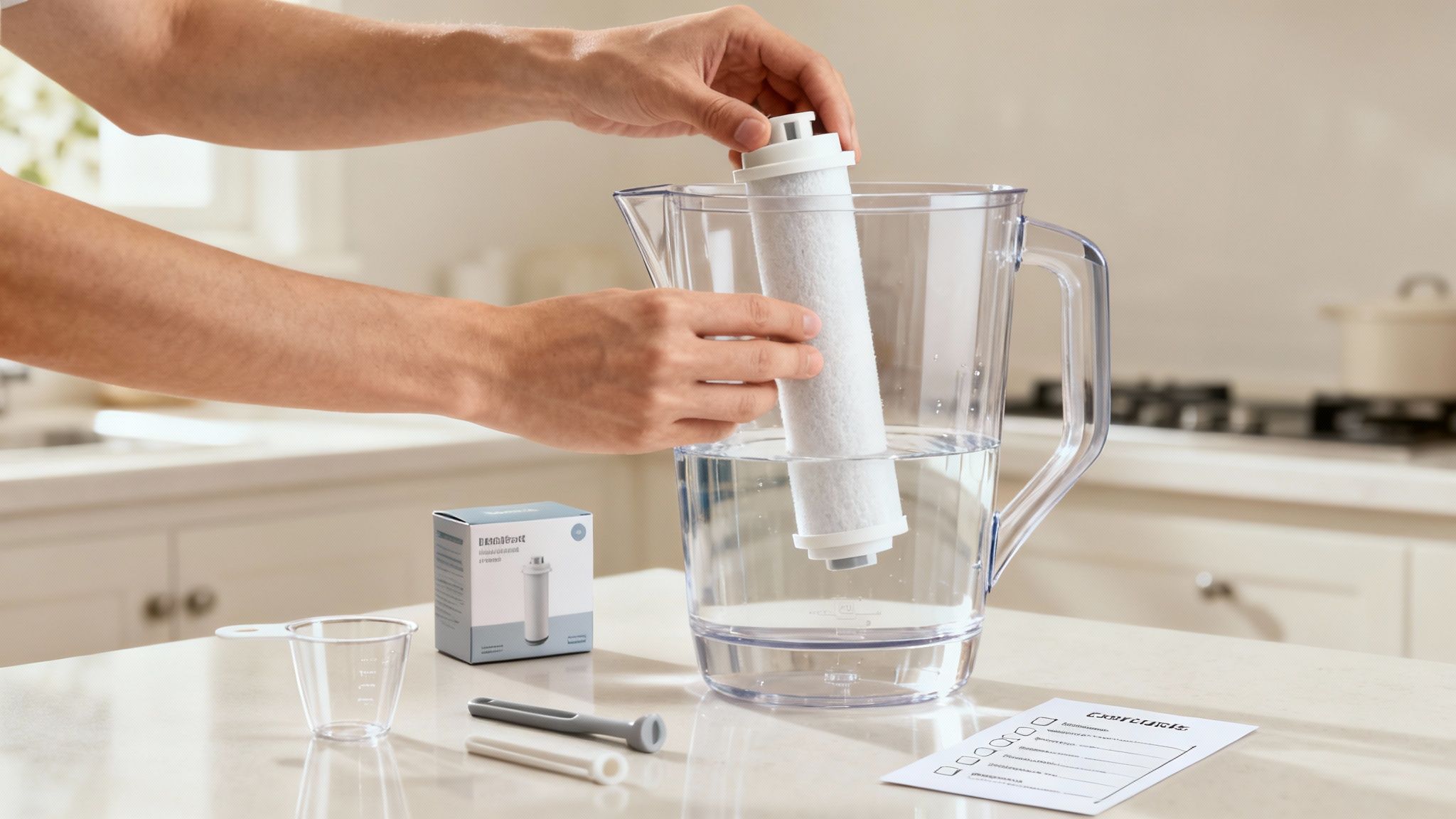
A new filter needs a quick prep. Most brands recommend soaking the new cartridge in cold water for 10–15 minutes. This activates the filter media and removes any loose activated carbon dust. After soaking, press it firmly into the pitcher's reservoir to ensure a snug fit.
It's a good idea to discard the first one or two pitchers of filtered water. This final flush clears out any remaining carbon dust.
Knowing when to replace the filter is crucial. Over time, it becomes saturated. Most pitchers have an indicator, like a sticker or a digital timer, to remind you. You can also trust your senses. If the flow rate slows down or the tap water taste returns, it's time for a new cartridge. For reliable performance, use brand-compatible Refills & Cartridges. You can learn about other options in our guide to Brita tap filters.
Environmental and Wellness Benefits
Using a filter pitcher does more than improve your water's taste. It is a small change with significant benefits for the environment and your well-being. By choosing filtri per caraffa, you join a movement toward a healthier, more sustainable lifestyle.

Reducing Plastic Waste
The most immediate benefit is a sharp reduction in single-use plastic bottles. A single filter cartridge can replace up to 300 standard 500ml plastic bottles.
Over a year, this small change can prevent hundreds or thousands of plastic bottles from ending up in landfills and oceans. This is a major reason for the growing popularity of home filtration. You can read more about these residential filter market trends for more information.
Enhancing Your Daily Wellness
Filtered water also enhances your daily life. By reducing chlorine, it can improve the taste of everything you make.
- Better Tasting Drinks: Your coffee and tea will have a cleaner, richer flavour without the chemical aftertaste.
- Improved Cooking: Using filtered water allows the natural flavours of your food to stand out, from boiling pasta to making soup.
- Encourages Hydration: When water tastes good, you are more likely to drink it. Staying hydrated is essential for health. Learn more about the importance of daily water consumption.
Improving your water quality is a simple investment in your well-being. You can extend this benefit throughout your home. Our Shower Filters are designed to improve the water you bathe in, which can be gentler on skin and hair. See the shower filter kit that installs in minutes.
Common Questions About Pitcher Filters
You might still have some questions about using a filter pitcher. Here are simple answers to common queries to help you feel confident in your choice.
How Do I Know When to Change My Filter?
The most obvious sign is a drop in performance. If water filters much more slowly or if the chlorine taste returns, the filter's filter lifespan is likely over. Most brands recommend replacement every 30 to 60 days or after filtering a set volume, like 150 litres. Many pitchers include a reminder indicator.
Can I Use Hot Water in My Filter Pitcher?
No. Only use cold or room-temperature tap water. Hot water can damage the filter materials, particularly the activated carbon and resins. This can make the filter ineffective and may cause it to release trapped substances. Always filter water cold, then heat it if needed.
Do Pitcher Filters Remove Everything?
Pitcher filters are designed to reduce specific substances that affect taste and smell, like chlorine, limescale, and some heavy metals. They are not designed to purify unsafe water and will not remove bacteria or viruses. For airborne particles in your home, other systems like Air Purifiers are designed to handle contaminants like PM2.5 and VOCs.
What Are Those Black Specks in My Water?
If you see tiny black specks after installing a new filter, do not worry. This is harmless, food-grade activated carbon dust. Simply follow the setup instructions, which usually advise discarding the first one or two pitchers. This initial flush will clear any loose particles.
Disclaimer: Home filtration complements—not replaces—professional advice. The information provided is for educational purposes and should not be considered a substitute for professional water quality analysis or medical consultation.
At Modern Essentials, we believe better water should be simple. Our range of filters is designed for easy installation and immediate results.
➡️ See the Water Filters kit that installs in minutes.