

Laica Caraffa Filtrante: A Practical Guide for Better Water
A Laica caraffa filtrante is an Italian-designed water filter jug. It uses a cartridge to help improve the taste and quality of your tap water by reducing substances like chlorine and limescale. It's a simple, at-home solution for anyone looking for an alternative to bottled water.
Quick Answer: How Does a Laica Caraffa Filtrante Work?
A Laica filter jug uses a replaceable cartridge with activated carbon and ion-exchange resins. As tap water passes through, the activated carbon helps reduce chlorine, improving taste and smell. The ion-exchange resins capture minerals like calcium and magnesium, which cause limescale. The result is fresher, better-tasting water.
Why Your Tap Water Might Taste "Off"
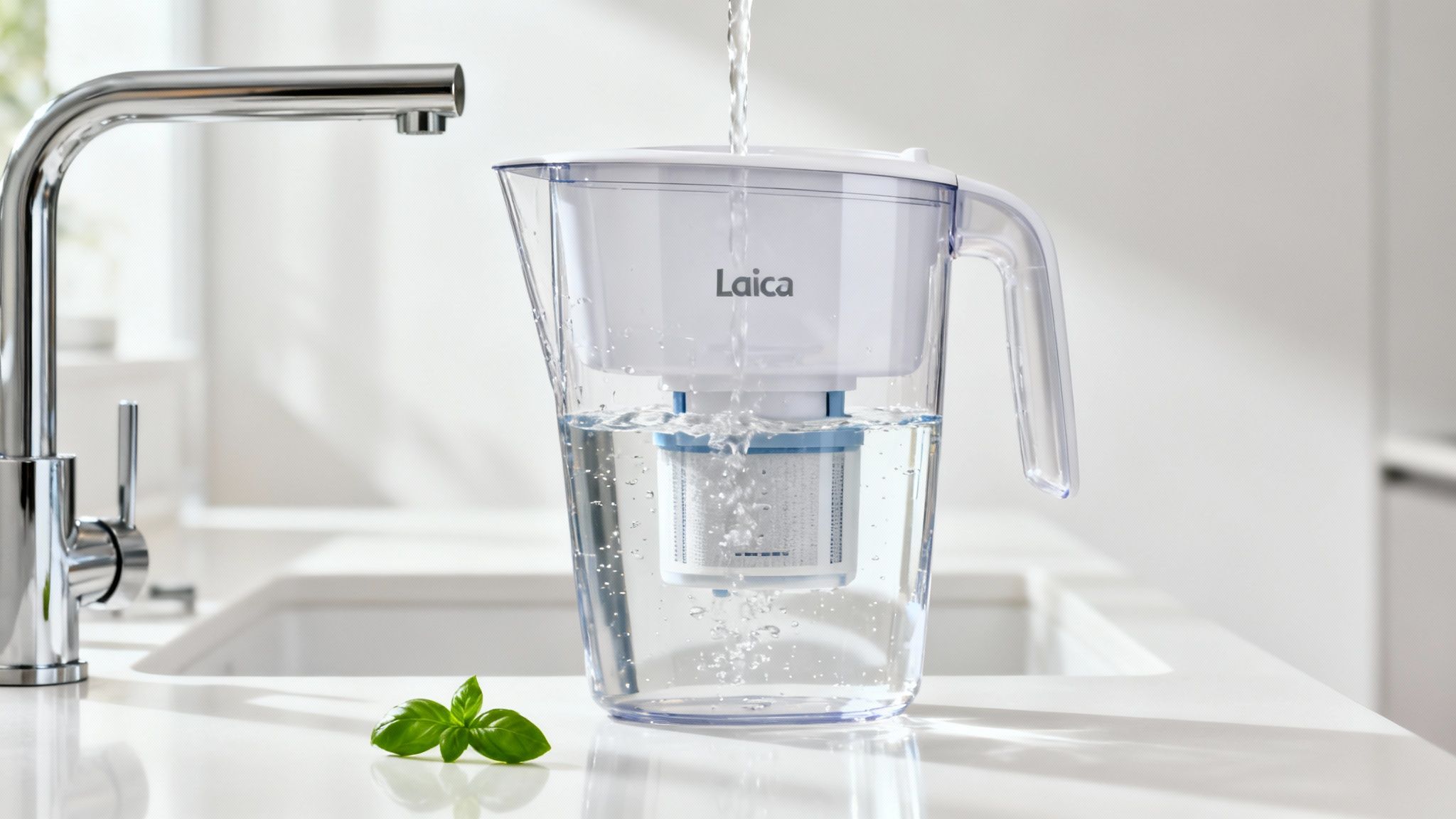
Have you ever noticed a faint swimming-pool smell from your tap water? Or maybe a slightly chalky taste? That is often the chlorine used to keep water supplies safe, or high mineral content that causes limescale. While your tap water is safe to drink, these elements can affect its flavour.
This is where a Laica caraffa filtrante helps. Think of it as an upgrade for your water. You fill the jug, and the water flows through a replaceable filter cartridge. This process is designed to capture unwanted extras, leaving you with fresher, cleaner-tasting water. It's a step up from a standard carafe, which only holds drinks.
How Does the Filtration Work?
The real work happens inside the cartridge. It contains key ingredients that target specific impurities:
- Activated Carbon: This material is excellent at capturing chlorine, which often causes odd tastes and smells in tap water.
- Ion-Exchange Resins: These small beads tackle water hardness. They are designed to capture minerals that cause limescale buildup, such as calcium and magnesium.
It's a simple yet effective system. Laica's cartridges are made in Italy and use silver-impregnated vegetable activated carbon. According to Laica’s official product specifications, the system helps reduce chlorine levels and is designed to filter 150 litres over a 30-day period. The filter lifespan depends on usage and local water quality.
Disclaimer: Home filtration complements—not replaces—professional advice.
Popular Models and Smart Features
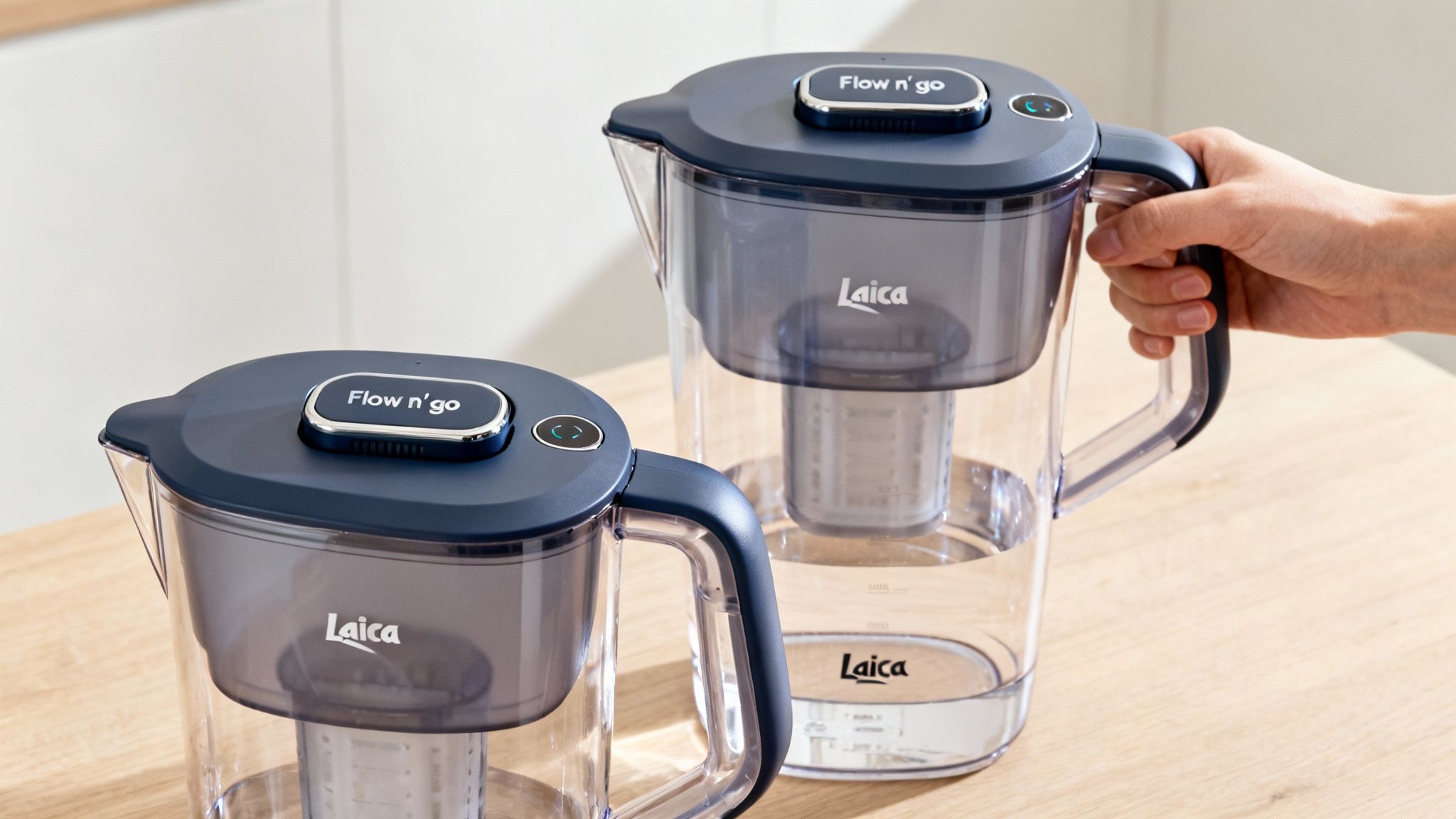
Laica jugs blend smart Italian design with practical features for everyday life. These small details make filtering water an easy and pleasant experience.
Designed for Everyday Use
One of the most user-friendly features is the ‘Flow n’ go’ automatic lid. This design lets you fill the jug directly from the tap without removing the lid. It’s a small detail that saves time.
Laica also offers different sizes. You can find compact models for one person and larger jugs for the whole family. Each one is ergonomically shaped for a comfortable grip, making pouring smooth and easy. These features ensure that using a laica caraffa filtrante feels completely natural.
Tracking Your Filter’s Lifespan
Knowing when to change your filter cartridge is key to getting great-tasting water. Laica offers a few ways to keep track.
- Manual Indicators: These are simple, battery-free dials on the lid. When you insert a new filter, you set the date. It’s a straightforward visual reminder.
- Electronic Indicators: Some models have a digital display that counts down the days or litres filtered. It’s a precise way to monitor your filter's life.
Each system has its benefits. Manual dials are simple and eco-friendly, while electronic indicators offer set-it-and-forget-it convenience. Proper maintenance ensures a consistent flow rate and filtration performance.
To explore the topic more broadly, take a look at our general guide to a caraffa acqua con filtro.
Understanding Advanced Microplastic Filtration
Filtering water for better taste is one thing, but what about particles you can't see? Microplastics are a growing environmental concern and are being found in water sources.
As awareness grows, so does the demand for more thorough filtration. Advanced filter jugs, like those from Laica, offer an extra layer of reassurance. For more background, you can read about understanding microplastics in water.
What Is MikroPLASTIK-STOP™ Technology?
Laica's answer to this issue is their MikroPLASTIK-STOP™ technology. It is a powerful, two-stage system for your water.
Here’s how it works:
- The Bi-flux® Cartridge: This is the first step. It helps reduce substances like chlorine and limescale to improve the taste of your tap water.
- The MikroPLASTIK-STOP™ Filter: Next, the water passes through this specialised filter. It is made of hollow fibre membranes that act as a physical barrier, designed to capture very small particles that a standard filter might miss.
This dual approach means you get the taste benefits of the classic Bi-flux® filter plus the added feature of microplastic reduction.
Certified Performance
Laica has had this system tested by independent labs in Italy and Germany.
The tests confirmed the filter blocks more than 99.5% of microplastics as small as 0.1 µm and over 99.99% of those 1 µm or larger.
These results have been verified by accredited labs like Wessling GmbH in Germany. You can see the data on Laica's product page. This certified performance provides confidence for health-conscious families. To learn more about Italian approaches to water quality, see our guide on depurazione acqua potabile.
How Laica Jugs Compare to Other Systems
Choosing the right water filtration system depends on your lifestyle, budget, and goals. A Laica caraffa filtrante is a great starting point, but how does it compare to tap-mounted or under-sink filters?
Filter jugs are very easy to use. There is no installation, they are portable, and the upfront cost is low. This makes them a good match for renters or anyone who wants better-tasting water without fuss. The only trade-off is that you need to fill them and wait for the water to filter.
Home Water Filtration Systems Compared
This table helps you see the differences between the main types of home water filters. It covers setup, costs, and maintenance to help you decide. Compare options with our quick table.
| Feature | Laica Filter Jug | Tap-Mounted Filter | Under-Sink System |
|---|---|---|---|
| Installation | None, ready to use | Simple, DIY in minutes | Professional recommended |
| Initial Cost | Low (€20–€40) | Moderate (€50–€100) | High (€150–€500+) |
| Ongoing Costs | Regular cartridge changes | Less frequent cartridge changes | Yearly cartridge changes |
| Convenience | Must refill manually | Instant filtered water | Instant filtered water |
| Portability | High (can move anywhere) | Low (fixed to one tap) | None (fixed under sink) |
| Filtration Power | Good (reduces chlorine, limescale) | Very Good (adds sediment removal) | Excellent (multi-stage filtration) |
This comparison shows there’s an option for every situation, whether you value affordability, convenience, or filtration power.
Sometimes, the choice depends on what you want to filter out. This simple chart helps you see which Laica filter might be right for you.
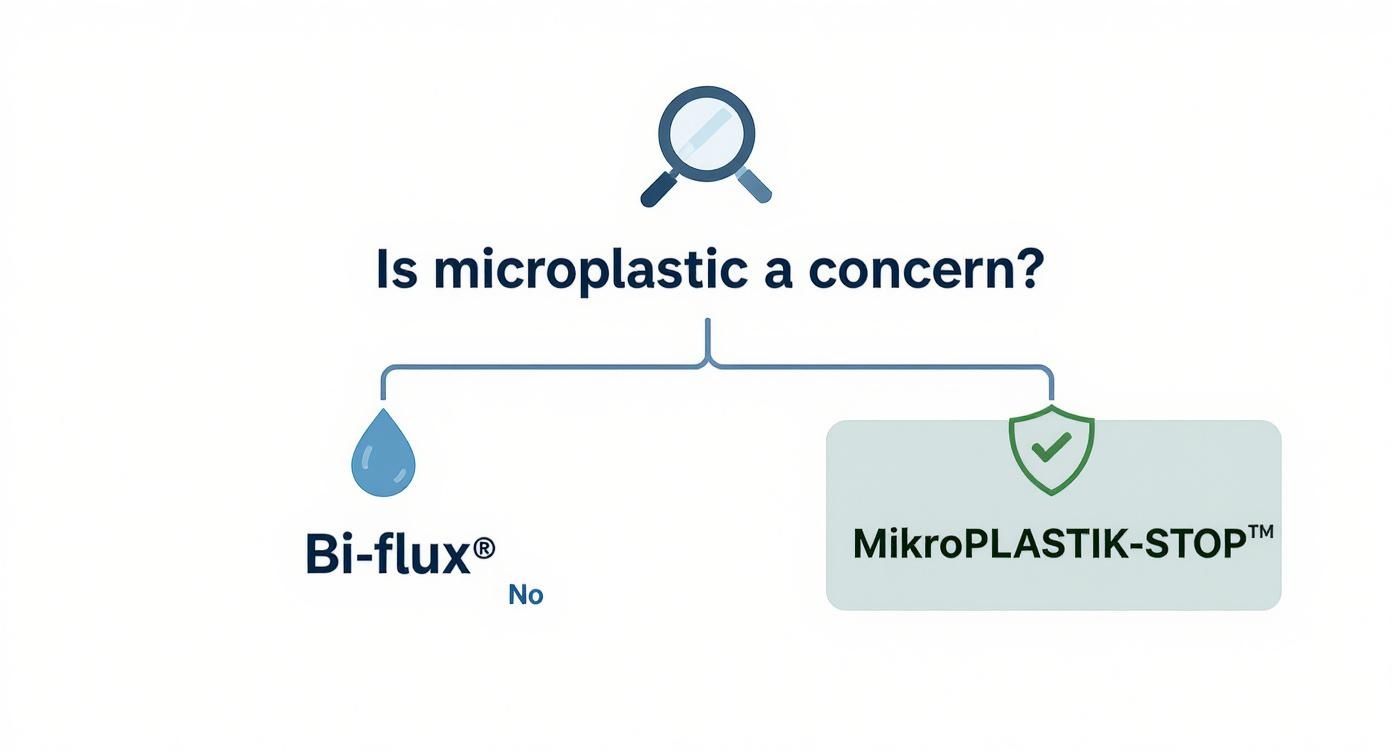
If you mainly want to improve taste and reduce limescale, the standard Bi-flux® filter is a great choice. If removing microplastics is your top priority, the MikroPLASTIK-STOP™ filter is the one to choose.
Tap-mounted filters are a good middle-ground option. See the tap filter kit that installs in minutes. For a more comprehensive solution, our guide to under-sink water filters has more detail.
Managing Costs and Environmental Impact
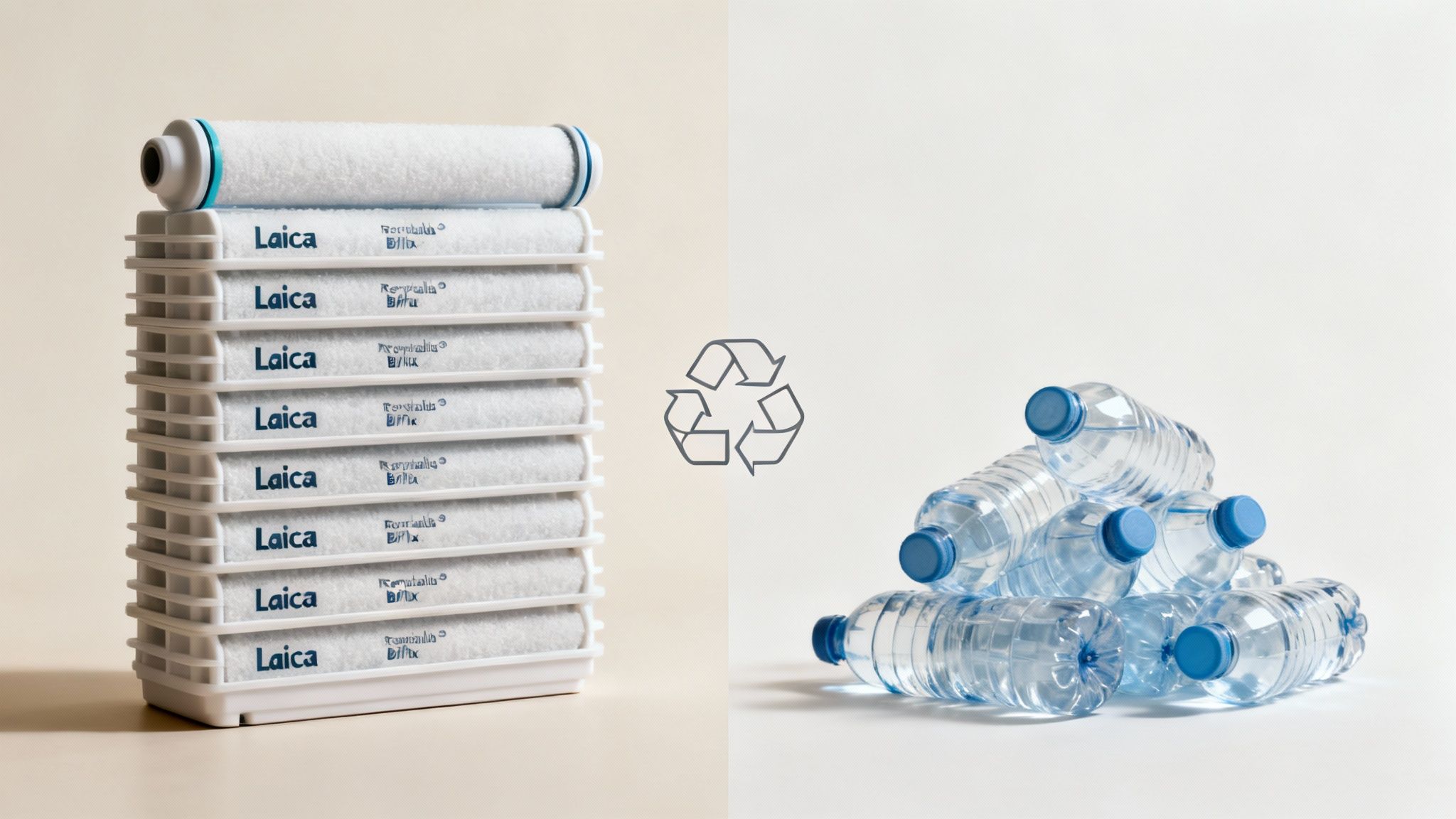
When considering filtered water, cost and environmental impact are key. Let's look at the practical numbers behind using a laica caraffa filtrante.
The only recurring cost is for the replacement Refills & Cartridges. A standard Bi-flux® cartridge filters up to 150 litres, which lasts about a month for an average household. When you compare this to the price of bottled water, the savings are clear. Check sizes & refills — fast EU shipping.
The Real Cost of Ownership
A single replacement cartridge usually costs between €6 and €8. If you change it monthly, your annual total is about €72–€96. For a family drinking two litres a day, that’s over 730 litres of fresh, filtered water.
Buying that much bottled water would cost hundreds of euros more, plus the hassle of carrying heavy packs home. A filter jug is a smarter, more budget-friendly way to drink water.
A Greener Way to Drink
The environmental argument for a filter jug is strong. Every time you fill your jug, it's one less plastic bottle that could end up in a landfill. One year of using Bi-flux® filters can prevent the use of up to 1,200 1.5-litre plastic bottles.
Switching to a filter jug is an easy way to reduce your household's plastic consumption. It's a small habit that makes a big difference over time.
While cartridges need replacing, many of their parts are recyclable. This creates a smaller environmental footprint than producing and transporting billions of plastic bottles. To dive deeper, see our article on the essentials of acqua da bere.
Checklist for Maximising Your Filter's Life
To get the most value from your filter jug, follow these simple habits.
- Prime new cartridges: Soak new filters according to the instructions to activate them.
- Use the filter life indicator: Use the manual or electronic reminder to know when to change it.
- Store the jug in the refrigerator: This keeps your filtered water cool and tasting its best.
- Clean the jug regularly: Wash the jug and lid with mild soap and water once a week.
- Check local recycling guidelines: Many councils have facilities that can recycle parts of used cartridges.
- Only filter cold tap water: Hot water can damage the filter media and reduce its effectiveness.
Frequently Asked Questions (FAQs)
Let's answer some common questions about the Laica caraffa filtrante to clear up any final doubts.
How Often Should I Change the Laica Filter Cartridge?
You should replace the cartridge every 30 days or after it filters 150 litres of water, whichever comes first. This ensures the filter's ingredients, like activated carbon, are fresh and effective at reducing chlorine and limescale. Using a cartridge beyond its lifespan will reduce its filtering performance.
Does a Laica Jug Make Tap Water Safe from Bacteria?
No. This is an important point. Laica filter jugs are designed to improve the taste and smell of water that is already considered safe to drink. They are great at reducing substances like chlorine and certain heavy metals. However, they are not designed to purify water from microbiological contaminants like bacteria or viruses. For more, see our guide on drinking tap water in Italy.
Is Filtered Water Better for My Coffee Machine?
Yes. One of the main benefits of using a Laica jug is reducing limescale, a build-up of minerals from hard water. Limescale can damage appliances like coffee machines and kettles. Using filtered water helps prevent this build-up, which can help your appliances last longer and work more efficiently. It can even make your coffee and tea taste better.
What Is the Difference Between Bi-flux and MikroPLASTIK-STOP Filters?
The standard Bi-flux® cartridge is an all-rounder. It is designed to improve the general taste and odour of your water by targeting chlorine, limescale, and some heavy metals. It is a perfect choice for everyday drinking and cooking.
The MikroPLASTIK-STOP™ is a more specialised, two-stage system. It combines the Bi-flux® cartridge with a second filter block. This second stage is certified to remove over 99.5% of microplastics. If you are specifically concerned about microplastic contamination, this is the filter for you.
Ready to improve your water in just a few minutes? At Modern Essentials, our tap-mounted systems offer instant filtration without the wait.
See the tap filter kit that installs in minutes.