

Filtrare Acqua Rubinetto: A Practical Guide to Purer Water
Filtering your tap water is an easy way to improve its taste and quality. While tap water in the EU is generally safe, it can pick up unwanted things on its way to your home. Common issues include the taste of chlorine or limescale buildup from older pipes. A simple filter tackles these problems, giving you better water for drinking, cooking, and making coffee.
Quick Answer: How can you filter tap water at home?
The easiest way to filter tap water is with a faucet-mounted filter. These devices attach directly to your kitchen tap in minutes without any tools. They use activated carbon to help reduce common impurities like chlorine, sediment, and some heavy metals, which instantly improves the taste and smell of your water.
Why Filtering Your Tap Water Is a Smart Choice
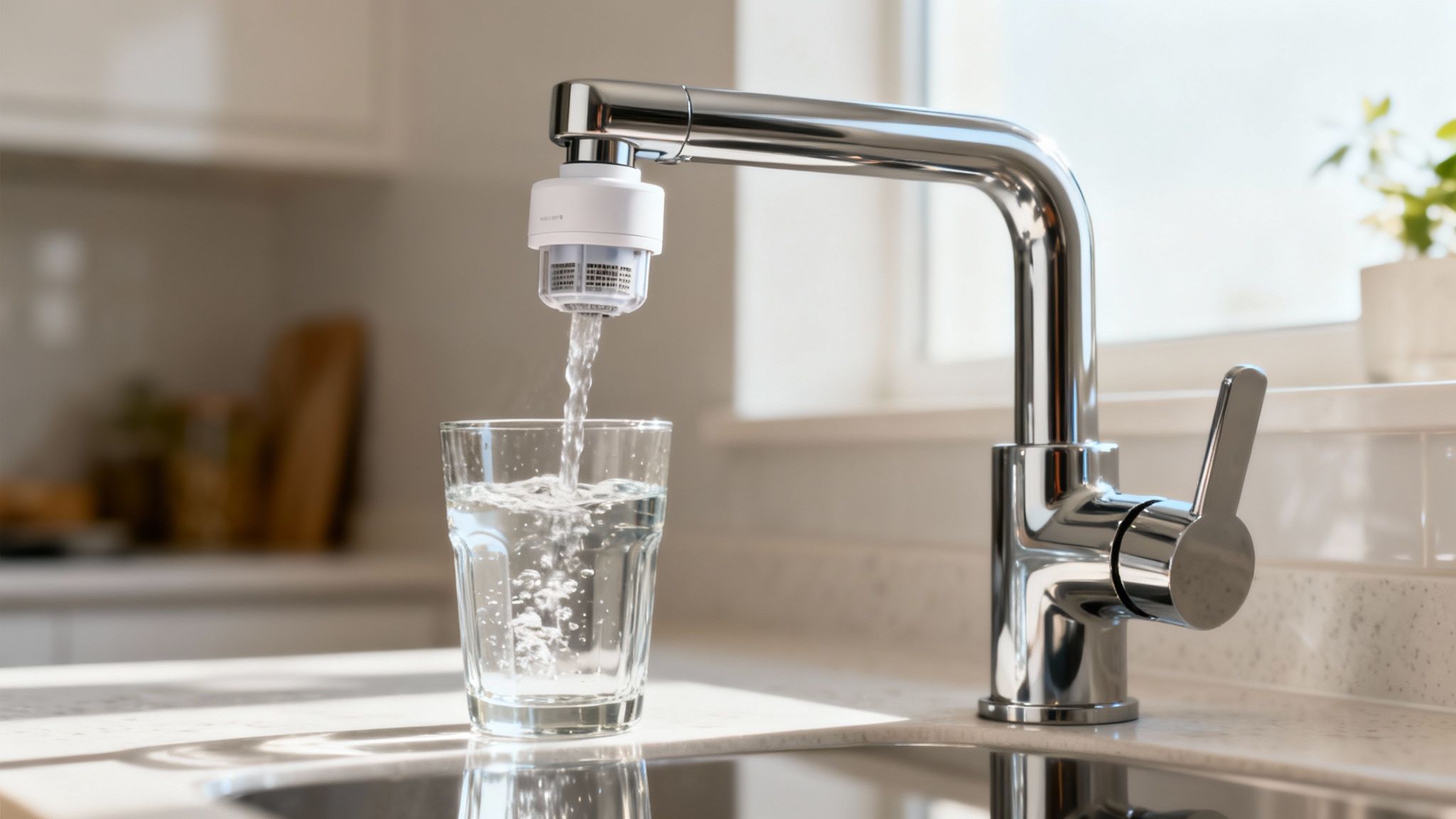
If city water is safe, do you really need to filtrare acqua rubinetto? It’s a good question. The answer depends on the final quality of the water from your specific tap. Water leaves the treatment plant in good condition, but the journey through kilometres of pipes can introduce elements that affect its taste, smell, and appearance.
This is where a home water filter helps. Think of it as a final line of defence, designed to capture impurities right before you pour a glass. It’s not about distrusting the public supply; it’s about refining it for a better experience.
Key Reasons to Consider a Water Filter
- Better Taste and Smell: This is the first change you'll notice. Filters are great at reducing chlorine, the disinfectant that gives tap water a distinct smell and taste. The result is water that tastes fresher and more natural.
- Fewer Common Contaminants: A good filter can trap a surprising range of substances. For example, activated carbon is a workhorse for grabbing chlorine and certain organic compounds, while more advanced systems can tackle other concerns.
- Protects Your Appliances: If you live in a hard water area, you know the struggle with limescale. That chalky buildup from calcium and magnesium can damage coffee machines and kettles. Filtering the water helps reduce these minerals, which can extend the life of your appliances.
Choosing to filter is a proactive step. It's about taking control and making sure the water you and your family drink is as clean and enjoyable as it can possibly be.
It Is More Than Just Drinking
The benefits don't stop with a glass of water. Using filtered water can transform your tea and coffee, letting the true flavours shine through. It also makes a real difference in the kitchen—soups are clearer, and even your pasta will taste better.
Ultimately, adding a water filter is a simple upgrade that pays off immediately. It’s a small investment for noticeable improvements in taste, appliance health, and your peace of mind.
What is in Your Tap Water?
Before you pick a filter, you need to know what's in your water. Don't worry, you don't need a chemistry degree for this. You can learn a lot from simple observations in your kitchen.
Knowing what you’re dealing with is the first step. It’s what separates buying a random filter from investing in a solution that works for you. This is the foundation of learning how to properly filter your tap water, or as they say in Italy, come depurazione acqua potabile.
Is Your Water Hard or Soft?
One of the first things to check is whether your water is "hard" or "soft." This refers to its mineral content, specifically calcium and magnesium.
- Hard Water: This is water with a high mineral count. The tell-tale sign is the chalky white residue, or limescale, that builds up on your taps, shower screen, and kettle. It’s not harmful to drink, but it can clog pipes and shorten the life of your appliances.
- Soft Water: This has fewer minerals. Soap lathers easily, and your skin might feel a bit slick after a shower. Sometimes, it can have a slightly salty taste.
Knowing your water's hardness is important for looking after your appliances. If you've ever had to learn how to descale your coffee machine, you've dealt with the effects of hard water. A good filter can help reduce these minerals.
Check Your Local Water Quality Report
For a more scientific look, start with the official report from your local water supplier. You can usually find these online. They have data on everything from mineral content and pH levels to tests for various contaminants.
Keep in mind, these reports describe water quality at the treatment facility. By the time it travels through kilometres of pipes to your home, its composition can change. That's why a filter at the point of use—right at your tap—is so effective.
You’ll often come across the term Total Dissolved Solids (TDS). This is just a measure of everything dissolved in your water. A high TDS number generally means harder water with more minerals.
Simple home testing kits are another great option. They are cheap, easy, and can give you an instant reading on things like chlorine levels. This helps you zero in on exactly what you want your filter to remove.
Comparing Your Home Water Filtration Options
So, you have an idea of what's in your water. Now it is time to pick a filtration system that fits your home, lifestyle, and budget. There are many choices, but they boil down to a few main types, each with its own pros and cons.
The goal is to match the filter to your specific needs. Are you renting and need something easy to install and remove? Or are you a homeowner looking for a more permanent solution? Let's walk through the most popular options. Compare options with our quick table.
Understanding the Main Filter Types
Every filtration method offers a different balance of convenience, cost, and effectiveness. Faucet-mounted filters give you instant filtered water right from the tap, which makes them a popular choice for daily kitchen use.
Water filter pitchers are simple and portable. They're perfect for smaller households or for keeping chilled, filtered water in the fridge. Under-sink systems are hidden from view and filter water before it reaches your tap, but they require more effort to set up.
Key Takeaway: There's no single "best" filter for everyone. The right choice depends on your kitchen setup, how much water you use, and what you want to filter out.
Faucet-Mounted Filters: The Popular DIY Choice
For most homes, faucet-mounted filters are one of the most practical solutions. They connect directly to your kitchen tap and install in minutes—no special tools needed. This makes them a great choice for renters or anyone who wants a quick upgrade without permanent changes.
These filters generally use activated carbon to tackle common issues like chlorine, which can make a huge difference in taste and smell. They hit the sweet spot between performance and convenience, giving you filtered water on demand with the flip of a switch.
This decision tree can help you pinpoint what's motivating your search.
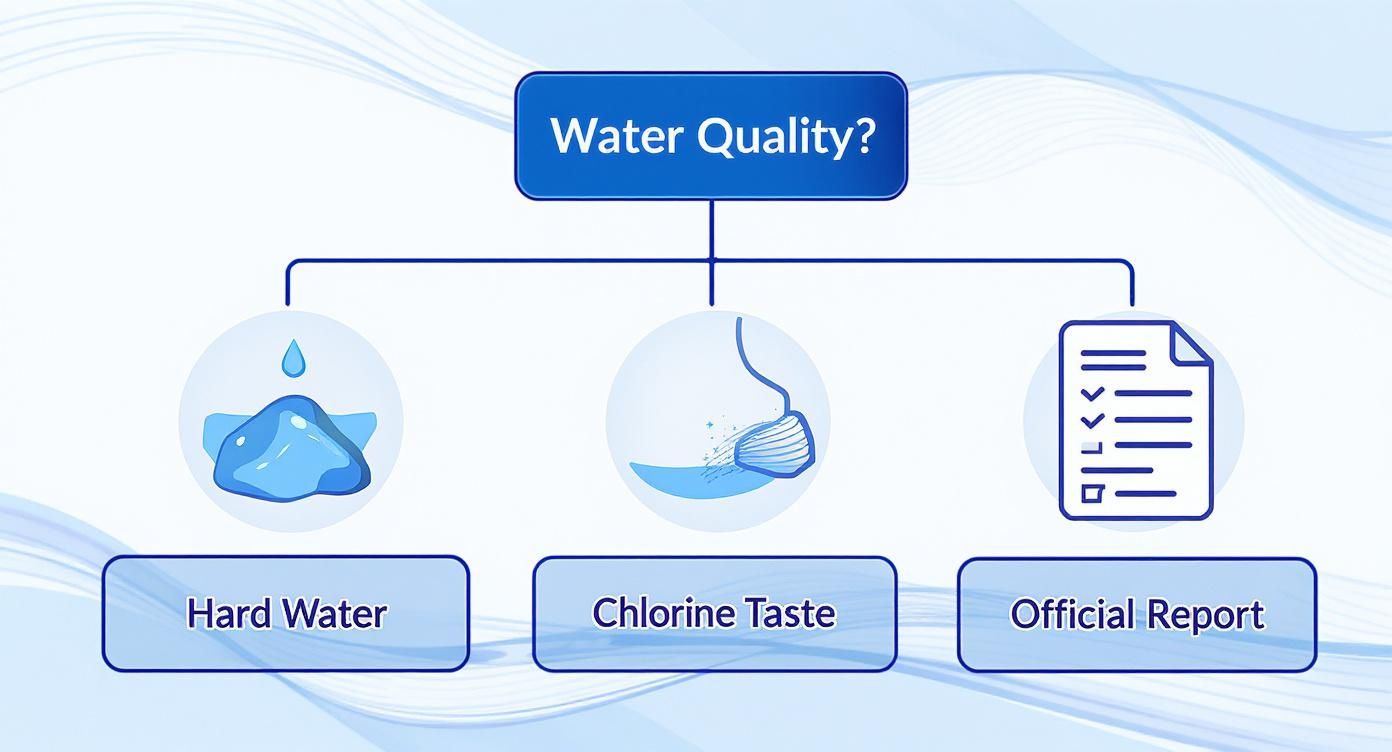
As you can see, the reasons vary from dealing with hard water to getting rid of an unpleasant taste or odour.
Home Water Filter Comparison Table
To help you decide, here’s a quick comparison of the most common options. This table breaks them down by ease of installation, typical cost, and what they’re designed to capture.
| Filter Type | Best For | Installation | Typical Cost (€) | Designed to Reduce |
|---|---|---|---|---|
| Faucet-Mounted | Renters, families, quick installation | DIY, 5 minutes | €30 – €60 | Chlorine, sediment, some heavy metals, bad taste |
| Under-Sink | Homeowners, high-volume use | Moderate (plumbing may be needed) | €100 – €300+ | Chlorine, heavy metals, VOCs, sediment |
| Water Pitcher | Individuals, small households | None | €20 – €40 | Chlorine, bad taste (effectiveness varies) |
| Reverse Osmosis | Maximum purification needs | Professional installation recommended | €250 – €800+ | Broad spectrum: metals, minerals, TDS |
This comparison shows why faucet filters are a great starting point. They offer a major improvement over basic pitchers without the cost and installation hassle of under-sink systems. If you're still curious about pitchers, you can dive deeper into our guide on water filter pitchers.
How to Install and Maintain Your Faucet Filter
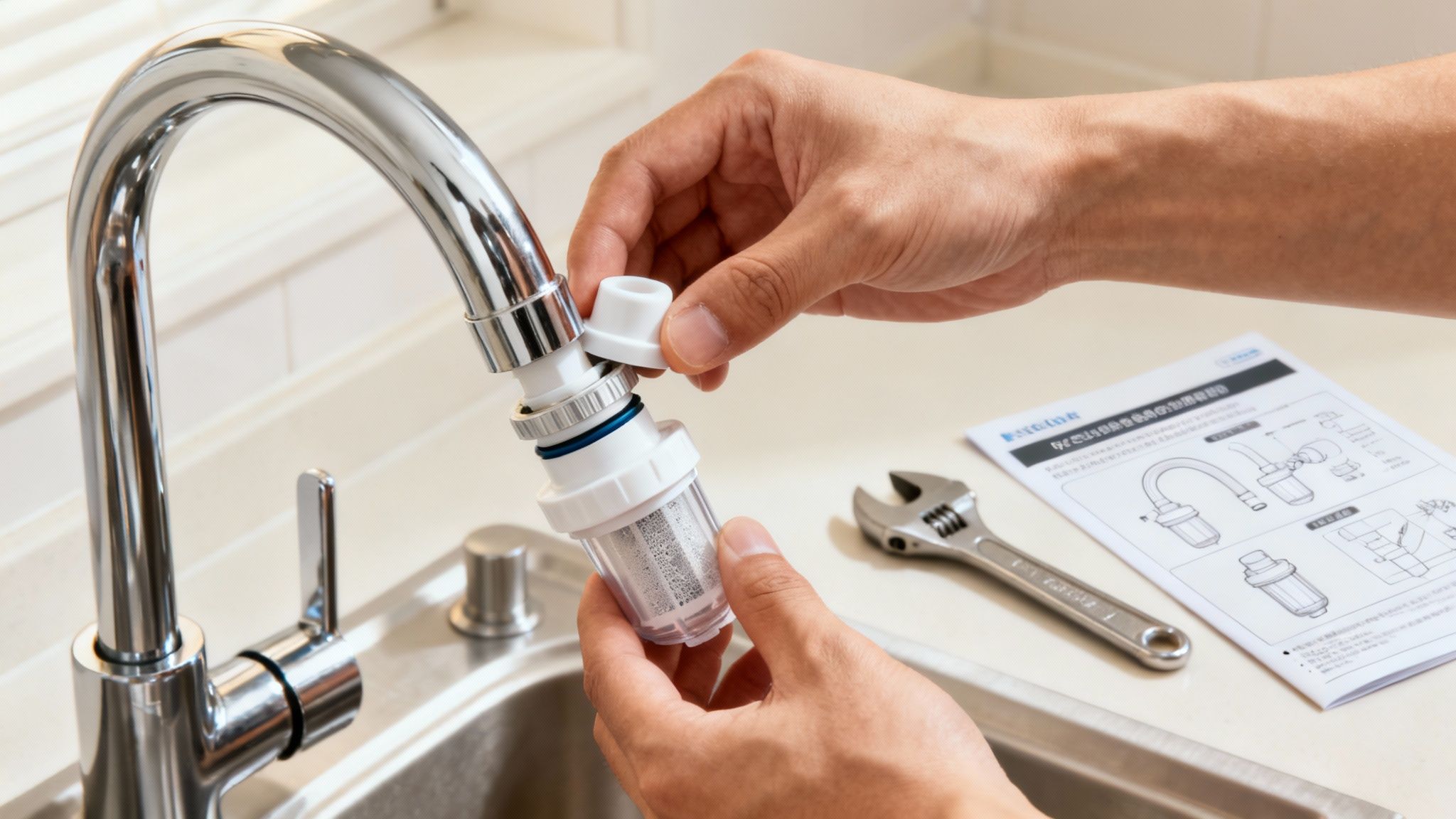
You've decided on a faucet-mounted filter. Great choice! It’s one of the best DIY solutions for cleaner, better-tasting water. The best part? You can have it set up and running in less than ten minutes, no plumber required. See the tap filter kit that installs in minutes.
Before you start any work involving your taps, it’s always smart to know how to turn off your water main. You likely won’t need to for this simple job, but it’s good to be prepared.
Getting Your Filter Installed
First, clear the area around your sink. Open your filter kit. Inside, you should see the main filter unit, a cartridge, and a bag of adaptors. Those adaptors are key to making sure your new filter fits your tap perfectly.
Your first move is to unscrew the aerator from the tip of your tap. That's the small mesh piece where the water comes out. Most of the time, you can twist it off with your fingers. If it’s stubborn, wrap a cloth around it and use pliers for a gentle grip. The cloth prevents scratching your tap's finish.
Next, find the adaptor that matches the threads on your tap. Screw it on until it's snug, but do not overtighten it. With the adaptor in place, you can now attach the main filter unit. It should click or screw on smoothly.
Final Steps and the First Taste
Now you can pop in the new activated carbon filter cartridge. Most models use a simple twist-and-lock system.
Time for a quick leak check. Turn on the cold water slowly and look closely where the filter connects to your tap. If you see drips, give the connections a slight tighten.
Many faucet filters have a small lever. This feature lets you switch between filtered water (for drinking) and unfiltered tap water (for washing dishes). Using unfiltered water for chores is a smart way to extend the filter lifespan.
Pro Tip: For the very first use, let cold water run through the filter for a couple of minutes. This flushes out any harmless, loose carbon dust from the manufacturing process and gets the filter ready for use.
Keeping Your Water Fresh: Maintenance and Care
Looking after your faucet filter is easy. The only real job is changing the filter cartridge on schedule. The filter traps things like chlorine and sediment, and eventually, it can't hold any more.
The lifespan of a cartridge is usually measured in two ways:
- By Volume: Most are good for around 600 litres of water.
- By Time: For a typical family, this means a replacement every 3 to 4 months.
It’s important to stick to this schedule. An old filter is not effective. When your indicator tells you it's time, or if you notice the water taste changes or the flow rate drops, swap it out. The process takes less than a minute.
Installation & Maintenance Checklist
Here's a quick checklist to guide you. You'll see just how simple it is to get great filtered water at home.
- Check Your Tap: Ensure your tap has a removable aerator. Most modern taps do.
- Pick the Right Adaptor: Find the adaptor from the kit that fits your tap's threads.
- Attach the Filter: Screw the main unit onto the adaptor until it's secure.
- Insert the Cartridge: Pop in the new filter cartridge.
- Run & Check for Leaks: Let cold water run through for 2 minutes and check for drips.
- Monitor the Indicator: Keep an eye on the filter life monitor.
- Replace Regularly: Change the cartridge every 3-4 months or when the indicator says so.
The Broader Benefits of Home Water Filtration
When most people think about filtering tap water, they think of better-tasting water. That's a great start, but it's just one of many benefits. Filtering your water at home improves many parts of your day, from your morning coffee to your evening skincare.
Removing common elements like chlorine and hard minerals makes a big difference. You’ll unlock better flavours in the kitchen, help protect your appliances, and be kinder to your skin and hair.
Elevate Your Coffee And Cooking
Ever brewed coffee that tasted a bit off? Your tap water is often the culprit. Chlorine, essential for disinfecting the water supply, can clash with the delicate oils in coffee beans. This can create a harsh aftertaste that masks the coffee's true flavour. Switching to filtered water provides a clean, neutral base, letting the rich notes of your coffee or tea shine through.
This same logic applies to cooking.
- Clearer Soups and Broths: Minerals and sediment in tap water can cause cloudiness. Filtered water keeps them clear.
- Better-Tasting Pasta and Rice: Grains absorb a lot of water. Using filtered water means they don't soak up any strange tastes.
- Brighter Steamed Vegetables: Chlorine can sometimes dull the vibrant colours of fresh vegetables.
By removing unwanted extras, you let the real flavours of your food and drinks take centre stage. It's a simple change that makes a big difference in the kitchen.
A Kinder Touch For Skin And Hair
The benefits of filtered water extend to the bathroom. The water you use to wash can impact your skin and hair, especially in a hard water area.
Hard water is high in dissolved minerals like calcium and magnesium. These minerals can leave a film on your skin that may clog pores and lead to dryness. The same mineral buildup can coat your hair, making it feel dull and brittle.
A dedicated shower filter can be a game-changer. These simple devices attach to your showerhead and are designed to reduce chlorine and hard minerals. The result is water that feels softer and is gentler on your body. If this sounds like a familiar problem, you can learn more about how a shower filter for hard water works. See our full range of Shower Filters.
Frequently Asked Questions
It’s normal to have questions about how home water filtration works. We’re here to give you straightforward answers so you can feel confident in your choice.
Let's tackle some common concerns about trying to filtrare acqua rubinetto.
How do I know when to change the filter?
This is a common question, and the answer is simple. Modern filters take the guesswork out of it. Most quality faucet filters come with a built-in indicator.
- A mechanical dial: This type tracks how much water has passed through, showing the filter lifespan remaining.
- An LED light: Many models have a small light that changes colour to give you a clear visual cue that it's time for a replacement.
These systems are set to the filter's capacity, typically around 600 litres. For an average family, that's about three or four months of use. When the time comes, you can find the right replacement on our Refills & Cartridges page. Check sizes & refills — fast EU shipping.
The Bottom Line: Don't stress about remembering. The filter itself will tell you when it needs a fresh cartridge.
Will a filter slow down my water pressure?
That's a fair question. Modern faucet filters are engineered to have a minimal impact on your water’s flow rate. When the filter is fresh, you’ll barely notice a difference. The design allows water to move efficiently through the filtration media, like activated carbon, without creating a bottleneck.
You might notice a slight drop in pressure when the filter is nearing the end of its life. Think of this as a helpful signal. It means the cartridge is full of the contaminants it has trapped and is ready to be replaced.
Is it hard to install a faucet filter?
Not at all. Faucet-mounted filters are designed for a quick, DIY setup. This means no need to call a plumber or use a toolbox. The whole process takes less than ten minutes.
- Unscrew your tap’s aerator.
- Pick the right adaptor from the included kit.
- Attach the filter unit to the adaptor.
- Insert the cartridge.
And you're done! It’s an intuitive, user-friendly design that’s perfect for renters or anyone who wants an instant upgrade. For more tips and guides, explore our Knowledge Hub.
A Quick Note on Shipping & Returns
We know you want cleaner water soon! For questions about delivery times across the EU, take a look at our Shipping Policy. If you need information on returns, you can find details in our Refund Policy.
Disclaimer: Home filtration complements—not replaces—professional advice. If you have serious concerns about your water quality, please consult a professional.
At Modern Essentials, we believe everyone deserves cleaner, better-tasting water. Our filters are designed to be simple, effective, and affordable. Check out our range of tap Water Filters to find a kit you can install in minutes.