

Is the Water in Italy Safe to Drink? Your Practical Guide
Visiting Italy and wondering about the tap water? Let's clear it up. Yes, the water in Italy is safe to drink. Public water supplies must meet strict EU standards, and health authorities confirm that the vast majority is perfectly healthy. So, whether you're in Rome, Milan, or a small Tuscan village, you can generally fill your glass from the tap with confidence.
Quick Answer: Is Italian Tap Water Safe to Drink?
Yes, Italian tap water is safe to drink. Official data from 2020-2022 shows that 99.1% of public water tests met all health standards. While it's safe, regional differences in taste and mineral content (hardness) are common, which is why many residents choose to use a simple water filter.
Understanding Italy's Water Quality
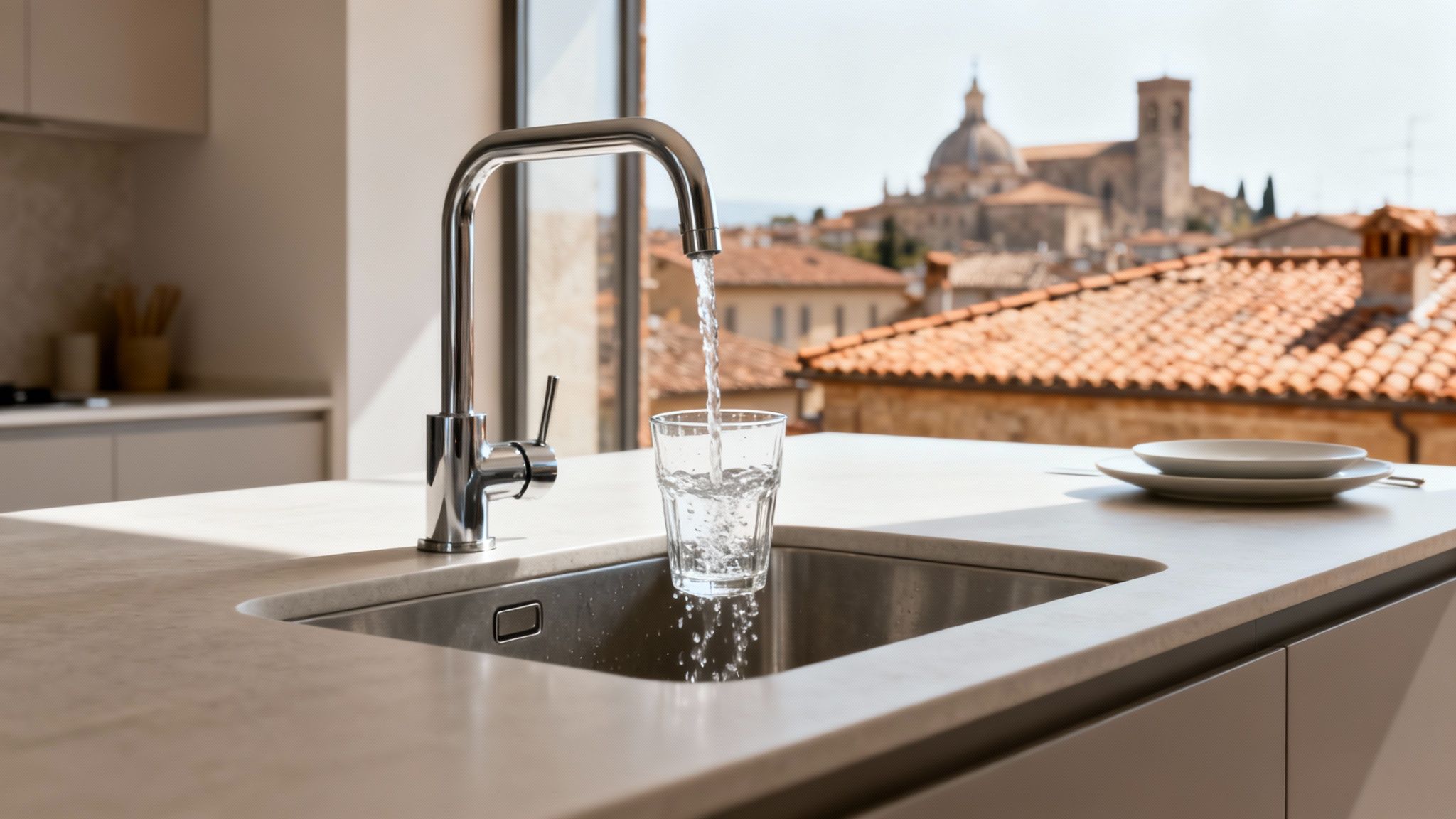
The official answer to "is the water in Italy safe to drink?" is a confident yes. Italy's infrastructure is modern and held to high standards. This ensures that any potentially harmful contaminants are kept well below dangerous levels.
To be specific, a detailed report from the National Centre for Water Safety looked at data between 2020 and 2022. It found that 99.1% of more than 2.5 million tests met all health parameters. This data covered 90% of Italy's population, placing the country among the best in Europe. You can see more official findings on Italy's tap water standards.
However, safe does not always mean it tastes perfect to everyone. You will likely notice regional differences in flavour and mineral content.
Why Does the Taste of Tap Water Vary?
So, what are these minor issues you might notice?
- Taste and Odour: The most common thing people notice is a slight chlorine smell. This is not a bad thing. It's the disinfectant doing its job, keeping the water free of bacteria on its journey to your home.
- Hardness and Limescale: Much of Italy has "hard water." This means it is high in natural minerals like calcium and magnesium. These are healthy to consume, but they cause the chalky white buildup (limescale) in kettles and on taps. This can also change the flavour of your tea or coffee.
These things are not health risks. But they can affect your daily experience with the water. This is why many people—locals and travellers alike—opt for a simple fix right at the source.
Using a point-of-use filter is an easy and effective way to elevate your tap water from "safe" to "great." A good faucet filter with activated carbon is designed to capture the chlorine and other elements that affect taste. It's a fantastic alternative to buying endless plastic bottles, saving you money and helping the environment. See the Water Filters kit that installs in minutes.
Why Trust in Tap Water Varies Across Italy
If Italian tap water is officially so safe, why is Italy one of the world's biggest consumers of bottled water? The answer has more to do with culture, old habits, and perception than safety.
For many Italians, reaching for a bottle of water is simply second nature. It’s a custom often passed down through generations. It is seen as a normal part of daily life and dining out.
This habit has created a "trust divide." Public trust in tap water changes depending on where you are. For instance, one in two families in Sicily and Sardinia distrust tap water. But that number drops to just one in ten in the northern region of Friuli-Venezia Giulia. This gap is often rooted in historical problems with inconsistent supply, an issue that still affects nearly 30% of residents in places like Calabria.
The North-South Perception Gap
Head to northern cities like Milan or Turin, and you'll find that confidence in tap water is generally high. People here are more likely to drink straight from the tap. They trust the well-maintained local systems. The water also tends to be softer, with a taste many find pleasant.
Travel south, and you’ll notice a shift in attitude. In regions like Sicily, Calabria, and Puglia, scepticism is more widespread. This isn't because the water fails to meet the same strict EU standards—it does. Instead, it’s a mix of other factors.
- Historical Infrastructure: In the past, some southern regions struggled with water shortages. This created a lasting sense of distrust that’s hard to shake.
- Taste Preferences: After decades of drinking bottled water, many people are used to the specific mineral flavour of their favourite brands.
- Marketing Influence: Bottled water companies have spent years successfully positioning their products as purer or healthier than what comes from the tap.
Dining Out and Social Norms
Nowhere is this cultural preference more obvious than in a restaurant. The moment you sit down, the waiter will likely ask if you'd like naturale (still) or frizzante (sparkling) water. Asking for tap water (acqua del rubinetto) is becoming more accepted, but it can still raise an eyebrow.
The default offer of bottled water in restaurants is not a judgement on safety. It is a reflection of custom and what customers expect. It reinforces the cultural idea that bottled water is the 'proper' choice for a meal out.
Understanding this context is key. The choice between tap and bottled water in Italy is rarely about health. It's a decision shaped by regional history, cultural norms, and personal taste. For a closer look at a specific city, our guide on whether Rome's water is safe to drink dives into the capital's unique water culture.
What Causes Common Tap Water Issues?
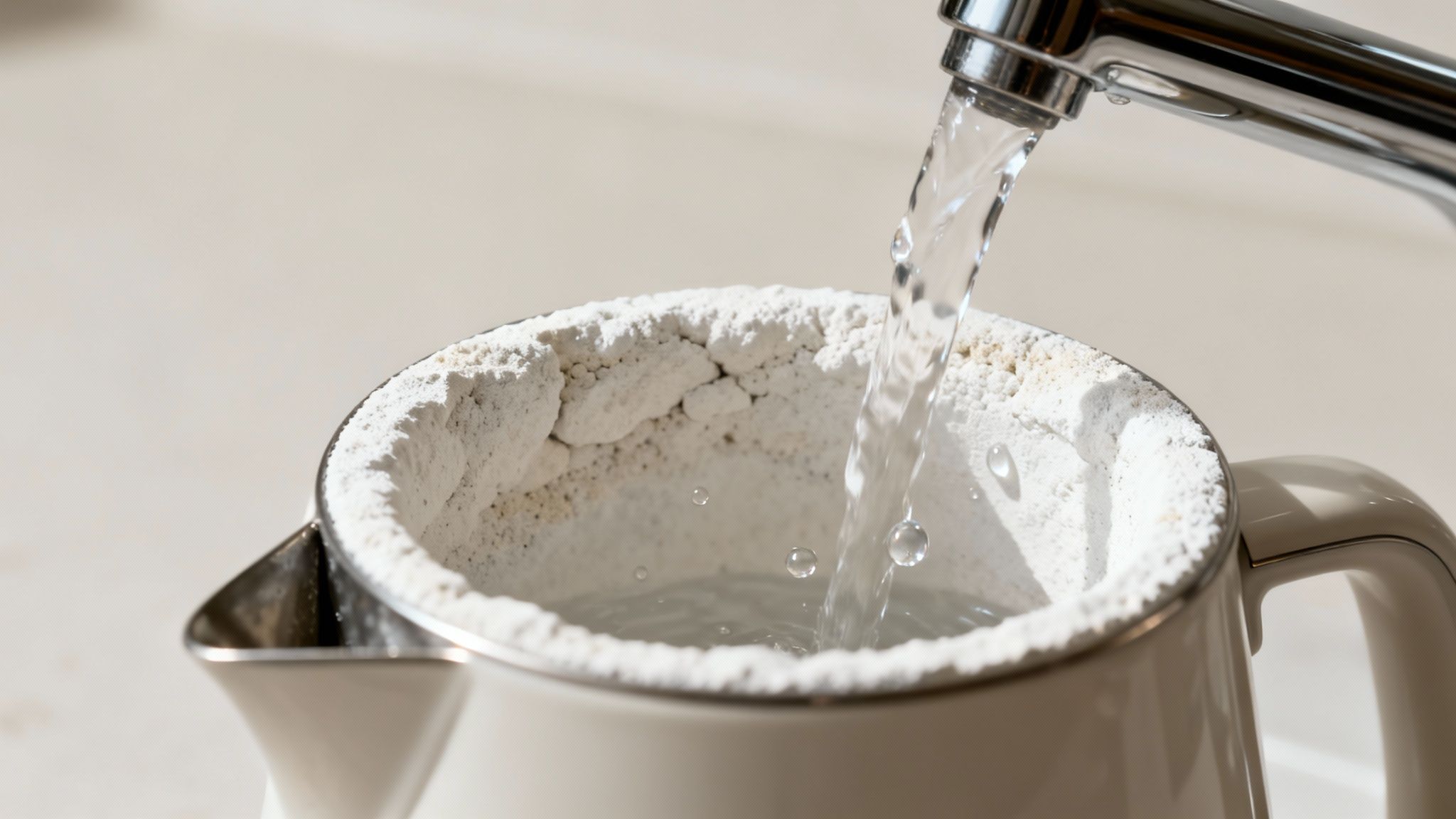
We know that Italy’s tap water meets high safety standards. But just because it’s safe doesn’t mean you’ll always love what comes out of the tap. Let’s talk about a few common characteristics you might notice.
For the most part, these are not health hazards. They are aesthetic issues that affect the taste, smell, and feel of the water. Knowing what’s behind them can help you decide what’s best for you and your family.
Limescale and Hard Water
If you have ever lived in Italy, you have met limescale. It's that chalky, white stuff that builds up in your kettle, on your taps, and inside your coffee machine. This is the sign of "hard water," which means the water is rich in minerals like calcium and magnesium.
Drinking hard water is perfectly fine. The minerals are good for you. The downside is more practical.
- It affects taste: The high mineral content can give water a distinct flavour. This changes the taste of your morning coffee or tea.
- It’s tough on appliances: Mineral buildup clogs and reduces the efficiency of kettles, coffee makers, and dishwashers.
- It makes cleaning harder: Soap does not lather as well in hard water. You often end up using more product.
Chlorine Taste and Odour
You might also notice a faint smell or taste of chlorine. This is completely normal. Water suppliers add chlorine to disinfect the water. It helps kill any harmful bacteria and viruses before the water reaches your home.
That slight chlorine smell is a good sign—it means the system is doing its job. Still, most of us don't enjoy drinking it. It’s a big reason why many people reach for bottled water instead. If you want to dive deeper, our guide to water purification in Italy covers it in more detail.
Localised Contaminants
It is also important to be transparent about potential issues. While Italy's water supply is overwhelmingly safe, isolated problems can occur.
For instance, you may have heard about PFAS contamination—often called "forever chemicals." These have been a challenge in a few specific areas. The Forever Pollution Project found that some municipalities in Lombardy and Piedmont had levels exceeding EU limits. However, it is crucial to see the bigger picture. With millions of tests confirming a 99.1% national compliance rate, these are localised exceptions, not the rule.
When travelling, it’s always wise to be aware of potential water-related health issues. For a broader perspective on common stomach ailments, it can be helpful in understanding the causes of viral gastroenteritis.
How to Easily Improve Your Tap Water
So, Italian tap water is safe to drink. But safe does not always mean perfect. The goal is not just about safety—it's about having water you enjoy drinking every day.
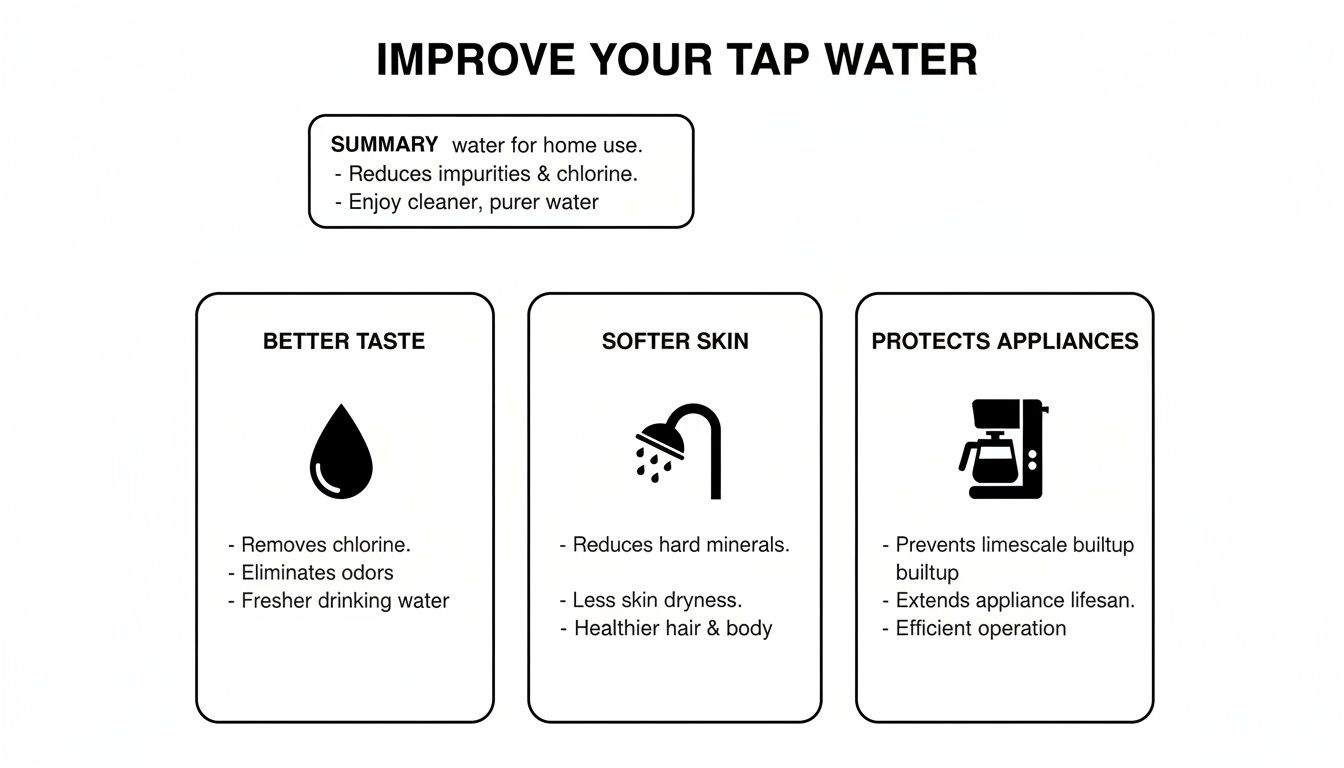
The good news is that practical solutions are easy to find. This puts you back in control. A great place to start is with a simple faucet-mounted water filter. It's a smart and easy alternative to buying bottled water.
Upgrading Your Kitchen Tap
The most direct route to better drinking water is at your kitchen sink. Faucet filters are designed to tackle the most common complaints: the chlorine taste and odour.
These devices often use materials like activated carbon. Activated carbon is highly porous. It is perfectly designed to grab onto the chlorine used for disinfection and any fine sediment from the pipes.
The result? Water that tastes cleaner and smells fresher. It’s an immediate upgrade for everything from your morning coffee to a simple glass of water.
Protecting Your Skin and Hair
The benefits of filtering your water don't stop in the kitchen. Hard water minerals and traces of chlorine can also be harsh on your body.
Installing a shower filter can make a real difference. It is designed to reduce your skin and hair's exposure to chlorine and hard minerals. Many people find their skin feels less dry and their hair becomes softer. If you're curious about the science, you can explore various water filtration and purification methods to understand the technology.
By filtering water at the source, you take direct control over its quality. This addresses everything from taste to skin sensitivity. It helps create a healthier and more pleasant environment at home.
Quick Checklist For Choosing a Filter
Finding the right solution does not have to be complicated. Use this checklist to pinpoint the best option for your home. For those considering other options, we also have a guide on choosing an under-sink water filter.
Checklist for Choosing Your Water Filter
| Consideration | What To Look For | Recommended Solution Feature |
|---|---|---|
| Main Goal | Better-tasting drinking water? Softer water for showers? | Target your main concern first: a faucet filter for taste or a shower filter for skin and hair. |
| Installation | How easy is it to set up? Do you need a plumber? | Look for DIY-friendly kits with universal fittings that install in minutes without tools. |
| Contaminants | What do you want to reduce? Chlorine, limescale, sediment? | Check that the filter uses multi-stage media like activated carbon for taste and odour. |
| Maintenance | How often do you need to change the cartridge and how much does it cost? | Prioritise systems with a long filter lifespan and affordable replacement cartridges. |
| Flow Rate | Will the filter significantly slow down your water pressure? | Look for a filter designed to maintain a good flow rate so it does not disrupt your daily routine. |
Choosing the right filter is a simple step towards improving your daily routines and cutting down on single-use plastics. It's a small change that delivers noticeable benefits.
Comparing Your Options: Tap vs. Filtered vs. Bottled
When it comes to drinking water in Italy, you have three main paths: stick with the tap, filter it, or buy it in bottles. Each choice has its own pros and cons. The best option depends on what you value most—cost, convenience, or your environmental footprint. Let's compare options with our quick table.
Tap vs. Filtered vs. Bottled Water: A Comparison
| Factor | Tap Water | Filtered Tap Water | Bottled Water |
|---|---|---|---|
| Annual Cost | Virtually free (€) | Low cost (€€) | High recurring cost (€€€) |
| Convenience | High (always on) | Highest (on-demand) | Low (requires shopping & storage) |
| Taste & Odour | Variable | Greatly improved | Consistent, but often sterile |
| Plastic Waste | None | Minimal (cartridges) | Extremely high |
| Carbon Footprint | Very low | Very low | High (production & transport) |
On the surface, tap water is the cheapest. The real battle is between bottled water and a good home filter system. An average Italian family can easily spend over €300 per year on bottled water. A high-quality faucet filter is a small one-time investment. After setup, your only ongoing cost is replacement cartridges, which usually have a long filter lifespan. The yearly cost for filtered water is a fraction of what you'd spend on bottled water.
Let’s be honest, convenience matters. Buying bottled water can be a hassle. You have to carry heavy packs from the shop, store them at home, and then deal with the empty plastic bottles. Filtered water shines here. You get clean, great-tasting water straight from your tap, anytime. For those who like portability, options like pitcher filters can also be a great fit, as we cover in our guide to water filter pitchers.
Italy's love for bottled water comes at a high environmental cost. The energy and resources needed to produce, transport, and dispose of billions of plastic bottles are staggering.
Switching to a water filter is one of the most impactful changes you can make to reduce your household's plastic waste. It's a simple step towards a more sustainable lifestyle that benefits both your wallet and the planet.
Filtering your tap water is the clear winner for anyone looking for a solution that's both eco-friendly and budget-friendly. You get the benefits of great-tasting water without the hidden costs.
A Final Word on Your Italian Tap Water
So, what's the final verdict? Italy's tap water is safe to drink. It meets strict standards. However, "safe" does not always mean "perfect." The taste and hardness can vary, and a little improvement can make a big difference.
A simple water filter shines here. It is designed to capture common culprits like chlorine and limescale. It gives you better-tasting water and helps protect your appliances from scale build-up. It's a small change that delivers big wins. You save money by skipping bottled water and help cut down on single-use plastic.
We believe you can embrace your tap as the go-to source for drinking water. If you're ready to upgrade that experience, take a look at our easy-to-install Water Filters and Shower Filters. Check sizes & refills — fast EU shipping.
And for those times you're on the move, our guide to choosing the best filtered water bottle for your needs is a great place to start.
Disclaimer: Home filtration complements—not replaces—professional advice. While our filters are fantastic for everyday improvements, they are not a substitute for professional health advice. If you have specific concerns about your local water supply, it's always smart to chat with a local water quality expert.
Frequently Asked Questions
Got a question about Italy's tap water? You're not alone. Here are some quick, straightforward answers to the things people ask us most often.
Can I drink from the public fountains?
Yes, absolutely! Those charming public fountains, like the famous 'nasoni' in Rome, are fed by the same safe, high-quality municipal water that flows into homes. The water is tested regularly and is fine to drink. They are a great way to stay hydrated while you're out.
Is it rude to ask for tap water in a restaurant?
It's not rude, but it's not the norm. Italian dining culture has a long tradition of serving bottled water ('acqua minerale'). While you can ask for 'acqua del rubinetto' (tap water), don't be surprised if the waiter politely explains they only serve bottled.
The culture around water in Italian restaurants is about tradition, not safety. Serving bottled water is part of the standard dining experience.
How do I know if my water is hard?
Hard water leaves obvious clues. The biggest giveaway is limescale—that chalky, white buildup you find on your taps, in your kettle, and on shower screens. Another sign? You might find it hard to get a good lather from your soap or shampoo.
How often should I change my faucet filter?
This depends on the filter and your water usage. As a general rule, a good quality faucet filter cartridge usually has a filter lifespan of 2 to 4 months. Always check the manufacturer's guidelines for the best performance. Check sizes & refills — fast EU shipping on our Refills & Cartridges page.